
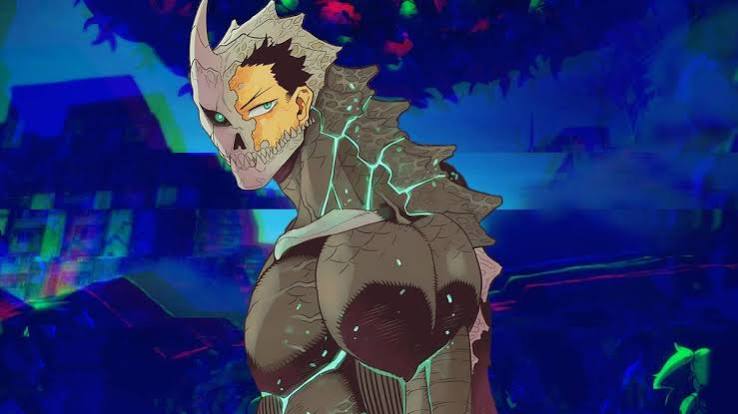
Imagine spending your entire life cleaning up the disgusting leftovers of giant monsters, only to wake up one day and realize you’ve become the exact nightmare you’ve been trying to escape. Yeah, talk about the worst career change ever. That’s basically the wild setup behind Kaiju No. 8, a manga that takes the classic monster-fighting formula and flips it into something way more personal. While platforms like komiku help readers discover action-packed manga and explore stories from different genres, Kaiju No. 8 stands out because its biggest question isn’t simply how humanity can defeat monsters. It’s what happens when the person fighting for humanity starts looking like its greatest enemy. And honestly, that identity crisis hits harder than any giant monster throwing a building across the street.
When the Monster Is Literally You
At first glance, Kaiju No. 8 seems like a straightforward action story. Humanity is under constant threat from massive creatures, specialized defense forces are responsible for taking them down, and the battlefield is basically a nightmare for anyone without serious combat skills.
Enter Kafka Hibino, a guy who’s already spent years dealing with the aftermath of kaiju attacks instead of fighting on the front lines.
He’s older than many aspiring recruits, his original dream seems increasingly out of reach, and life hasn’t exactly handed him a heroic glow-up. Then, suddenly, his body undergoes a transformation that turns him into a powerful kaiju himself.
The irony is absolutely unreal.
Kafka finally gets the physical power he needs to fight the monsters, but that power comes with a terrifying catch: his new form makes him resemble the very creatures humanity fears.
This isn’t just a cool transformation for the sake of flashy action scenes. It creates a conflict that follows him everywhere. Every time he uses his abilities, he risks exposing the secret that could destroy the life he’s been trying to rebuild.
He’s stronger than ever, yet he’s also more vulnerable than ever.
That’s what makes his situation so compelling. Kafka doesn’t simply need to defeat monsters. He has to prove that becoming one doesn’t automatically erase the person he used to be.
The Uncanny Valley of Human and Monster
One of the most unsettling ideas in Kaiju No. 8 is how quickly appearance can influence trust.
When a creature looks completely alien, people can categorize it as a threat without much hesitation. It’s big, dangerous, and clearly not human. There’s comfort in that distinction because it creates a clean line between the people being protected and the monsters being destroyed.
Kafka’s transformation completely wrecks that line.
He retains his memories, personality, and desire to protect others, but his body tells a different story. His appearance suggests danger even when his intentions are heroic.
This is where the concept of the uncanny becomes especially interesting. Something feels uncanny when it resembles something familiar but contains enough differences to make us uncomfortable. Kafka is recognizably human in his thoughts and emotions, yet his monstrous body creates a disturbing contradiction.
People aren’t just afraid of what he can do. They’re afraid of what he might be.
And that’s a much more complicated problem than defeating a creature that attacks without warning.
The story basically asks whether humanity is defined by physical appearance, biological classification, or the choices someone makes when given power.
If Kafka can think, feel, and act with compassion, does his monstrous anatomy make him less human? Or does his willingness to protect others prove that humanity was never about appearance in the first place?
There’s no easy answer, and that’s exactly why the conflict works.
The Body Becomes a Battlefield
In many action stories, gaining extraordinary power is treated like winning the ultimate lottery. The protagonist unlocks a stronger form, beats the villain, and gets a cool new ability to show off in the next fight.
Kaiju No. 8 makes that transformation much messier.
Kafka’s body becomes both his greatest advantage and his biggest liability. His abilities allow him to confront threats that ordinary humans struggle to survive, but every use of that power raises questions about control, secrecy, and the consequences of being different.
His physical transformation isn’t something he can simply ignore when the battle ends. It affects his identity, his relationships, and the way institutions might perceive him.
This is what makes the idea of becoming a monster so much more interesting than a basic power fantasy.
Power doesn’t automatically grant freedom. Sometimes, it creates new responsibilities and forces people to confront parts of themselves they would rather avoid.
Kafka has to learn how to use his abilities without losing sight of why he wanted to become a defender in the first place. The challenge isn’t merely mastering a stronger body. It’s making sure that strength serves his values rather than replacing them.
And let’s be real, that struggle feels pretty relatable outside the world of giant monsters, too. People can gain status, authority, or influence and still have to decide what kind of person they want to become.
Humanity’s Greatest Enemy Might Be Its Own Fear
Here’s where the story’s central conflict gets even more interesting: Kafka’s biggest obstacle isn’t always physical strength.
It’s the fear attached to his identity.
When society faces a threat, people naturally want protection and clear answers. They want to know who the enemy is, what it looks like, and how to recognize it before it’s too late.
But those categories become unreliable when the supposed enemy can think and act like a human being.
Kafka represents a problem that can’t be solved by simply looking at someone’s body and making a decision. His existence challenges the assumption that monsters and humans must always occupy separate moral categories.
This doesn’t mean every monster should automatically be trusted or that the danger they pose isn’t real. The series still presents kaiju as genuine threats. Instead, Kafka’s situation forces people to confront the possibility that appearances alone aren’t enough to determine someone’s intentions.
That’s a pretty uncomfortable lesson.
It’s easier to fear something when we can label it as completely different from ourselves. It’s harder when the thing we’re afraid of reflects our own characteristics, emotions, or vulnerabilities.
The real enemy might not be fear itself, but the willingness to let fear replace judgment.
Why Kafka’s Struggle Feels So Human
One of the best things about Kafka as a protagonist is that he doesn’t begin his journey as an unstoppable teenage prodigy. He’s an adult who has experienced disappointment, watched his ambitions slip away, and wondered whether his chance to achieve something meaningful has already passed.
That makes his transformation feel different from the usual superhero origin story.
He doesn’t suddenly become a monster because he wants to dominate everyone around him. He gets a chance to pursue a dream that once seemed impossible, but the opportunity arrives in a form he never could have predicted.
His situation becomes a metaphor for the uncomfortable ways people can change while chasing their goals.
Sometimes, becoming stronger means confronting parts of yourself that other people won’t understand. Sometimes, achieving something important forces you to accept responsibilities you never expected. And sometimes, the thing that makes you different is also the thing that allows you to help others.
For readers who enjoy exploring similar character-driven stories, taking time to baca komiku and discover different manga can reveal just how many ways creators approach identity, transformation, and the fear of becoming an outsider.
Kafka’s journey reminds us that personal growth isn’t always a clean, inspirational process. It can be awkward, frightening, and full of contradictions.
The Price of Being Humanity’s Protector
There’s also something tragic about the idea that the person most capable of protecting humanity might never be fully accepted by it.
A hero usually receives recognition for their sacrifices, even if the journey is difficult. Kafka, however, has to consider whether revealing his true nature would make people see his actions differently.
Would they remember the lives he saved, or would they focus entirely on the monster standing in front of them?
That uncertainty creates emotional tension beyond the physical battles. Every victory potentially strengthens his ability to protect others, but it also reminds him of the secret that could separate him from the people he cares about.
His existence challenges the idea that doing the right thing automatically earns trust.
Sometimes, people judge others based on what they fear rather than what those people have actually done. Sometimes, proving your intentions takes much longer than demonstrating your strength.
Kafka’s struggle is therefore about more than finding a place within the Defense Force. It’s about whether a society built around fighting monsters can recognize humanity when it appears in an unexpected form.
And that’s a question worth asking even when there isn’t a kaiju in sight.
What Makes Someone Truly Human?
Kaiju No. 8 turns the classic monster-versus-human conflict into a surprisingly personal story about identity, prejudice, power, and belonging. Kafka Hibino’s transformation forces us to question whether humanity is something determined by anatomy or something demonstrated through our choices, especially when those choices come with a personal cost. His monstrous body makes him dangerous, but it doesn’t automatically make him evil; his determination to protect others is what gives his struggle its emotional weight. As you explore the series to baca komik or discover other adventures through baca manga solo leveling, remember that the most interesting monsters aren’t always the ones with the biggest claws or the most terrifying appearances. Sometimes, the real tension comes from discovering how easily fear can distort our judgment of someone who looks different. Platforms like Komiku offer readers opportunities to explore stories across genres, but Kaiju No. 8 leaves us with a question that goes far beyond manga: if someone looks like a monster but consistently chooses to protect humanity, who are we to decide that their humanity no longer counts? Maybe the scariest transformation isn’t becoming something that looks inhuman. Maybe it’s allowing fear to make us forget what being human actually means.
