
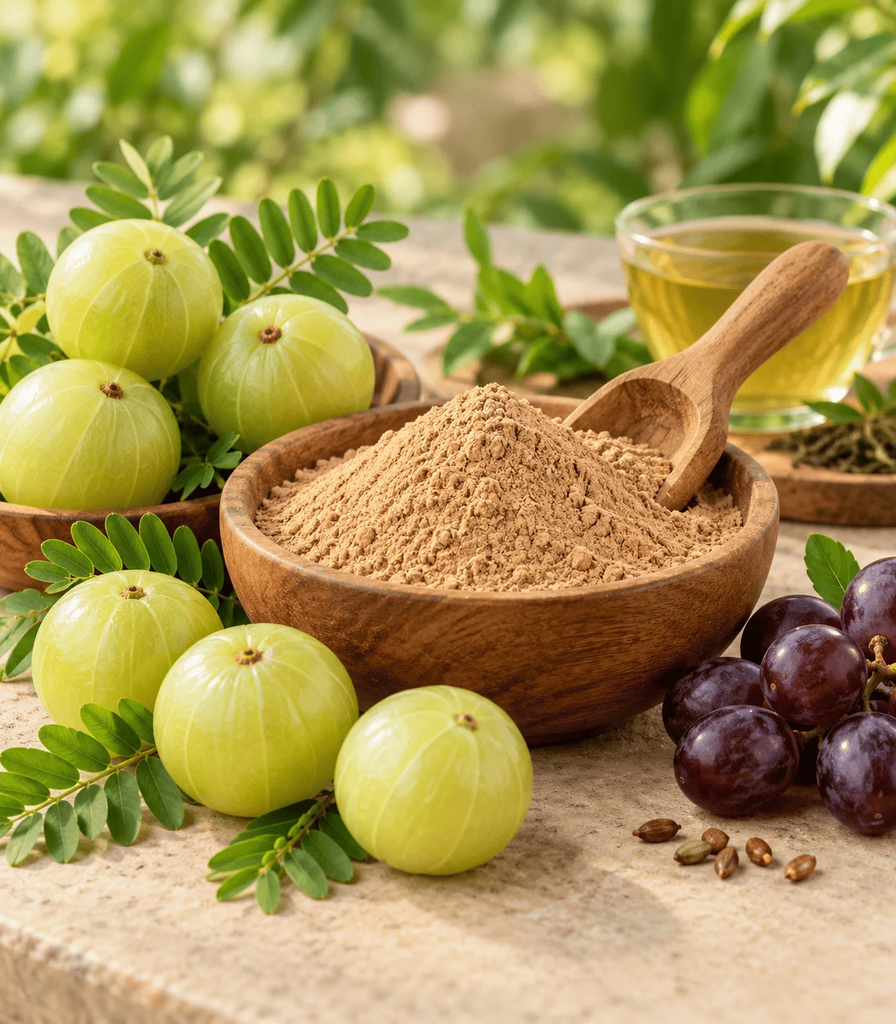
Ask most buyers what amla is known for, and the answer usually comes back in two words: vitamin C. That reputation is so strong that many purchase orders never mention anything else. The fruit actually carries a complex mix of tannins, phenolic acids and related compounds that rarely make it onto a spec sheet. If you buy Amla Extract on vitamin C alone, you may be judging it by its least reliable feature.
This also has a commercial angle. A buyer who understands the polyphenol side of Amla Extract can ask sharper questions, compare suppliers on firmer ground and avoid paying for a number that tells only part of the story. So what really sits inside the fruit?
Why Vitamin C Tells Only Part of the Amla Story
It is reported that vitamin C occurs in amla only in trace quantities. Its own amla extract brand is standardized to 10% beta-glucogallin, a small gallic acid and glucose compound, rather than to vitamin C.
Older Indian research points in the same direction. An ICAR paper cites earlier work suggesting that amla’s “vitamin C-like” activity comes from low-molecular-weight hydrolysable tannins, not from ascorbic acid itself.
Perhaps that comes as a surprise. It surprises plenty of people new to this fruit. It also changes what a sensible specification should ask for.
The Hydrolysable Tannins Inside Amla Fruit
Let’s sort them out. Researchers usually divide the main polyphenols in amla into a few loose groups:
- Simple phenolic acids, such as gallic acid and ellagic acid
- Gallotannins and galloyl glucoses, such as beta-glucogallin and digalloyl glucose
- Ellagitannins, such as corilagin, chebulagic acid and geraniin
- Mucic acid gallates, which show up less often in marketing but appear often in lab work
- Flavonoids, present in smaller amounts
A 2021 study of the fruit’s tannin fraction tentatively identified 110 compounds. These included 45 hydrolysable tannins, 22 mucic acids, 15 phenolic acids and 15 flavonoids.
The same team proposed nine marker compounds for quality checks. These were gallic acid, punicalagin A and B, methyl gallate, geraniin, corilagin, chebulinic acid, chebulagic acid and ellagic acid.
That is a long list. Not every buyer needs all nine on a certificate, but knowing they exist helps when a supplier offers just one vague “tannin” figure.
Which Polyphenols Show Up Most in Amla Extract
Abundance matters more than a long list of names. A 2012 study in the Journal of Agricultural and Food Chemistry looked at methanol extracts of dried amla fruit.
The most abundant compounds included mucic acid gallate, monogalloylglucose, gallic acid, digalloylglucose and chebulagic acid. The researchers detected 144 peaks in total and tentatively identified 67.
Here is why that matters for you. Fruit from two cultivated varieties differed from wild fruit in both the amount and the profile of phenolic compounds. Two amla lots can share a name and still carry different chemistry.
An ICAR study of six cultivars made a similar point when it measured ellagic acid separately by HPLC. Cultivar choice quietly shapes what ends up in the drum, and few suppliers mention it unless you ask.
How Test Methods Change the Tannin Numbers
Now for the less tidy part. A single amla product can produce very different numbers depending on how the lab tests it.
One standardisation study of an amla capsule reported 6.32% vitamin C, 9.96% gallic acid and 24.12% tannins. Each figure came from a different method. The lab measured tannins gravimetrically, vitamin C by UV spectrophotometry and gallic acid by HPLC.
Method choice carries real weight. Permanganate titration, a common tannin test, tends to overestimate results because it oxidises other compounds along with the tannins. HPLC identifies and measures individual compounds simultaneously.
A UHPLC method published in Planta Medica measured eight hydrolysable tannins across amla and three Terminalia species in one run. Methods like this let you see named compounds instead of a lumped total.
So a “40% tannins” claim and a “10% beta-glucogallin by HPLC” claim are not the same kind of promise. One describes a broad group, and the other names a molecule.
Choosing Polyphenol Markers for Your Amla Specification
What should you do with all this? A practical starting point might look like this:
- Pick one or two named markers, such as gallic acid, beta-glucogallin or ellagic acid, instead of total tannins alone.
- Ask for the method behind every percentage, whether HPLC, UHPLC, gravimetric or titration.
- Request the fruit source, including whether it came from a cultivated variety or wild collection.
- Compare results from at least three lots to see how much the profile moves.
Vitamin C can still appear on the certificate if your market expects it. Just don’t let it be the only number you rely on.
Some formulators prefer total polyphenols because it is cheaper to test, and that choice can work for a simple product, for a label claim or a premium positioning, named markers give you far firmer ground.
Discussing Botanical Polyphenol Specifications with a Manufacturer
ShriNanda Herbs manufactures herbal extracts, conventional powders and phytochemicals in Uttarakhand. The company runs an in-house testing facility that checks its extracts for purity and potency.
If your product depends on polyphenol markers rather than a single vitamin figure, share your specification with the team to discuss what they can support.
