
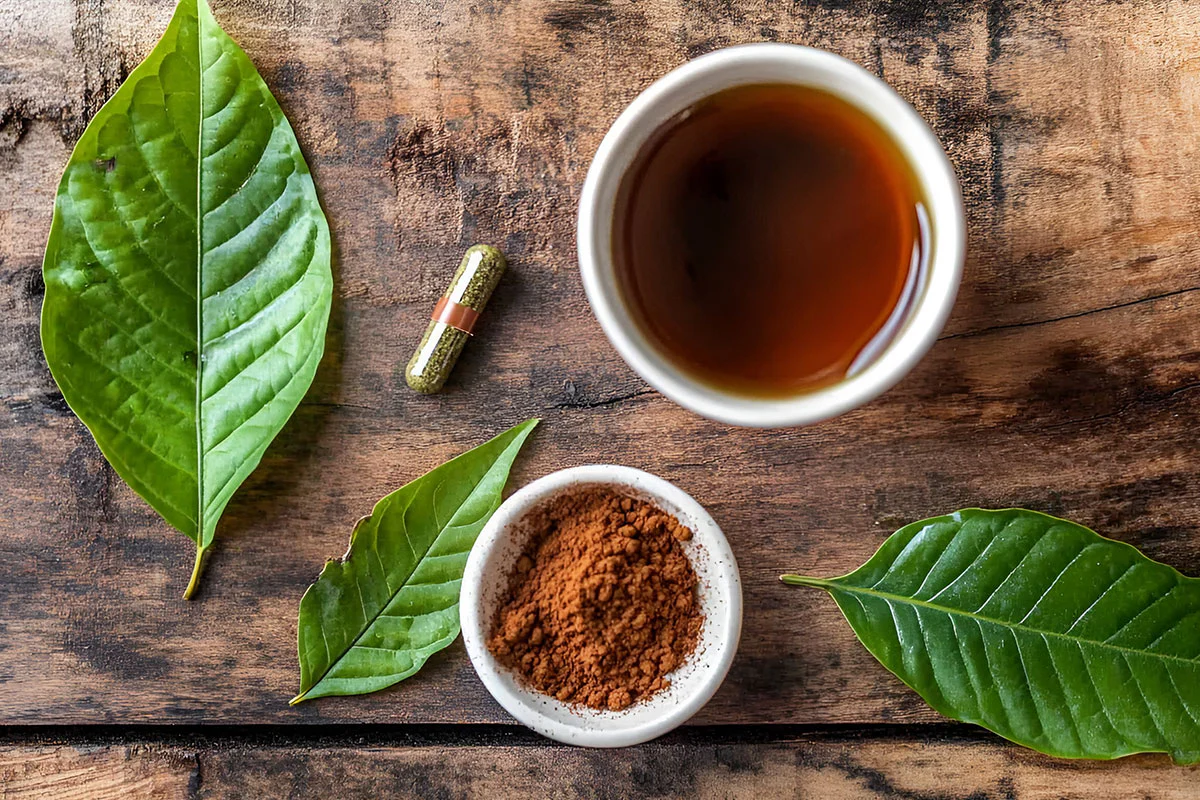
If you have ever explored the world of herbal supplements, you have likely tripped over the word “Kratom.” It is often discussed in the same breath as morning coffee or evening chamomile, yet it feels infinitely more mysterious.
Is it a tea? A supplement? A botanical wonder? Scientifically known as Mitragyna speciosa, Kratom is a tropical evergreen tree from Southeast Asia. In 2026, it remains a hot topic for researchers and wellness enthusiasts alike.
In this guide, we will break down the real-world kratom powder benefits, the logic behind how it works, and why “dosage” is the most important word in the Kratom dictionary.
The Coffee Connection: Understanding the Origin
To understand Kratom, you first have to look at its family tree. Believe it or not, Kratom belongs to the Rubiaceae family—the same family as the coffee plant.
In its native regions like Thailand and Malaysia, laborers have chewed the leaves for centuries to fight fatigue and boost productivity under the hot sun. When these leaves are dried and ground, they become the fine kratom powder we see in the market today.
The Science of Two Sides: Stimulant vs. Sedative
Kratom is a bit of a pharmacological shapeshifter. Unlike most supplements that do one thing, Kratom’s effects change based on how much you take. This is due to its active alkaloids, primarily mitragynine and 7-hydroxymitragynine.
1. Low Dose: The Productivity Partner
At lower doses (typically 1 to 5 grams), many users report stimulant-like effects.
- Increased Energy: Similar to a strong cup of tea but without the caffeine jitters.
- Enhanced Focus: Users often feel more “dialed in” to their work or social tasks.
- Mood Elevation: It can provide a subtle sense of optimism that helps navigate a stressful Monday.
2. High Dose: The Evening Wind-Down
When the dosage increases (above 5 grams), the alkaloids begin to interact more heavily with the brain’s opioid receptors. This shifts the experience toward sedative-like effects.
- Physical Comfort: Many people use kratom powder specifically to manage long-term physical discomfort.
- Relaxation: It helps quiet the “background noise” of a busy mind, making it easier to decompress after a long day.
- Support for Sleep: For some, the calming nature of a higher dose is a preferred alternative to traditional evening aids.
Most Reported Kratom Powder Benefits
While the FDA has not approved Kratom for medical use, thousands of people in Western countries self-report significant improvements in their quality of life. Here are the most common reasons people turn to this botanical:
- Managing Withdrawal: One of the most significant (and studied) uses is for managing cravings and withdrawal symptoms associated with other substances.
- Discomfort Relief: Because it binds to receptors in the brain similar to how traditional relief agents do, it is a frequent choice for those seeking a plant-based option for body aches.
- Social Ease: Because it can reduce social “rustiness,” some find it makes talking to strangers or networking much less intimidating.
- Energy Maintenance: For those who find coffee too harsh on the stomach, Kratom offers a different path to staying alert.
Why “Dry Weight” and “Lab Testing” Matter
In the world of kratom powder benefits, quality is everything. Not all powder is created equal. Because the industry is still evolving its regulations in 2026, the burden of “trust” often falls on the consumer.
Expert Insight: Always look for a Certificate of Analysis (COA). This document proves that the powder has been tested for heavy metals (like lead) and microbes (like Salmonella). Since Kratom grows in soil, it is a “bio-accumulator,” meaning it soaks up whatever is in the ground. Clean soil equals clean powder.
Safety First: Staying Human and Healthy
We have to be real here: because Kratom interacts with the brain’s receptors, it carries a risk of dependence if used excessively.
The Logic of Responsible Use:
- Start Low: If you are new, start with a “micro-dose” (under 2 grams) to see how your body reacts.
- Hydrate: Kratom is notoriously dehydrating. Drink more water than you think you need.
- Rotate Strains: Using the same strain every day can lead to “stagnant strain syndrome,” where the effects seem to disappear. Switching between “Red,” “White,” and “Green” veins can help.
- Talk to a Pro: If you are taking other medications (especially for blood pressure or liver health), check with your doctor. Kratom can interact with certain enzymes in the liver.
Conclusion: A Balanced Approach to Botanical Wellness
The kratom powder benefits are vast, but they require a respectful approach. Whether you are seeking a morning spark or evening serenity, this Southeast Asian leaf offers a unique, plant-based versatility that few other botanicals can match.
By focusing on high-quality, lab-tested sources and keeping your dosages mindful, you can explore the world of Kratom safely and effectively.
Verified Resources:
- National Institute on Drug Abuse (NIDA): Kratom Research and Reports (2026 Update).
- Mayo Clinic: Understanding the Risks and Reported Benefits of Kratom.
- American Kratom Association (AKA): Good Manufacturing Practice (GMP) Standards.
Final Thought: Wellness isn’t about finding a magic pill; it’s about finding the right tools for your specific body. Listen to your system, stay informed, and always prioritize quality over price.
