
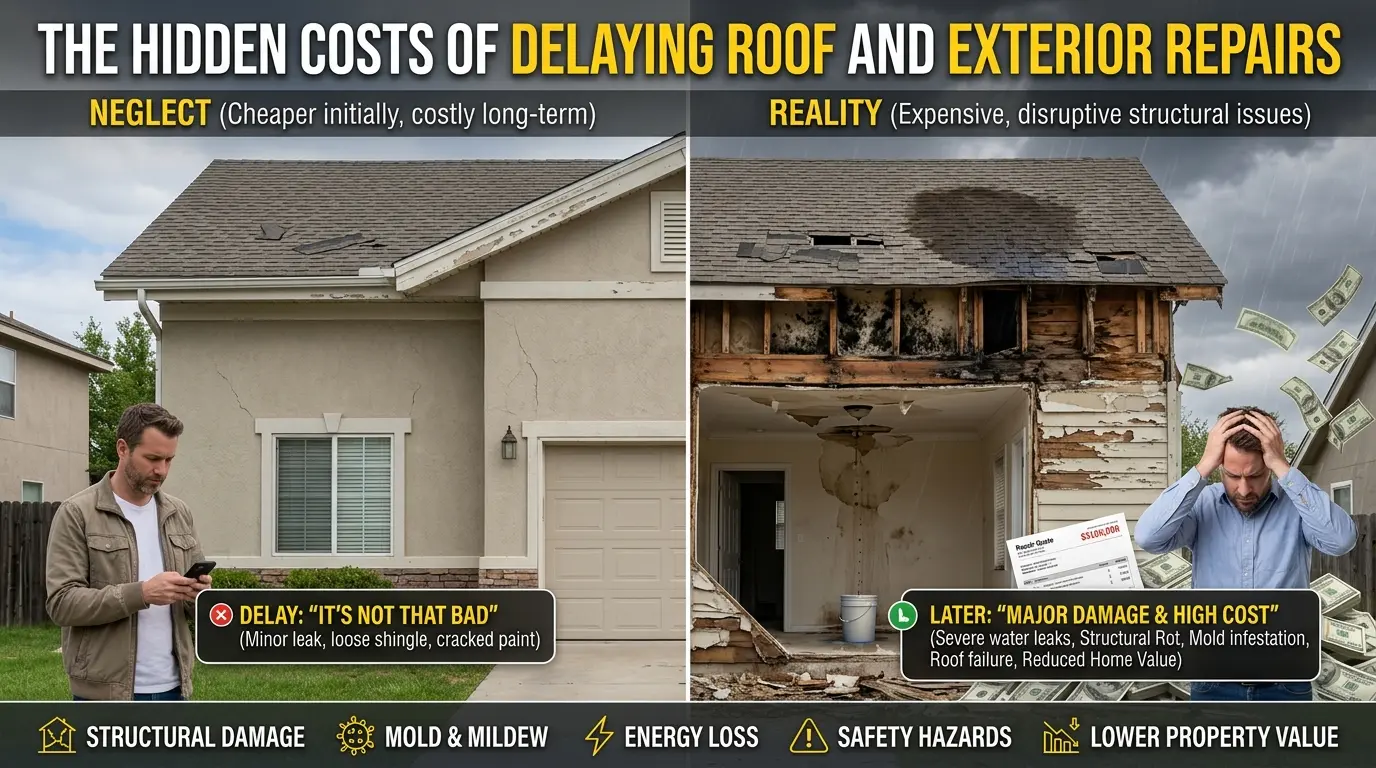
Most homeowners understand that roofs and exterior systems require maintenance, but many delay inspections or repairs until visible problems become impossible to ignore. Unfortunately, waiting too long can create a chain reaction of issues that affect far more than the outside appearance of a home.
Minor exterior concerns rarely stay minor forever. A small roofing issue can eventually lead to insulation damage, moisture buildup, weakened structural materials, and expensive restoration work. The same is true for gutters, siding, flashing, and ventilation systems. Preventive care often costs significantly less than major repairs caused by long-term neglect.
Understanding how exterior systems work together can help homeowners make smarter decisions before problems escalate.
Why Exterior Maintenance Should Be Proactive
The exterior of a home faces constant exposure to weather, changing temperatures, and environmental stress. Wind, rain, humidity, UV rays, and seasonal storms gradually wear down materials over time.
Because damage develops slowly, many homeowners overlook warning signs until leaks or interior issues appear. However, by the time visible water stains or structural symptoms emerge, the underlying damage may already be extensive.
A proactive maintenance strategy helps reduce the likelihood of:
- Water intrusion
- Mold growth
- Structural deterioration
- Rising utility costs
- Premature material failure
- Emergency repair expenses
Routine inspections can help identify these concerns early while repairs remain more manageable.
Roofing Systems Do More Than Keep Rain Out
A roof is one of the most important protective systems in any home. While shingles are the most visible component, a complete roofing system includes underlayment, flashing, decking, ventilation, and drainage elements that all work together.
When one area weakens, the entire system may become vulnerable.
For example, damaged flashing around chimneys or vents can allow water infiltration even if shingles appear intact. Poor attic ventilation may trap moisture and heat, shortening the lifespan of roofing materials from the inside out.
Some common indicators that a roof may need professional attention include:
Curling or Missing Shingles
Aging or storm-damaged shingles may expose underlying materials to moisture.
Granule Accumulation
Shingle granules collecting in gutters often indicate wear and deterioration.
Interior Water Stains
Discoloration on ceilings or walls can signal hidden roof leaks.
Uneven Temperature Levels
Poor ventilation and insulation performance may contribute to inconsistent indoor comfort.
Addressing these issues early may help homeowners avoid larger structural concerns later.
Gutters and Drainage Systems Play a Bigger Role Than Expected
Gutters are often overlooked because they seem simple compared to roofing systems, but effective drainage is essential for protecting a home.
When gutters become clogged or damaged, rainwater may overflow near the foundation or seep into vulnerable exterior areas. Over time, this excess moisture can contribute to erosion, basement leaks, wood rot, and foundation movement.
Proper drainage helps direct water safely away from:
- Roof edges
- Siding materials
- Foundation walls
- Landscaping features
- Basement areas
Regular gutter cleaning and inspections are among the simplest ways homeowners can reduce preventable moisture-related problems.
Siding Helps Protect Structural Integrity
Siding is not only decorative. It also acts as a barrier against moisture, pests, and environmental exposure.
Cracks, warping, loose panels, or deteriorating seams may allow water to penetrate behind the surface. In some cases, hidden moisture can remain trapped inside wall cavities for long periods before becoming noticeable.
Well-maintained siding can help support:
- Indoor energy efficiency
- Moisture control
- Structural protection
- Long-term durability
- Overall curb appeal
When siding issues are identified early, repairs are often less invasive and less expensive.
Storm Damage Is Often Less Visible Than Homeowners Assume
Many people expect storm damage to be dramatic and obvious. In reality, weather-related damage is frequently subtle at first.
Hail can weaken shingles without creating immediate leaks. Wind may loosen flashing or lift roofing materials slightly, creating future vulnerabilities. Heavy rainfall can expose drainage weaknesses that were previously hidden.
Because these issues may not produce immediate symptoms, homeowners sometimes postpone inspections after storms. Months later, they discover moisture damage that could have been addressed much earlier.
Scheduling a professional assessment after severe weather events can help identify hidden concerns before they worsen.
Energy Efficiency and Exterior Condition Are Closely Connected
Exterior systems also influence how efficiently a home operates. Roofing materials, ventilation systems, insulation, and siding all contribute to temperature regulation.
When these systems are compromised, heating and cooling equipment often works harder to maintain indoor comfort. This can increase energy consumption and utility costs over time.
Exterior improvements that may support better efficiency include:
- Updated attic ventilation
- Improved insulation systems
- Energy-efficient roofing materials
- Sealed exterior gaps
- Moisture-resistant siding products
These upgrades can contribute to a more comfortable indoor environment while reducing unnecessary strain on HVAC systems.
Long-Term Planning Creates Better Results
One of the most effective approaches to exterior care is strategic planning rather than reactive repairs. Homeowners who schedule regular inspections and prioritize maintenance often experience fewer emergencies and lower long-term costs.
When evaluating roofing or exterior projects, it is helpful to consider:
Material Durability
Different products perform differently depending on climate conditions and weather exposure.
Maintenance Requirements
Some materials require more upkeep than others throughout their lifespan.
Ventilation and Moisture Control
Balanced airflow plays a major role in preserving structural integrity.
Installation Quality
Even high-quality materials may fail prematurely if improperly installed.
Homeowners researching exterior protection and roofing considerations can explore additional information athttps://www.idealroofingandexteriors.com/.
Conclusion
Exterior systems quietly protect homes every day, yet they are often overlooked until serious problems develop. Roofing, siding, gutters, and ventilation all work together to prevent moisture intrusion, support energy efficiency, and preserve structural stability.
Delaying repairs may seem cost-effective in the short term, but minor issues can become major expenses when left unresolved. Preventive maintenance, routine inspections, and timely upgrades help homeowners reduce risks while extending the lifespan of critical exterior components.
By taking a proactive approach to exterior care, homeowners can better protect their property, maintain long-term value, and avoid the stress that often comes with unexpected repairs.
