
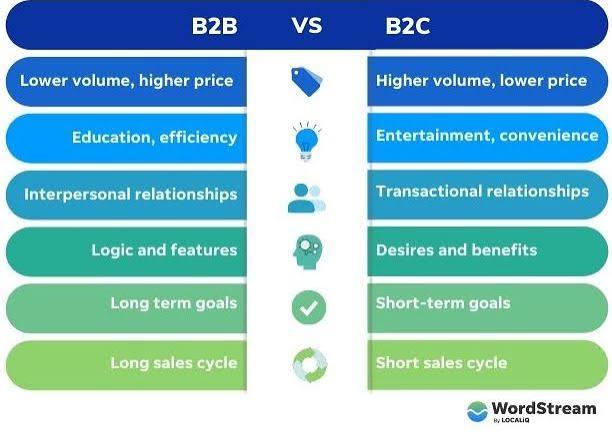
The business world is broadly divided into two major models: business to business, commonly known as B2B, and business to consumer, commonly known as B2C. Although both models aim to generate revenue and build successful organizations, they differ significantly in how they attract customers, market products, build relationships, and create long term growth. Understanding these differences is essential for entrepreneurs who want to develop effective strategies and compete successfully in today’s marketplace.
Whether you are launching a startup or expanding an existing enterprise, selecting the right business model influences every aspect of your operations. From pricing and branding to customer service and sales techniques, B2B and B2C companies require different approaches. Businesses planning to register a trading company in Hong Kong should also understand these differences because Hong Kong provides an excellent environment for both business models through its strong legal framework, international trade connections, and business friendly policies.
This guide explains the major differences between B2B and B2C business strategies, helping entrepreneurs choose the right approach for their goals.
Understanding B2B Business
Business to business refers to companies that sell products or services directly to other businesses instead of individual consumers. These businesses often provide raw materials, software, consulting services, manufacturing equipment, logistics solutions, or wholesale products.
A B2B company typically focuses on building long term partnerships. Instead of attracting thousands of individual buyers, success often depends on maintaining strong relationships with a smaller number of high value clients. Trust, reliability, and expertise are essential because business customers make purchasing decisions based on return on investment rather than emotional appeal.
Examples of B2B businesses include accounting firms, software providers, industrial manufacturers, commercial suppliers, and marketing agencies.
Understanding B2C Business
Business to consumer companies sell products or services directly to individual customers. Retail stores, restaurants, clothing brands, online marketplaces, beauty companies, and entertainment platforms all operate under the B2C model.
Unlike B2B businesses, B2C companies focus on reaching a large audience and encouraging frequent purchases. Customer experience, convenience, pricing, and emotional branding play major roles in attracting and retaining buyers.
Digital commerce has significantly expanded B2C opportunities, allowing businesses to reach customers across different countries through online platforms.
Differences in Customer Decision Making
One of the biggest distinctions between B2B and B2C lies in how customers make purchasing decisions.
Business customers usually involve multiple decision makers before approving a purchase. Managers, finance teams, executives, and procurement departments often evaluate products based on quality, cost savings, efficiency, and long term value. Because of this process, B2B sales cycles tend to be longer.
Consumer purchases are generally much faster. Individual buyers often make decisions based on personal preferences, convenience, price, brand reputation, or emotional appeal. Marketing campaigns designed for consumers therefore focus on creating immediate interest and encouraging quick purchasing decisions.
Sales Process Comparison
The sales process in B2B businesses is usually more detailed and relationship driven.
Sales representatives often conduct meetings, product demonstrations, negotiations, and customized presentations before closing a deal. Contracts may involve large financial commitments and long term agreements.
In contrast, B2C sales emphasize speed and simplicity. Customers expect straightforward purchasing experiences whether shopping in physical stores or online. Businesses invest heavily in user friendly websites, secure payment systems, and efficient checkout processes to reduce purchasing barriers.
Marketing Strategies
Marketing approaches differ significantly between the two models.
B2B marketing focuses on educating potential clients and demonstrating expertise. Companies publish detailed reports, case studies, webinars, and professional articles that explain how their solutions improve business performance. Networking events and industry conferences also play important roles in building credibility.
B2C marketing focuses on capturing attention quickly through engaging advertisements, social media campaigns, influencer collaborations, and emotional storytelling. Consumers respond well to memorable branding and personalized experiences that create lasting impressions.
Branding Approaches
Although branding matters for both business models, the objectives differ.
B2B brands prioritize professionalism, trust, expertise, and reliability. Business customers need confidence that suppliers can consistently deliver quality products or services.
B2C brands emphasize emotional connections. Successful consumer brands often build communities around shared values, lifestyles, or aspirations. Attractive packaging, creative advertising, and memorable customer experiences strengthen brand loyalty.
Pricing Strategies
Pricing structures also vary considerably.
B2B pricing often depends on order volume, customized solutions, contract duration, and ongoing partnerships. Businesses may negotiate pricing individually with each client based on specific requirements.
B2C pricing is generally fixed and transparent. Consumers expect clear prices that allow quick comparisons between competing products.
Discounts, seasonal promotions, and loyalty programs frequently encourage repeat purchases in B2C markets.
Customer Relationships
Building relationships remains essential regardless of the business model, but the approach differs.
B2B companies invest heavily in maintaining long term partnerships. Dedicated account managers, regular communication, technical support, and personalized service help strengthen business relationships over many years.
B2C businesses focus on creating positive customer experiences that encourage repeat purchases. Fast customer support, personalized recommendations, and convenient shopping experiences contribute to long term customer loyalty.
Digital Transformation in Both Models
Technology has transformed both B2B and B2C operations.
Business customers increasingly research suppliers online before making purchasing decisions. Professional websites, search engine optimization, educational content, and virtual demonstrations have become essential components of B2B marketing.
Consumer businesses rely heavily on ecommerce, mobile applications, digital advertising, and social media engagement to reach modern shoppers.
Many entrepreneurs planning to register a trading company in Hong Kong integrate digital technologies from the beginning because doing so enables efficient international trade, streamlined operations, and stronger customer engagement.
Expanding into International Markets
Globalization has created opportunities for both B2B and B2C companies to serve customers worldwide.
Businesses seeking international expansion often choose to register a trading company in Hong Kong because the region offers strategic geographic positioning, efficient logistics, internationally recognized financial services, and access to major Asian markets. Whether supplying businesses or selling directly to consumers, establishing operations in Hong Kong can simplify cross border trade while supporting long term business growth.
The ability to reach international customers through digital platforms has reduced barriers that previously limited expansion for small and medium sized businesses.
End of Part 1.
