
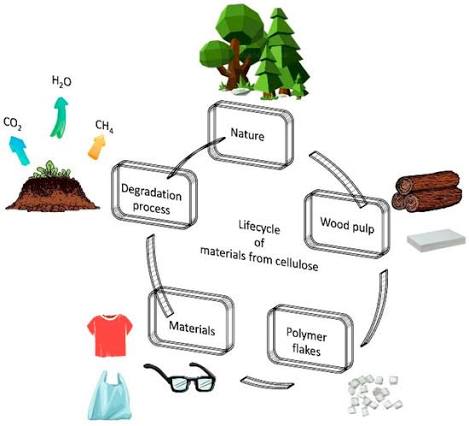
Plastic materials are widely used in packaging, agriculture, construction, healthcare, electronics, and consumer products. However, conventional plastics can remain in the environment for many years after disposal. This has increased the demand for 可生物降解热塑性材料, which can provide useful performance while helping reduce long-term plastic waste. These materials can be processed using common thermoplastic manufacturing techniques and may break down under suitable environmental or industrial composting conditions.
What Are Biodegradable Thermoplastic Materials?
Biodegradable thermoplastic materials are polymers that become flexible when heated and solidify after cooling. This feature allows manufacturers to process them through extrusion, injection moulding, film blowing, compression moulding, and other established methods. Unlike many traditional plastics, 可生物降解热塑性材料 are designed to decompose through biological activity under specified conditions.
Biodegradation does not always happen immediately or in every environment. The decomposition rate depends on temperature, moisture, oxygen, microorganisms, polymer thickness, and chemical structure. Therefore, companies must evaluate the intended disposal environment before selecting a material. Products designed for industrial composting may not biodegrade at the same rate in soil, freshwater, seawater, or home composting conditions.
The Role of Polyvinyl Alcohol
Polyvinyl alcohol, commonly known as PVOH or PVA, is a water-soluble synthetic polymer used in films, adhesives, coatings, paper processing, ceramics, textiles, and several other industrial applications. A dependable PVOH 制造商 can offer different grades based on viscosity, molecular weight, degree of hydrolysis, solubility, and required mechanical performance.
PVOH is especially valuable in sustainable material development because it has excellent film-forming ability, strong adhesion, good oxygen-barrier properties, and compatibility with several natural polymers. Under suitable conditions, certain PVOH grades can be biodegraded by microorganisms. However, biodegradation performance depends on the selected grade, formulation, thickness, and disposal environment. Manufacturers should avoid making broad environmental claims without proper testing.
Important Material Properties
The commercial success of 可生物降解热塑性材料 depends on more than biodegradability. The material must also provide sufficient strength, flexibility, stability, and processability during production and use. Packaging films, for example, may require high tensile strength, controlled water solubility, transparency, sealability, and resistance to oxygen.
PVOH can deliver strong oxygen-barrier performance, particularly under dry conditions. Its behaviour can change when humidity increases because the polymer naturally attracts moisture. An experienced PVOH 制造商 can help customers choose a suitable grade or recommend formulation adjustments to control moisture sensitivity.
Plasticisers such as glycerol or sorbitol may be added to improve flexibility and thermoplastic processing. Nevertheless, excessive plasticiser can reduce strength, increase stickiness, or change water resistance. The final formulation must balance processability with the required product performance.
Blending PVOH With Other Materials
PVOH may be blended with starch, cellulose derivatives, natural fibres, proteins, or other biodegradable polymers to develop specialised materials. Starch is economical, renewable, and widely available, but it may have limited strength and moisture resistance when used alone. Combining it with PVOH can improve film formation, flexibility, and mechanical performance.
Natural fillers may also reduce material costs and increase the renewable content of a formulation. However, poor compatibility between components can create weak areas inside the finished product. Particle size, moisture level, mixing conditions, and processing temperature must be carefully controlled. Working with a technically capable PVOH 制造商 can help businesses select a grade that interacts effectively with other ingredients.
Manufacturing and Processing Considerations
Producing high-quality 可生物降解热塑性材料 requires precise control over heat, moisture, and residence time. PVOH has a relatively narrow thermal-processing range because degradation can begin close to its melting or softening temperature. Appropriate plasticisation and carefully selected equipment settings are therefore essential.
Raw materials should be stored under controlled conditions to prevent unwanted moisture absorption. During extrusion, temperature zones, screw speed, pressure, and cooling must be optimised. Inconsistent conditions may cause discolouration, bubbles, poor surface quality, or reduced mechanical strength. A reliable PVOH 制造商 should provide technical data and processing recommendations for the supplied grade.
Common Applications
Biodegradable thermoplastics can be used in water-soluble packaging films, laundry and dishwasher capsules, agricultural products, temporary protective coatings, shopping bags, compostable packaging, and selected medical or hygiene products. PVOH-based films are particularly useful when controlled water solubility is required.
The material can also act as a binder in ceramic processing, paper coatings, seed treatments, and construction-related formulations. The correct application depends on the polymer grade and the desired balance between solubility, durability, flexibility, and environmental performance.
Testing and Environmental Claims
Companies must verify performance through recognised laboratory testing before marketing a product as biodegradable or compostable. Biodegradability, disintegration, chemical safety, and ecotoxicity are different factors and may require separate evaluations. A product that breaks into smaller pieces is not necessarily fully biodegradable.
Manufacturers should also consider the complete product life cycle, including raw material sourcing, energy consumption, production waste, transportation, product use, and disposal. Certifications and claims should match the conditions under which the finished product was tested.
Conclusion
可生物降解热塑性材料 can support the transition towards products with a lower long-term environmental impact. PVOH offers valuable properties such as water solubility, film formation, adhesion, and oxygen-barrier performance, making it suitable for many innovative formulations.
Choosing the right Pvoh 制造商商 is an important step in achieving consistent quality and reliable processing. With careful grade selection, balanced formulation, controlled production, and verified biodegradation testing, businesses can develop thermoplastic products that meet practical performance requirements while supporting more responsible material use.
