
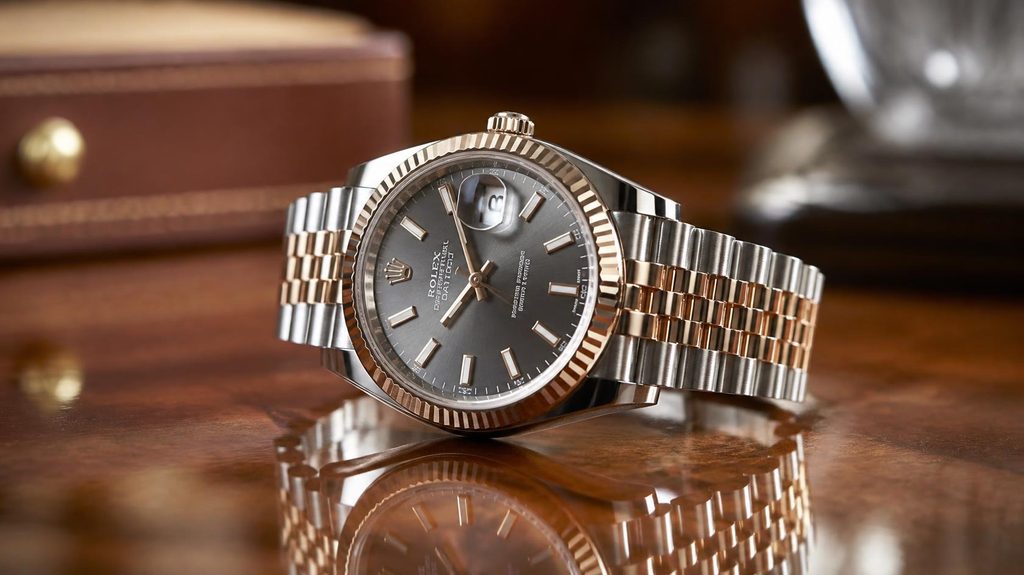
A fine mechanical watch represents a unique meeting point between technology and tradition. While modern devices have made timekeeping almost effortless, mechanical watches continue to attract people who appreciate intricate engineering, refined design, and the history behind a carefully crafted object.
Few names illustrate this enduring interest as clearly as Rolex. Over the course of its history, the company has developed a distinctive approach centered on reliability, recognizable aesthetics, technical development, and long-term ownership. Its watches have become familiar across generations, but their significance is easier to understand when viewed through the broader history of mechanical watchmaking.
The Evolution of the Wristwatch
The wristwatch became increasingly practical during the early twentieth century. Smaller movements and improvements in manufacturing allowed watches to be worn conveniently throughout the day.
However, portability created new challenges. Unlike a pocket watch that could remain relatively protected, a wristwatch was exposed to movement, moisture, dust, and accidental impacts.
Creating a dependable wristwatch therefore required more than simply reducing the size of an existing movement. Manufacturers had to rethink case construction and protection.
Rolex became associated with this period of innovation through developments such as the Oyster case, which helped improve resistance to environmental exposure. This was an important step in demonstrating that a wristwatch could be both elegant and capable of handling everyday conditions.
The Engineering Inside a Mechanical Watch
The movement is the heart of a mechanical timepiece.
A mechanical movement stores energy in a mainspring and gradually releases it through a series of gears. The escapement controls this release, while the balance assembly regulates the movement’s oscillations.
Although the principle is relatively straightforward, implementing it on such a small scale is an impressive engineering challenge.
Each component must interact correctly with the others. Manufacturing tolerances need to be carefully controlled, surfaces must be appropriately finished, and the completed movement requires proper adjustment.
This intricate mechanism is a major part of the appeal for enthusiasts. A mechanical watch is not simply an object displaying the time; it is a compact machine operating continuously on the wrist.
The Pursuit of Reliable Performance
Mechanical watchmaking has always involved a search for improved accuracy and reliability.
A movement can be affected by temperature, position, magnetic fields, and physical shocks. Watchmakers have therefore developed better materials, manufacturing processes, and movement designs to reduce these influences.
Modern production methods allow tiny components to be manufactured with considerable consistency. Quality-control procedures then help identify potential issues before a watch reaches its owner.
The result is a balance between traditional mechanical principles and modern precision manufacturing.
For enthusiasts, this combination is especially appealing because it preserves the character of mechanical watchmaking while benefiting from contemporary engineering.
The Importance of a Consistent Design Language
Design longevity is one of the defining characteristics of successful luxury products.
Rolex has generally evolved its collections gradually, preserving recognizable features while introducing technical improvements and refinements. This approach creates a visual connection between watches from different generations.
A vintage example may therefore look related to a contemporary model even when the underlying technology has changed significantly.
This continuity is valuable to collectors because it allows them to understand a model as part of a larger historical progression.
It also makes classic designs versatile. A watch that avoids extreme fashion trends can remain appropriate across different environments and styles.
When Professional Requirements Influence Design
Many influential mechanical watches were developed in response to professional needs.
Divers required reliable underwater timing instruments. Pilots needed easily readable displays. Explorers and other professionals required equipment capable of operating in challenging environments.
These practical requirements influenced case construction, dial layouts, bezels, and other features.
Today, owners may purchase professional-style watches for everyday use rather than for extreme activities. Nevertheless, the original purpose remains part of the product’s story.
This connection between function and history adds depth to watch collecting. A design feature can represent not only an aesthetic choice but also a solution to a real-world engineering problem.
Materials and Precision Manufacturing
The materials used in a watch have a direct influence on its durability and appearance.
Stainless steel is valued for its strength and resistance to corrosion. Precious metals offer distinctive visual qualities and weight. Sapphire crystal provides strong resistance to everyday scratching.
Ceramic can also be useful for components where hardness and resistance to wear are important.
Yet high-quality materials are only effective when combined with precise manufacturing.
Components must be machined accurately, surfaces need appropriate finishing, and assembly must be carried out carefully. Small details can have a significant effect on both performance and appearance.
The finished product is therefore the result of many interconnected manufacturing decisions.
Exploring the Pre-Owned Market
The secondary market has become an important part of luxury-watch culture.
Pre-owned watches can provide access to discontinued models, vintage references, and examples with histories that make them particularly interesting to collectors.
However, condition is a crucial consideration.
Two watches with the same reference can have very different levels of wear. One may have been carefully maintained, while another could have undergone extensive polishing, component replacement, or inconsistent servicing.
Documentation can help buyers understand an individual watch’s history. Service records, purchase documents, and other supporting information may all be useful.
Anyone researching the subject can explore rolex for additional watch-related resources.
Authentication Should Be a Priority
The popularity of luxury watches also creates challenges for buyers.
Counterfeit products can imitate external characteristics, making it increasingly difficult to rely on appearance alone. Authenticity may require a closer examination of the movement, case construction, dial, finishing, and other details.
For an expensive purchase, professional authentication can provide valuable reassurance.
The seller’s reputation is also important. Buyers should look for transparent descriptions, appropriate documentation, clear photographs, and straightforward answers to questions about condition and provenance.
An unusually low price should be investigated carefully rather than automatically viewed as a bargain.
Caring for a Mechanical Timepiece
Long-term ownership involves more than simply wearing a watch.
Mechanical movements contain numerous moving components. Over time, lubrication can deteriorate and individual parts can experience wear.
Professional servicing allows a qualified technician to inspect the movement and address problems that may not be visible from the outside.
Water resistance also requires attention. Seals can age and lose effectiveness, meaning that a watch’s original resistance should not necessarily be assumed to remain unchanged indefinitely.
Owners can also help preserve their watches by avoiding unnecessary impacts, storing them properly, and following appropriate maintenance recommendations.
The Emotional Side of Luxury Watches
Technical specifications are only one reason people become attached to mechanical watches.
A timepiece can mark an important personal milestone. It might be purchased after completing an education, achieving a professional goal, celebrating an anniversary, or reaching another significant moment.
Because a well-maintained mechanical watch can remain functional for many years, it may eventually become an heirloom.
The object can therefore acquire meaning beyond its original purchase.
Signs of wear can even become part of the story. A small scratch or worn bracelet may remind the owner of years of use rather than simply representing damage.
Developing a Collector’s Perspective
People who become interested in watch collecting often discover that knowledge changes how they see timepieces.
Learning about movements, references, materials, complications, case construction, and historical development makes subtle differences easier to appreciate.
It also helps collectors identify their own preferences.
Some are drawn to vintage watches and historical significance. Others prefer modern manufacturing techniques or professional designs. Some appreciate minimalism, while others enjoy complicated movements and distinctive materials.
A collection does not need to follow a predetermined formula. Personal interest is often more important than market popularity.
Making an Informed Purchase
A thoughtful purchase begins with understanding how the watch will be used.
For everyday wear, comfort, durability, and versatility may be important. A collector may instead prioritize rarity, historical significance, or technical characteristics.
Case dimensions should not be ignored. Diameter, thickness, bracelet construction, and weight all influence how a watch feels on the wrist.
For pre-owned examples, condition and service history deserve particular attention.
It is also useful to consider future maintenance costs. A mechanical watch is a long-term object, and servicing should be regarded as part of responsible ownership.
Why Mechanical Watches Remain Relevant
The continued interest in mechanical watches is particularly remarkable given the availability of inexpensive and highly accurate electronic alternatives.
However, mechanical watches serve a different purpose.
They offer craftsmanship, tactile interaction, history, and a sense of permanence. They are objects designed to be maintained and appreciated over time rather than replaced whenever technology changes.
Rolex provides one of the most recognizable examples of this approach. Its combination of engineering, design consistency, and historical associations has allowed its watches to remain relevant across generations.
Readers interested in learning more about luxury watches can also visit replica rolex.
The Continuing Future of Traditional Watchmaking
Smartwatches have introduced an entirely different category of wearable technology. They provide communication, notifications, health monitoring, navigation, and countless other digital features.
Mechanical watches do not attempt to provide the same functionality.
Instead, their appeal lies in craftsmanship and longevity. A mechanical movement can be appreciated as a miniature engineering system independent of software or digital connectivity.
As technology becomes increasingly integrated into everyday life, this distinction may make traditional watchmaking even more appealing to people looking for something tangible and enduring.
Conclusion
The story of Rolex is closely connected to the broader evolution of mechanical watchmaking. From improvements in water-resistant case construction to advances in movement technology and manufacturing, the industry has continually refined the relationship between precision and durability.
Its enduring appeal comes from more than recognition. Design continuity, engineering, professional heritage, materials, and craftsmanship all contribute to the fascination surrounding these watches.
For anyone considering a luxury timepiece, research remains essential. Understanding authenticity, condition, maintenance, movement technology, and personal requirements can lead to a more satisfying purchase.
Ultimately, a mechanical watch is valuable not only because it measures time but because it represents an approach to craftsmanship that has survived generations of technological change. That combination of engineering, heritage, and personal meaning is what keeps fine watchmaking relevant today.
