
There is a certain appeal to skincare that feels closer to nature. A familiar herb, a botanical oil, or an ingredient with roots in Ayurveda can make a routine feel simpler and more intentional. But “herbal” on a label does not automatically tell you whether a product is well formulated.
That distinction matters. Good herbal products are not simply about putting plant ingredients into a bottle. They are about choosing appropriate ingredients, using them at sensible concentrations, formulating them carefully, and understanding how they interact with the skin.
If you are considering making herbal skincare part of your routine, a few simple considerations can help you look beyond the label.
Start by Looking at the Ingredients
The word herbal can mean different things to different brands. One product may contain a carefully selected botanical extract, while another may simply add a small amount of plant-derived fragrance to an otherwise conventional formula.
So, start with the ingredient list.
Look for familiar botanical ingredients and understand what they are intended to do. Aloe vera, neem, turmeric, rose, licorice, tulsi and various plant oils are commonly found in Ayurvedic and botanical skincare, but their presence alone does not determine whether a product will suit your skin.
The formulation around them matters just as much.
Understand What Your Skin Actually Needs
It is tempting to choose skincare based on ingredients that are currently popular. But your skin may have a completely different set of priorities.
Dry skin may benefit from moisturising ingredients and nourishing oils. Oily skin may prefer lighter textures and formulations that do not feel heavy. Sensitive skin often needs a shorter, simpler routine with fewer potential irritants.
This is where herbal products can fit into a routine without becoming the entire routine.
You do not need ten botanical products simply because they contain natural ingredients. A cleanser, moisturiser and sunscreen that work well for you can be far more useful than a crowded shelf.
Ayurveda Is More Than a List of Herbs
Ayurveda has a long history of using plants, oils and minerals as part of traditional approaches to personal care. But reducing Ayurvedic skincare to a list of ingredients misses the larger philosophy.
Traditional Ayurvedic practices often consider the individual, the environment and the way products are used rather than treating one ingredient as a universal solution.
Modern formulations can build on that knowledge while also considering stability, preservation, texture, concentration and skin compatibility.
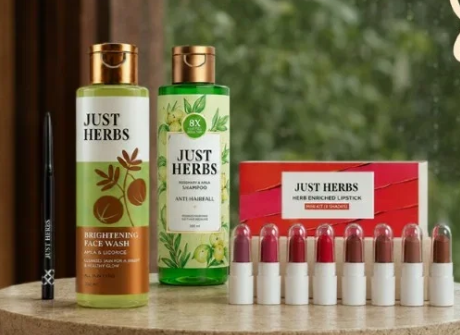
Brands such as Just Herbs represent this intersection, combining Ayurvedic ingredient traditions with contemporary cosmetic formulation approaches rather than treating heritage and modern science as opposites.
Pay Attention to the Formulation, Not Just the Hero Ingredient
A product may advertise turmeric, saffron or rose prominently on its packaging. That does not necessarily mean the ingredient is doing most of the work.
Skincare is a formulation, not a single ingredient.
The base, emulsifiers, preservatives, solvents, oils, extracts and active ingredients all contribute to how a product behaves. Two products containing the same botanical can feel completely different on the skin because their formulations are different.
This is especially important when buying herbal products online, where packaging often gives more attention to one attractive ingredient than to the complete formula.
Think About Your Existing Routine
Adding a new product is not always the answer.
If your current routine already includes several active ingredients, introducing multiple new botanical products at once can make it difficult to understand what your skin is responding to.
A more sensible approach is to introduce products gradually. Give your skin time to adjust, and pay attention to changes in texture, dryness, redness or comfort.
Skincare does not need to become complicated to become more thoughtful.
Consider How the Product Is Made
Ingredient sourcing can tell you something about a brand’s overall approach, but it should be considered alongside formulation quality.
For herbal skincare, factors such as the source of botanical ingredients, extraction method, processing, preservation and packaging can influence the final product.
Cold-pressed oils, plant waters and botanical extracts, for example, can be used in different ways depending on the formulation. What matters is not simply whether an ingredient sounds natural, but whether it has been incorporated appropriately.
This is one reason ingredient-conscious consumers are increasingly looking beyond attractive claims and asking more questions about how their skincare is actually made.
Give Your Skin Time
Skincare rarely needs to feel like an overnight transformation.
A comfortable cleanser may simply leave your skin feeling clean without tightness. A moisturiser may quietly improve how your skin feels throughout the day. A well-designed routine may not produce dramatic changes overnight, but it can become easier to maintain because your skin feels balanced and comfortable.
That slower perspective is useful when exploring herbal products.
Instead of expecting every botanical ingredient to deliver an immediate visible result, consider whether the product works comfortably within your routine over time.
Read Beyond the Word “Herbal”
The growing interest in herbal beauty reflects a broader shift in how people think about skincare. Consumers are paying closer attention to ingredients, sourcing, formulation practices and the relationship between traditional knowledge and modern cosmetic science.
That is a positive development, provided “natural” does not become a shortcut for “automatically better.”
The most thoughtful herbal products bring together several things: appropriate ingredients, careful formulation, responsible sourcing and a clear understanding of what the skin actually needs.
In the end, choosing herbal skincare is less about replacing every product in your bathroom with a botanical alternative. It is about becoming more aware of what you put on your skin and why.
And sometimes, that means choosing fewer products, understanding their ingredients better, and giving a good formulation enough time to do its job.
