
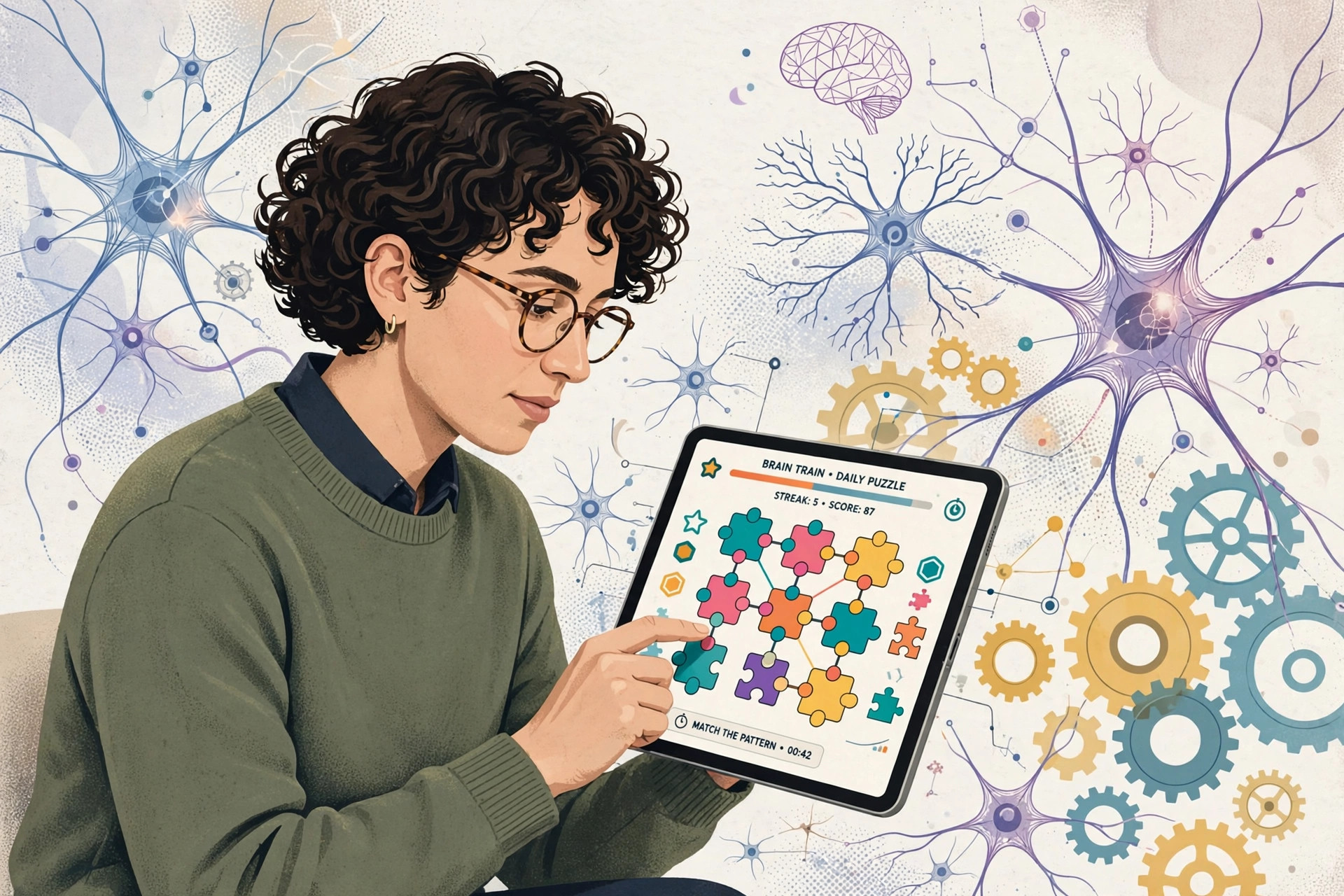
Brain-training apps promise a lot in a small download: a sharper memory, faster thinking, better focus at work, and even some protection against age-related decline. The pitch is appealing, But what does the evidence actually show when researchers test these products carefully, rather than relying on testimonials and rising in-game scores?
The short answer is nuanced. Brain games are not useless, but they are not a shortcut to a generally smarter brain either. People usually get better at the exact tasks they practise. Whether that improvement transfers to everyday thinking, long-term memory, or dementia risk is a much harder question, and the research there is mixed, modest, and often overstated in marketing.
What studies consistently find
The most reliable finding is known as near transfer. Practise a memory game and your score on similar memory tests tends to improve. Practise a speed-of-processing task and you may respond a little faster on related measures. That is real learning and can feel encouraging.
The problem is far transfer: the hope that training one narrow skill will lift unrelated abilities, such as managing finances, following a complex conversation, or remembering appointments without notes. Large reviews have generally found far-transfer effects to be small or inconsistent once studies use active control groups, proper blinding where possible, and tests that are not almost identical to the training itself.
Lumosity’s own myths-and-facts summary puts the point in a more balanced way than many headlines do: well-designed cognitive training can improve performance on practised skills and may extend further in some cases, but users should treat it like a workout routine, stay consistent, work at a challenging level, and not expect it to replace sleep, exercise, and social engagement.
Where the boldest claims go too far
Regulators have pushed back when companies have gone beyond the data. Claims that a game can prevent dementia, reverse cognitive decline, or improve conditions such as ADHD require far stronger evidence than most commercial products have produced. In past enforcement action in the United States, brain-training marketing was challenged precisely because advertising suggested benefits for real-world performance and age-related conditions that studies had not established.
Study design matters enormously here. If a control group does nothing while the training group plays an engaging game for weeks, any difference may reflect expectation, attention, or simply practice with computer-based testing. If participants are tested on tasks that closely mirror the game, improvement is almost guaranteed and tells us little about daily life. Good research therefore separates genuine cognitive change from becoming familiar with the test format.
There is also a hardware and habits side to any app routine. As our guide to how firmware and drivers shape specialized gaming hardware shows, the device and setup influence how smoothly a game runs, but no display, controller, or processor upgrade changes the underlying science of what training can transfer.
The more encouraging exceptions
Some findings deserve attention rather than dismissal. In one well-known experiment, a custom-designed multitasking video game study published through PubMed found that older adults improved their multitasking performance after adaptive training, with some gains in sustained attention and working memory and effects that persisted for months. That was a carefully designed intervention, however, not proof that every puzzle app produces the same result.
Speed-of-processing training has also attracted long-term interest, including follow-up work from large trials in older adults suggesting possible links with lower dementia incidence for a specific type of training with booster sessions. Those results remain debated and should not be converted into a promise for individual users, but they do suggest researchers should keep investigating which kinds of training, doses, and populations might benefit.
Context matters too. Keeping any health or puzzle app usable is part of sticking with a routine, as our article on keeping the app updated responsibly explains. An abandoned, buggy, or confusing app is unlikely to help anyone build a consistent habit, whatever its scientific claims.
What helps the brain more reliably
Compared with brain games, several everyday factors have broader and better-established support. Regular aerobic exercise is linked with better cardiovascular health and cognition. Adequate sleep supports memory consolidation and attention. Treating hearing loss, managing blood pressure and diabetes, staying socially engaged, and learning genuinely new skills, such as a language or musical instrument, all challenge the brain in varied, real-world ways.
None of this means you should delete a game you enjoy. Enjoyment, routine, and a sense of progress have value, and a puzzle may be a pleasant way to stay mentally active. The mistake is paying for certainty that science has not delivered, or using games as a substitute for medical advice if memory problems are new, worsening, or interfering with daily life. Sudden confusion, significant forgetfulness, or difficulty managing familiar tasks deserve a proper clinical conversation.
The bottom line
Are brain games effective? They are effective at making you better at brain games, sometimes modestly helpful on closely related measures, and unproven as a general defence against cognitive decline. That is the normal gap between a promising idea and settled science. If you play, choose a challenging product, be sceptical of disease claims, track whether you notice any benefit beyond the screen, and invest most of your effort in sleep, movement, social connection, and learning that extends beyond an app.
