
Rummy Card Game: A Guide to Card Combinations
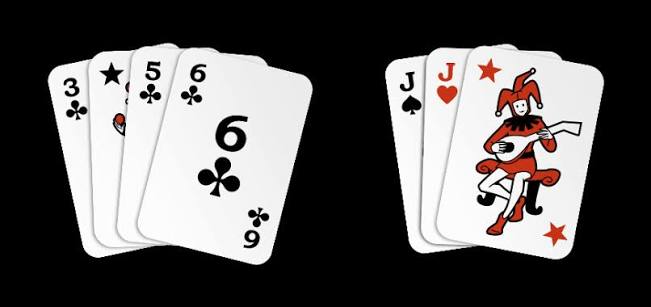
The rummy card game revolves around grouping cards into combinations. Players must understand which cards work together and how to organise their hands according to the rules of the selected variation. Sequences, sets, and jokers are the main concepts beginners should learn first.
For additional rummy-related reading, visit https://allrummyss.com/.
The Four Suits
A standard playing-card deck has four suits: hearts, diamonds, clubs, and spades. Each suit contains thirteen ranks, from Ace to King.
The suits help determine whether cards can form a sequence. The rank determines whether cards can form a set.
For example, the 4, 5, and 6 of hearts form a sequence because the ranks are consecutive and all three cards belong to the same suit. The 4 of hearts, 4 of clubs, and 4 of spades can form a set because the cards share the same rank.
Learning to distinguish these combinations makes the game much easier to follow.
Understanding Pure Sequences
A pure sequence is a run of at least three consecutive cards from the same suit without using a joker as a substitute.
Examples include:
- 2, 3, 4 of clubs
- 7, 8, 9 of hearts
- 10, Jack, Queen of diamonds
A pure sequence is a key requirement for a valid declaration in standard Indian 13-card rummy. Players should prioritise understanding this requirement before focusing on advanced decisions.
Understanding Impure Sequences
An impure sequence uses a joker to replace a missing card, where permitted.
For example, the 5 and 6 of spades combined with an appropriate joker can represent a sequence that would otherwise require the 7 of spades.
The joker provides flexibility, but the player must still follow the rules of the selected variation. An impure sequence does not satisfy the requirement for a pure sequence in standard Indian rummy.
How Sets Are Formed
A set contains cards of the same rank but different suits.
For instance, the 9 of hearts, 9 of clubs, and 9 of diamonds can form a set. A fourth nine from the remaining suit may also be included if the rules permit it.
Sets help players organise cards that share a rank rather than a consecutive sequence.
However, a hand made entirely of sets would not satisfy the usual requirement for sequences in Indian thirteen-card rummy.
The Role of Jokers
Jokers can replace missing cards in certain combinations. A printed joker is included in the deck, while a wild joker may be selected for a round.
Jokers are useful because they provide additional ways to complete combinations. Nevertheless, players must understand the limitations of joker use.
A joker should not be treated as a universal replacement that makes every arrangement valid. The requirements for sequences, sets, and declarations still apply.
Organising Your Cards
Sorting cards by suit can make potential sequences easier to identify. Grouping cards by rank can reveal possible sets.
For example, a hand containing the 4, 5, and 6 of clubs should be kept together as a potential sequence. If the hand also contains three Queens from different suits, those cards can be evaluated as a possible set.
Organisation reduces confusion and makes it easier to decide which cards may be unnecessary.
Common Errors
One common error is confusing cards of the same rank with consecutive cards. These form different types of combinations and follow different rules.
Another error is assuming that a joker automatically makes a hand valid. A declaration must satisfy all the requirements of the selected format.
Beginners should also avoid overlooking individual cards that have not been included in a valid combination.
Continue Learning About Rummy
Readers can explore the broader subject through All Rummy. Combining basic rules with worked examples is an effective way to develop a clear understanding of card combinations.
Conclusion
Sequences, sets, and jokers are the foundations of the rummy card game. Learning how each combination works helps players recognise valid arrangements, understand declarations, and avoid common mistakes.
