
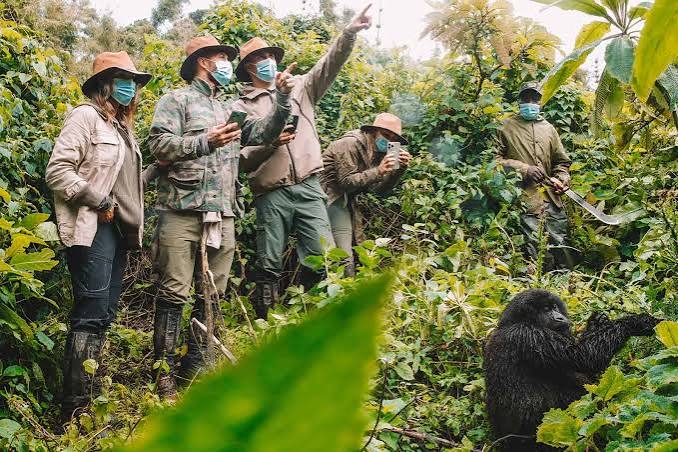
Introduction: Chimpanzee Experiences in Rwanda and Kenya
Chimpanzee tracking is among the most fascinating wildlife experiences available in East Africa. These intelligent primates share many behavioural characteristics with humans, making encounters with them particularly memorable. From observing wild chimpanzees moving through tropical rainforests to learning about rescued chimpanzees in conservation sanctuaries, Rwanda and Kenya offer different opportunities to discover these remarkable animals.
Rwanda is one of the leading destinations for wild chimpanzee tracking, particularly in Nyungwe National Park, where visitors can explore ancient montane rainforest in search of habituated chimpanzee communities. Kenya, on the other hand, offers an educational chimpanzee conservation experience at Sweetwaters Chimpanzee Sanctuary within Ol Pejeta Conservancy.
Although the two countries offer different experiences, combining Rwanda and Kenya creates an exciting East African safari that can include chimpanzees, mountain gorillas, rhinos, elephants, lions and other African wildlife.
For travellers interested in independent exploration, a combination of Rwanda and Kenya self-drive safaris also provides opportunities to discover East Africa at a flexible pace using a suitable 4×4 rental vehicle.
1. Chimpanzee Tracking in Rwanda – Nyungwe National Park
Nyungwe National Park is Rwanda’s principal destination for wild chimpanzee tracking. Located in the southwestern part of the country, this magnificent rainforest protects one of Africa’s most important montane forest ecosystems.
The park is home to chimpanzees and several other primate species, making it an exceptional destination for wildlife enthusiasts, photographers and nature lovers.
Chimpanzees live in complex social groups and spend much of their time searching for fruits, leaves, insects and other food. Visitors may observe them climbing through the forest canopy, grooming one another, communicating through loud calls and moving between feeding locations.
Where to Track Chimpanzees in Nyungwe
Chimpanzee tracking takes place in designated forest areas within the Nyungwe ecosystem. Uwinka and Cyamudongo are among the important areas associated with chimpanzee experiences.
Cyamudongo is a smaller isolated forest area that supports a chimpanzee community, while Uwinka serves as one of the principal visitor and forest activity centres.
The exact tracking location and departure arrangements depend on the chimpanzee community being visited and park management arrangements.
What to Expect During Rwanda Chimpanzee Tracking
Chimpanzee tracking generally begins early in the morning. Visitors meet their guides and trackers for a briefing before entering the rainforest.
The experience involves walking along forest trails, sometimes through steep, muddy and densely vegetated terrain. The duration of the walk depends on the location of the chimpanzees and their movements.
Chimpanzees are highly mobile animals. Visitors may hear their distinctive calls before locating them in the forest canopy or on the ground.
Once the chimpanzees are located, visitors are generally allowed up to one hour of observation, subject to the applicable park regulations.
A guided chimpanzee tracking experience provides opportunities to learn about chimpanzee behaviour, feeding habits, social relationships and conservation.
Rwanda Chimpanzee Tracking Permits and Costs
Visitors require an official chimpanzee tracking permit to participate in the activity.
The published 2026–2027 tariff lists the following indicative permit prices:
- International visitors: USD 250.
- International visitors resident in Rwanda or EAC: USD 100.
- Rwanda and EAC citizens: RWF 25,000.
These activity fees may be separate from park entrance charges. Visitors should confirm the applicable 2026–2027 prices and booking requirements with the park authorities before travelling.
The minimum age for chimpanzee tracking is generally 15 years.
Best Time for Chimpanzee Tracking in Rwanda
Chimpanzee tracking is available throughout the year, although weather conditions influence the difficulty of forest walks.
June to September and December to February are popular periods because they generally experience drier weather.
March to May and October to November are wetter periods, when forest trails can become slippery. However, the rainforest becomes particularly lush, offering excellent opportunities for nature photography.
2. Other Activities in Nyungwe National Park
Chimpanzee tracking is not the only reason to visit Nyungwe. The national park offers several additional activities that make it possible to spend multiple days exploring its rainforest ecosystem.
Nyungwe Canopy Walkway
The Nyungwe Canopy Walkway is one of Rwanda’s most exciting nature attractions. Suspended above the forest floor, this elevated walkway offers spectacular views of the rainforest canopy and surrounding hills.
Visitors may spot monkeys, birds and other forest wildlife while enjoying the unique perspective from above the trees.
Colobus Monkey Tracking
Nyungwe is famous for its large populations of Angolan black-and-white colobus monkeys. Guided tracking excursions provide opportunities to observe these beautiful primates moving through the forest.
Birdwatching and Forest Hiking
Nyungwe is an important birdwatching destination, with numerous forest species, including Albertine Rift endemics. Guided hiking trails also lead visitors through beautiful rainforest landscapes, streams and waterfalls.
3. Chimpanzee Experiences in Kenya – Sweetwaters Chimpanzee Sanctuary
Kenya provides a different opportunity to discover chimpanzees through Sweetwaters Chimpanzee Sanctuary, located within Ol Pejeta Conservancy in Laikipia County.
Unlike Rwanda, Kenya does not have naturally occurring wild chimpanzee populations. Sweetwaters is a sanctuary for rescued chimpanzees that have been victims of illegal wildlife trafficking, abuse and unsuitable captivity.
Established in 1993 through conservation partnerships involving Ol Pejeta Conservancy, Kenya Wildlife Service and the Jane Goodall Institute, the sanctuary provides a protected environment for chimpanzees that cannot safely return to the wild.
What to Expect at Sweetwaters Chimpanzee Sanctuary
Visitors can observe chimpanzees living in protected naturalistic enclosures while learning about their rescue histories, behaviour and conservation needs.
Depending on the group and activity, visitors may observe chimpanzees grooming, playing, climbing, feeding and interacting with one another.
The experience is educational and conservation-focused rather than a wild chimpanzee trekking activity.
Behind-the-Scenes Chimpanzee Conservation Experience
Travellers interested in learning more about chimpanzee conservation may arrange a special behind-the-scenes experience, subject to availability and sanctuary arrangements.
This experience provides additional insight into the work involved in caring for rescued chimpanzees, including feeding, veterinary attention, rehabilitation and daily management.
Visitors should understand that physical interaction with chimpanzees is not permitted.
4. Wildlife Safari in Ol Pejeta Conservancy
A visit to Sweetwaters Chimpanzee Sanctuary can be combined with an exciting Kenya wildlife safari in Ol Pejeta Conservancy.
Ol Pejeta is one of Kenya’s important wildlife conservation destinations and is particularly famous for its rhino conservation programmes.
Visitors can encounter several African wildlife species, including African elephants, lions, leopards, African buffaloes, black rhinos, white rhinos, giraffes, zebras and various antelope species.
Ol Pejeta is also home to the world’s last two northern white rhinos, which are protected under intensive conservation management.
The conservancy therefore provides a valuable opportunity to combine chimpanzee conservation education with traditional African wildlife viewing.
5. Rwanda vs Kenya: Where Should You See Chimpanzees?
Rwanda and Kenya provide different types of chimpanzee experiences.
Rwanda is the better destination for travellers who want to track wild chimpanzees in their natural rainforest habitat. Nyungwe offers guided forest tracking, where visitors follow habituated chimpanzee communities.
Kenya is ideal for travellers interested in chimpanzee rescue, rehabilitation and conservation education. Sweetwaters offers a chance to observe rescued chimpanzees in a protected sanctuary environment.
For travellers who have sufficient time, visiting both destinations provides a broader understanding of chimpanzee conservation and primate experiences in East Africa.
6. Combining Rwanda and Kenya on an East African Safari
Combining Rwanda and Kenya offers an opportunity to experience two different safari environments within one holiday.
Travellers can begin with rainforest exploration and chimpanzee tracking in Rwanda before continuing to Kenya for chimpanzee conservation and traditional savannah wildlife experiences.
A longer itinerary can also include mountain gorilla trekking in Rwanda at Volcanoes National Park and rhino conservation at Ol Pejeta.
Suggested 10-Day Rwanda and Kenya Safari Itinerary
Day 1: Arrival in Kigali, Rwanda
Arrive at Kigali International Airport. Meet your safari representative and transfer to your hotel. Depending on your arrival time, explore Kigali and visit some of its historical and cultural attractions.
Day 2: Kigali to Nyungwe National Park
Travel southwest towards Nyungwe National Park, passing Rwanda’s beautiful countryside, tea plantations and rolling hills.
Arrive at your accommodation and prepare for the following morning’s chimpanzee tracking experience.
Day 3: Chimpanzee Tracking in Nyungwe Forest
Wake up early and transfer to the designated chimpanzee tracking briefing point.
Join experienced guides and trackers for a rainforest adventure in search of wild chimpanzees. Spend time observing their behaviour and learning about their conservation.
In the afternoon, enjoy the Nyungwe Canopy Walkway or another guided forest activity.
Day 4: Nyungwe to Lake Kivu
After breakfast, travel towards Lake Kivu. Enjoy the beautiful scenery and explore the lakeside communities before spending the night near the lake.
Day 5: Lake Kivu to Volcanoes National Park
Continue north towards Volcanoes National Park, passing through Rwanda’s scenic countryside.
Arrive near the park and prepare for mountain gorilla trekking.
Day 6: Mountain Gorilla Trekking
Enjoy a guided mountain gorilla trekking experience in Volcanoes National Park.
After the briefing, enter the forest with experienced guides and trackers in search of one of the habituated mountain gorilla families.
Spend the permitted observation time with the gorillas before returning to your accommodation.
Day 7: Volcanoes National Park to Kigali and Flight to Nairobi
Return to Kigali and transfer to the airport for your flight to Nairobi, Kenya.
Flight schedules and international connections should be checked before finalising the itinerary.
Day 8: Nairobi to Ol Pejeta Conservancy
Travel north from Nairobi towards Nanyuki and Ol Pejeta Conservancy.
Enjoy the beautiful landscapes of central Kenya and an afternoon wildlife drive upon arrival.
Day 9: Sweetwaters Chimpanzee Sanctuary and Ol Pejeta Safari
Visit Sweetwaters Chimpanzee Sanctuary to learn about chimpanzee rescue and conservation.
Continue with a wildlife safari in Ol Pejeta, where you can encounter rhinos, elephants, lions and other wildlife.
Day 10: Ol Pejeta to Nairobi
After breakfast, return to Nairobi for your international departure.
Travellers with additional time can extend the safari to Lake Nakuru National Park or Maasai Mara National Reserve.
7. Self-Drive Rwanda and Kenya: Exploring East Africa Independently
A self-drive safari is an exciting way to explore Rwanda and Kenya. Travellers who prefer flexibility can rent a suitable 4×4 vehicle and discover different destinations at their own pace.
Rwanda’s relatively compact geography makes it possible to combine several national parks and attractions within a single holiday. Kenya offers longer wildlife circuits, with opportunities to explore conservancies, national parks and remote safari destinations.
Recommended 4×4 Vehicles for Rwanda and Kenya
For a cross-border safari, a reliable 4×4 vehicle is recommended.
Suitable options include:
- Toyota Land Cruiser Prado.
- Toyota Land Cruiser 76 Series.
- Toyota Land Cruiser 78 Series.
- Toyota Land Cruiser V8.
- Toyota Land Cruiser with rooftop tent.
Travellers interested in budget camping can choose a vehicle equipped with a rooftop tent and essential camping equipment.
Depending on the rental package, equipment may include sleeping bags, mattresses, a fridge, cooking utensils, a gas stove, camping tables and chairs.
For vehicle options, explore Rwanda 4×4 car rental, Kenya self-drive car hire and Land Cruiser rental with rooftop tent.
Cross-Border Car Rental Requirements
Travellers planning to drive between Rwanda and Kenya should confirm the following arrangements with their rental company:
- Written cross-border vehicle authorisation.
- Valid insurance covering both countries.
- Vehicle registration and supporting documents.
- Applicable border crossing requirements.
- Emergency and breakdown assistance.
- National park and conservancy vehicle regulations.
- One-way rental arrangements, where applicable.
It is important to note that self-driving does not remove the requirement for official guides and permits when visiting chimpanzees in Nyungwe.
Similarly, visiting Sweetwaters requires compliance with the sanctuary’s visitor arrangements.
8. Extend Your East African Chimpanzee Safari to Uganda and Tanzania
Rwanda and Kenya are not the only destinations offering interesting chimpanzee experiences in East Africa.
Travellers interested in wild chimpanzees can extend their holiday to Uganda and Tanzania.
Chimpanzee Tracking in Uganda – Kibale National Park
Kibale National Park is one of Africa’s most famous chimpanzee tracking destinations.
Located in western Uganda, the park protects a large tropical rainforest ecosystem supporting numerous primate species.
Visitors can participate in guided chimpanzee tracking and, subject to availability and eligibility, chimpanzee habituation experiences.
Uganda is an excellent addition to a Rwanda safari, particularly for travellers interested in combining Uganda chimpanzee tracking with mountain gorilla trekking in Uganda.
Chimpanzee Tracking in Tanzania – Gombe Stream National Park
Gombe Stream National Park is a historic chimpanzee research destination located along Lake Tanganyika in western Tanzania.
The park became internationally famous through the pioneering chimpanzee research of Jane Goodall.
Visitors can explore its forest trails with guides and observe wild chimpanzees in their natural habitat.
Chimpanzee Tracking in Tanzania – Mahale Mountains National Park
Mahale Mountains National Park is another remarkable chimpanzee destination in western Tanzania.
Located along the eastern shores of Lake Tanganyika, Mahale combines tropical forest, mountainous scenery and beautiful lakeside landscapes.
It offers an exceptional experience for travellers looking for remote wildlife destinations away from the more familiar northern Tanzania safari circuit.
Discover more through our Tanzania chimpanzee tracking safari and Tanzania wildlife safari pages.
9. Book Your Rwanda and Kenya Chimpanzee Safari
Whether you want to track wild chimpanzees in Nyungwe Forest, visit rescued chimpanzees at Sweetwaters or combine both experiences with mountain gorilla trekking and traditional African wildlife safaris, Rwanda and Kenya offer exciting opportunities for an unforgettable East African holiday.
With the right itinerary, travellers can explore tropical rainforests, encounter remarkable primates, discover conservation projects and enjoy some of Africa’s most beautiful wildlife destinations.
For independent travellers, consider Self Drive Rwanda, Self Drive in Kenya and East Africa 4×4 car rental for suitable 4×4 rental vehicles and cross-border safari arrangements.
Travellers interested in camping can also explore 4×4 rental with rooftop tent in East Africa for a flexible camping safari.
Contact our team to plan your Rwanda and Kenya chimpanzee safari, including accommodation, tracking permits, transport and optional self-drive arrangements.
Frequently Asked Questions About Chimpanzee Tracking in Rwanda and Kenya
1. Can You Track Wild Chimpanzees in Rwanda?
Yes. Visitors can track wild chimpanzees in Nyungwe National Park, one of Rwanda’s most important rainforest conservation areas.
2. Where Can You See Chimpanzees in Kenya?
Visitors can see rescued chimpanzees at Sweetwaters Chimpanzee Sanctuary within Ol Pejeta Conservancy in Laikipia County.
3. Does Kenya Offer Wild Chimpanzee Trekking?
No. Kenya does not have naturally occurring wild chimpanzee populations. Sweetwaters offers a sanctuary experience involving rescued chimpanzees.
4. How Much Does Chimpanzee Tracking Cost in Rwanda?
The published 2026–2027 international visitor activity permit price is USD 250. Park entrance charges and other applicable fees may be additional. Always confirm the latest tariff before booking.
5. What Is the Minimum Age for Chimpanzee Tracking in Rwanda?
The minimum age is generally 15 years.
6. Can I Combine Chimpanzee Tracking and Gorilla Trekking in Rwanda?
Yes. Visitors can combine chimpanzee tracking in Nyungwe National Park with mountain gorilla trekking in Volcanoes National Park.
7. Can I Visit Rwanda and Kenya on a Self-Drive Safari?
Yes, subject to rental company approval, cross-border authorisation, insurance and vehicle documentation. Both countries offer opportunities for independent exploration.
8. Which Is Better for Chimpanzee Tracking: Rwanda or Kenya?
Rwanda is better for tracking wild chimpanzees in their natural habitat. Kenya is better for learning about rescued chimpanzees and conservation at Sweetwaters.
9. Can I Combine Rwanda, Kenya, Uganda and Tanzania on One Chimpanzee Safari?
Yes. A longer East African itinerary can include Nyungwe in Rwanda, Sweetwaters in Kenya, Kibale in Uganda, and Gombe or Mahale in Tanzania.
10. What Is the Best Time to Visit Rwanda and Kenya for Chimpanzee Experiences?
Chimpanzee tracking in Rwanda is available throughout the year, with drier periods generally preferred. Sweetwaters in Kenya can be visited throughout the year, subject to visitor arrangements and operating schedules.