
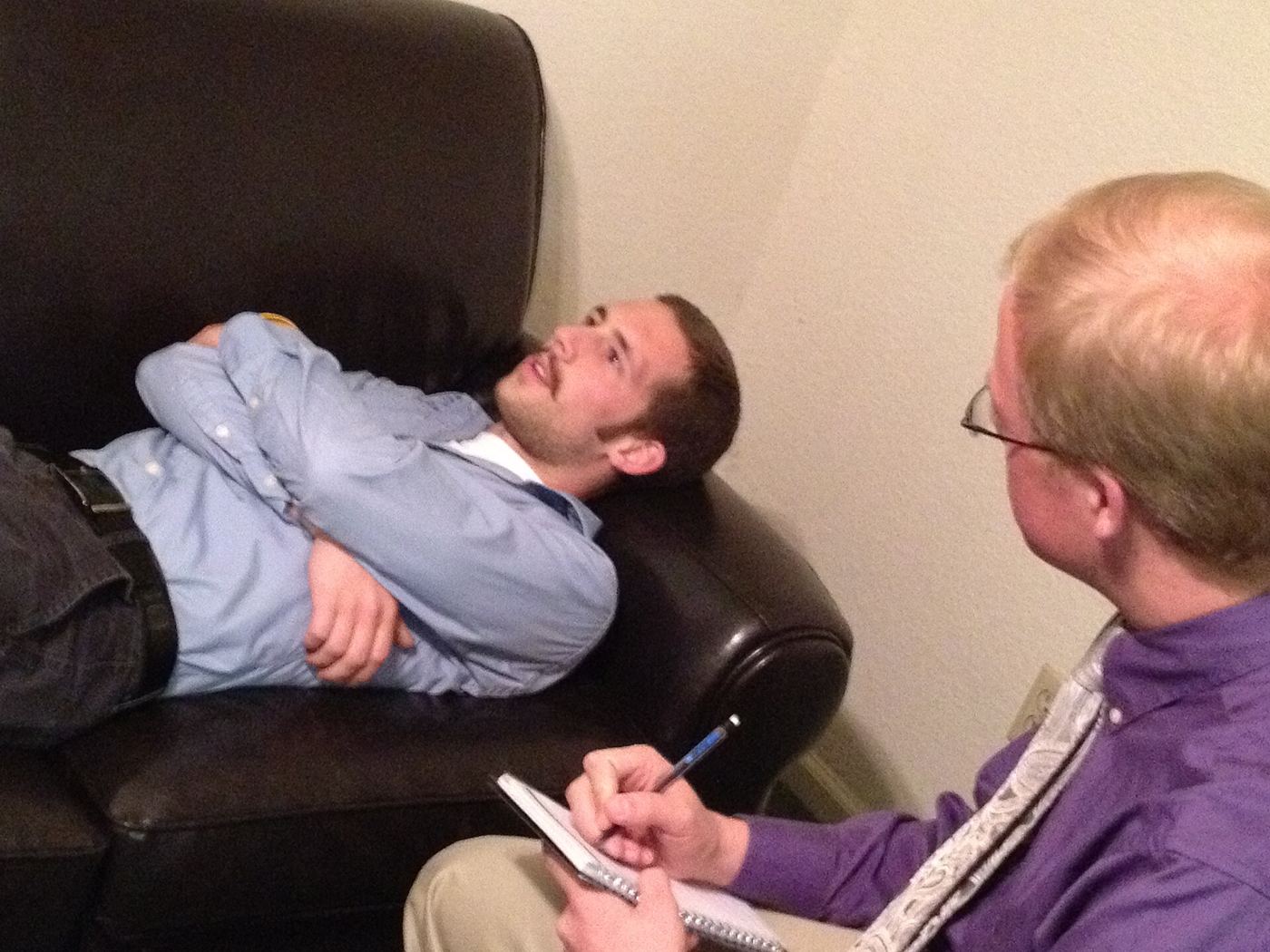
Carl Rogers, an American psychologist working in the 1940s and 1950s, argued that people grow best when they are accepted exactly as they are. In his book Client-Centered Therapy, published in 1951, he proposed that therapy should not diagnose or direct the patient but create the conditions in which the person can heal themselves. The therapist, he said, must offer three things: empathy, a genuine attempt to understand the client’s world, congruence, being honest and open rather than hiding behind a professional mask, and unconditional positive regard, accepting the client without judgement. Rogers believed that every person carries an actualising tendency, an inbuilt drive towards growth and fulfilment, which flourishes when these conditions are present. His ideas later shaped counselling, teaching and even conflict mediation around the world.
What the Evidence Shows
Rogers put his ideas into practice in counselling centres and schools, and his approach spread far beyond the consulting room. Teachers adopted it to build trust with pupils, managers used it to listen better to staff, and conflict mediators drew on it to help opposing sides hear each other. Together with Abraham Maslow, Rogers helped found humanistic psychology, a movement that put personal experience and free will back at the centre of the subject. Critics argue that the approach is too gentle for people with severe mental illness, who may need more directive treatment. Even so, the core conditions he described are now taught to almost every counsellor and therapist, and his belief that people can be trusted to direct their own growth remains one of psychology’s most hopeful ideas. Reporting and analysis from sources such as Nature Human Behaviour track the same developments, and specialists following Rogers person-centred therapy say the direction is now consistent across independent lines of evidence.
The Wider Context
The wider context is a discipline rebuilding confidence through replication and pre-registration, and findings on Rogers person-centred therapy are being reported with their effect sizes and limits attached. That honesty can make results sound smaller than the headlines of a decade ago, but the effects that survive are the ones practitioners can responsibly build on.
What Happens Next
What happens next in research on Rogers person-centred therapy is a turn toward real-world trials: longer, larger and conducted in the schools, workplaces and clinics where the findings are meant to apply. Psychologists are also studying individual differences more seriously, because average effects conceal the people for whom an approach works powerfully and those it leaves cold. Both shifts make the science slower and more useful. You can follow related developments in our coverage of psychology.
None of this will be settled by a single announcement, study or product launch. The pattern to watch is accumulation: independent confirmations, honest reporting of failures and steady improvement in the underlying numbers. Readers who follow those signals, rather than the loudest claim of the week, will understand this subject better than most of the commentary surrounding it suggests is possible.
