
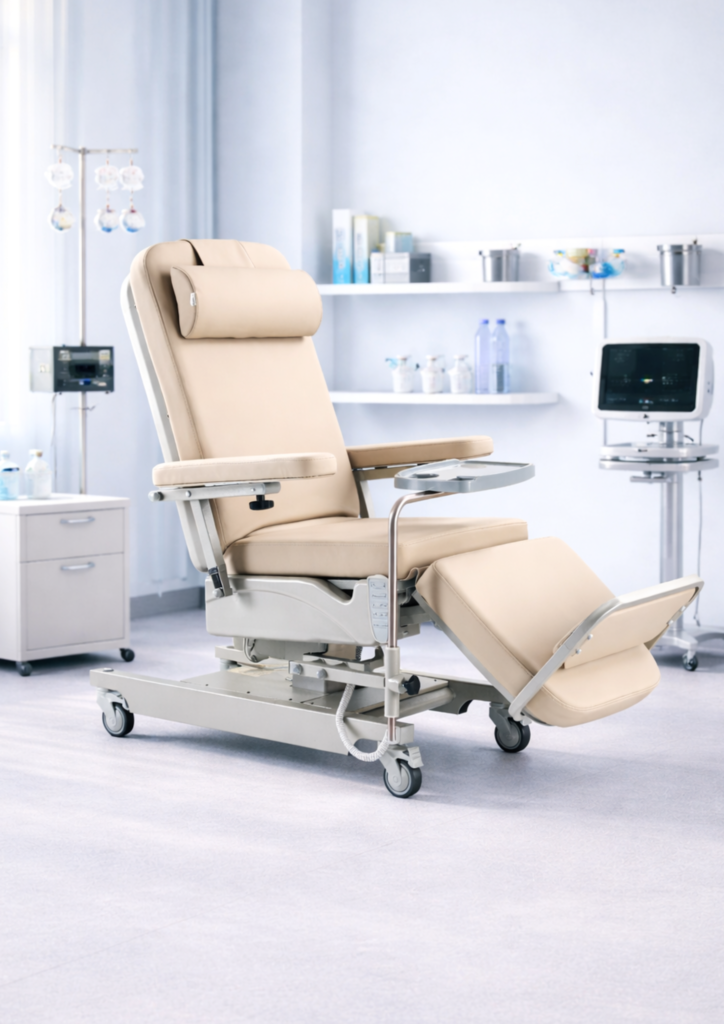
Modern healthcare settings face a constant balancing act between throughput targets and the kind of attentive care patients deserve over time. Treatment centres handling renal therapy, infusion work, and post-operative recovery rely on equipment that holds up to long sessions, day after day. Seating choices, in particular, shape both clinical outcomes and the daily mood of a busy facility.
For centres running multiple sessions a day, dialysis chairs built around ergonomic principles and clinical-grade materials become essential workhorses that protect patient comfort and staff workflow at the same time. These specialised seating systems carry patients through hours of treatment without the pressure points and fatigue that lesser recliners often cause during extended therapy at busy modern renal units.
Why Long Treatment Sessions Demand Smarter Seating
The Physical Toll of Static Positioning: Patients hooked to a treatment line for four hours or more cannot shift posture freely as they wish. Pressure builds along the lumbar region, shoulders, and calves while circulation slows in fixed positions over time. Seating shaped by careful ergonomic design supports gradual repositioning during treatment, helping reduce stiffness.
Staff Workflow Around the Chair: Nurses and technicians spend significant time accessing the patient from multiple angles throughout each session of dialysis. A chair that adjusts height electronically and reclines fully to a Trendelenburg position lets staff work standing upright rather than stooping awkwardly for hours. That small detail saves backs over a long shift and quickens response times during sudden blood pressure drops.
Build Quality That Earns Its Place in Clinical Rooms
Frames Engineered for Daily Punishment: Treatment chairs cycle through dozens of position changes each day under patient loads that can often exceed 150 kilograms easily. Precision-welded steel frames with powder-coated finishes resist the slow wear that gas-lift mechanisms rarely survive intact over years. Buyers who skim on frame quality often replace entire units within three years, which erodes any initial savings claimed at purchase.
Upholstery That Survives Real Clinic Conditions: Treatment areas see daily exposure to disinfectants, blood, dialysate spills, and constant wiping by busy clinical staff members. Standard upholstery cracks within months under such tough conditions in busy clinical settings. Materials engineered for infection control standards resist UV exposure, abrasion, and aggressive cleaning agents while keeping a soft, patient-friendly surface that genuinely helps during long sittings each week.
Safety Built Into Every Recline and Lift
CPR-Ready Backrest Mechanisms: Cardiac events during treatment, though uncommon, leave little room for fumbling with controls or releases under pressure. A quick-release backrest that drops flat in seconds gives the response team a stable surface to begin chest compressions immediately. Chairs missing this feature force staff to transfer the patient onto the floor or a trolley during the critical first minute.
Low Access Heights for Frail Patients: Elderly patients and those with mobility constraints often struggle with high-set chairs that demand a noticeable step up just to board. Electronic height adjustment that drops the seat close to 50 centimetres lets patients board safely without staff lifting them up. Centres serving senior populations notice fewer falls and faster session start times when this option is present consistently.
Features That Separate Capable Recliners From Ordinary Seating
The Checklist That Procurement Teams Should Carry: Procurement heads juggling tight budgets sometimes settle for chairs that look impressive at a trade show but fall apart in daily use within weeks. A short checklist of non-negotiables helps avoid that costly mistake at the buying stage. The points below cover features that separate clinically sound units from those that drain maintenance budgets within months of installation.
Electronic height, backrest, leg rest, and footrest adjustments controlled through a single user-friendly handset for ease.
Trendelenburg positioning capability for safely managing sudden hypotensive episodes that happen during longer sessions.
- Quick-release backrest lever placed within easy staff reach for immediate CPR readiness during emergencies.
- Disinfectant-resistant upholstery rated against alcohol, chlorine, and quaternary ammonium cleaning compounds used routinely.
- Reinforced powder-coated frame tested for patient loads above 150 kilograms without any flex or shift over time.
- Programmable memory positions on select models that recall preferred patient setups in just seconds.
Why Cutting Corners Costs More Later: Centres that pick chairs without these features face higher complaint rates, repeated repair callouts, and slow patient turnover times across the year. Each replaced motor or torn cushion eats into already thin operating margins. Choosing equipment built for the actual demands of treatment work feels more expensive at the quote stage and proves cheaper over a five-year horizon.
Operational Gains Treatment Centres See After Upgrading
Patient Retention and Word-of-Mouth Growth: Treatment is often chosen on the recommendation of an existing patient at another local centre nearby. A facility where patients leave each session without sore backs, numb legs, or transfer struggles gets quietly recommended over time. That kind of organic flow matters more than glossy marketing campaigns and protects revenue against newer competitors entering the same catchment area each year.
Productivity Gains for Clinical Teams: When a chair handles position changes electronically and supports staff at a comfortable working height, the team finishes more sessions in a shift without burning out by the close. Reduced manual handling also lowers staff injury claims, which can quietly drain operating budgets each quarter. The cumulative effect across a year often surprises facility managers tracking these numbers carefully.
Equipping a Centre That Quietly Wins Patient Loyalty
The right seating decision sits at the very centre of treatment centre planning and shapes outcomes long after the purchase order is finally signed. Centres choosing patient-focused, motorised, infection-aware furniture set themselves apart from facilities still relying on outdated equipment. Take a closer look at modern seating options today and quickly turn every session into a quiet competitive edge.
