
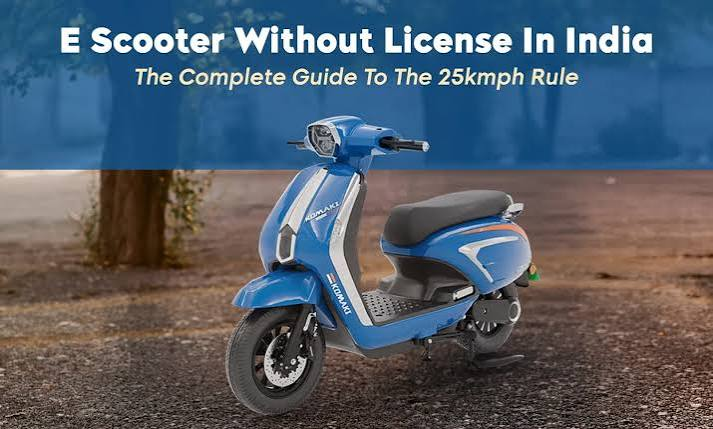
Low-speed electric scooters can make short-distance travel simpler for riders who do not want the requirements associated with a conventional scooter. An electric scooter without license generally refers to a low-speed electric two-wheeler that meets specific power and speed limits under Indian rules.
Current guidance for India generally identifies qualifying low-speed scooters as models with a maximum speed of 25 km/h and continuous motor output of no more than 250W. Both conditions matter when determining whether a particular scooter falls into the licence-exempt category.
Who Can Ride an Electric Scooter Without License?
Low-speed electric scooters are designed for riders whose travel needs do not require highway speeds or long-distance performance.
They may be useful for:
- Students travelling short distances
- Delivery partners working within local zones
- Office commuters
- Gig workers
- Riders completing daily errands
- People who want a simple neighbourhood vehicle
The main consideration should be whether the scooter’s speed and range match the rider’s actual route.
What Makes an Electric Scooter Licence-Free?
An electric scooter is not automatically licence-free simply because it runs on a battery.
The commonly cited exemption applies when the vehicle meets both of these limits:
- Maximum speed of 25 km/h
- Continuous rated motor power of 250W or less
Scooters that exceed either threshold can fall into a different regulatory category and may require normal registration and licence documentation.
Always verify the specifications and classification of the exact scooter rather than relying only on advertising terms such as “low speed” or “non-RTO.”
Does an Electric Scooter Without License Need RTO Registration?
Qualifying low-speed scooters within the applicable limits are generally treated differently from registered motor vehicles.
Current Indian EV guides commonly describe these models as not requiring standard RTO registration or a conventional number plate.
However, the exemption depends on the vehicle meeting the applicable technical requirements.
A scooter capable of travelling faster than 25 km/h should not be assumed to qualify simply because it has an electric motor.
Low-Speed vs. High-Speed Electric Scooters
Choosing between the two categories depends primarily on how and where you plan to ride.
Low-Speed Electric Scooter
Low-speed scooters generally focus on:
- Local commuting
- Short delivery routes
- Lower operating speeds
- Dense city roads
- Neighbourhood errands
Bounce Daily’s low-speed rental option has a stated top speed of up to 25 km/h, a range of up to 85 km, and swappable battery support.
High-Speed Electric Scooter
High-speed scooters are better suited to riders who need faster urban travel.
Bounce Daily’s high-speed rental model can reach up to 55 km/h and has a stated range of approximately 70 km. Bounce identifies this version as an option for riders with a driving licence.
Is an Electric Scooter Without License Good for Daily Commuting?
It can be practical when most trips happen on local roads.
For example, a low-speed scooter can work well when travelling between:
- Home and college
- Home and a nearby workplace
- Local shops
- Delivery zones
- Metro or bus connections
The main limitation is speed.
A scooter capped at 25 km/h may not be appropriate for routes dominated by fast-moving traffic or longer arterial roads.
Before choosing one, consider the route rather than simply focusing on the absence of a licence requirement.
Can Delivery Riders Use a Low-Speed Electric Scooter?
Yes, low-speed scooters can be useful for delivery work when deliveries are concentrated within a limited area.
Important factors include:
- Daily kilometres travelled
- Battery range
- Availability of battery swapping
- Carrying requirements
- Road conditions
- Average distance between orders
Bounce Daily specifically positions its low-speed rental scooter for delivery partners, gig workers, students, and daily commuters. Its service page lists up to 85 km of range and swappable battery support for the low-speed variant.
For riders working long shifts, reducing charging downtime can be as important as maximum range.
What About Driving Licence Support?
Rental requirements and legal vehicle classifications are not always the same thing.
Bounce Daily currently provides driving licence assistance at its hubs for a nominal ₹200–₹230 fee. Its service page advises customers to visit a hub or use the app to understand the applicable onboarding process.
This is useful because riders comparing different scooter variants may eventually decide that a higher-speed vehicle better suits their work or commute.
Check the documentation required for the specific scooter you intend to rent rather than assuming the same rules apply to every model.
Do Electric Scooters Without License Need Insurance?
Insurance requirements depend on how the scooter is legally classified.
Low-speed scooters falling within the relevant exemption may not be subject to the same compulsory insurance requirements as registered motor vehicles.
However, insurance can still provide protection against risks such as:
- Theft
- Accidental damage
- Third-party loss
- Personal financial exposure
Confirm the requirements for the exact vehicle before riding it.
Are Low-Speed Electric Scooters Cheaper to Run?
Electric scooters can have lower day-to-day energy costs than petrol scooters, particularly for riders covering regular city kilometres.
Other costs still need to be considered, including:
- Rental or purchase price
- Battery charging or swapping
- Maintenance
- Tyres and brakes
- Insurance where applicable
- Damage charges under rental agreements
Renting can help riders avoid the upfront cost of purchasing a scooter and may also simplify maintenance depending on the rental plan.
Should You Rent or Buy?
The better option depends on how long you expect to use the vehicle.
Buying may make sense if you want long-term ownership and are comfortable handling maintenance and battery-related costs.
Renting may work better if you want:
- Lower upfront spending
- Flexible daily or monthly use
- A vehicle for temporary delivery work
- Managed maintenance
- Access to battery swapping
- The ability to change vehicle types later
Gig workers often value flexibility because their work location and daily mileage can change.
What Should You Check Before Choosing a Low-Speed Scooter?
Before riding or renting, check:
- Maximum certified speed
- Motor power rating
- Vehicle classification
- Expected real-world range
- Battery charging or swapping options
- Rental documentation
- Maintenance responsibility
- Road suitability for your commute
This helps ensure the scooter matches both the rules and your actual mobility needs.
Find the Right Electric Scooter for Your Daily Route
A low-speed electric scooter can be a practical choice for short commutes, local deliveries, and everyday city travel when the vehicle meets the applicable power and speed limits.
Bounce Daily offers low-speed and high-speed rental options, swappable battery support, and driving licence assistance at its hubs. If you are comparing an electric scooter without license with faster rental alternatives, review your route, daily range, required documentation, and work needs before choosing a scooter.
