
Saturn has pulled decisively ahead in the solar system’s strangest competition. Astronomers have confirmed 128 additional moons around the ringed planet, lifting its official total to 274. That is more moons than every other planet combined, and it ends any realistic debate about which world dominates this particular league table. For readers who like their science in one clear briefing, the essentials are simple: a long, patient telescope survey found dozens of faint objects that earlier searches had missed, checked their orbits over several years, and secured formal recognition for them.
A headline number that rewrites the record books
The previous Saturn tally stood at 146, itself a record set only recently. Adding 128 worlds in a single announcement is not a small correction. It is a reminder that the outer solar system remains only partly mapped, and that even a famous planet studied for centuries can still hide an entire population of companions in plain sight, provided those companions are small enough and dim enough to evade a quick look.
How the faint moons were actually found
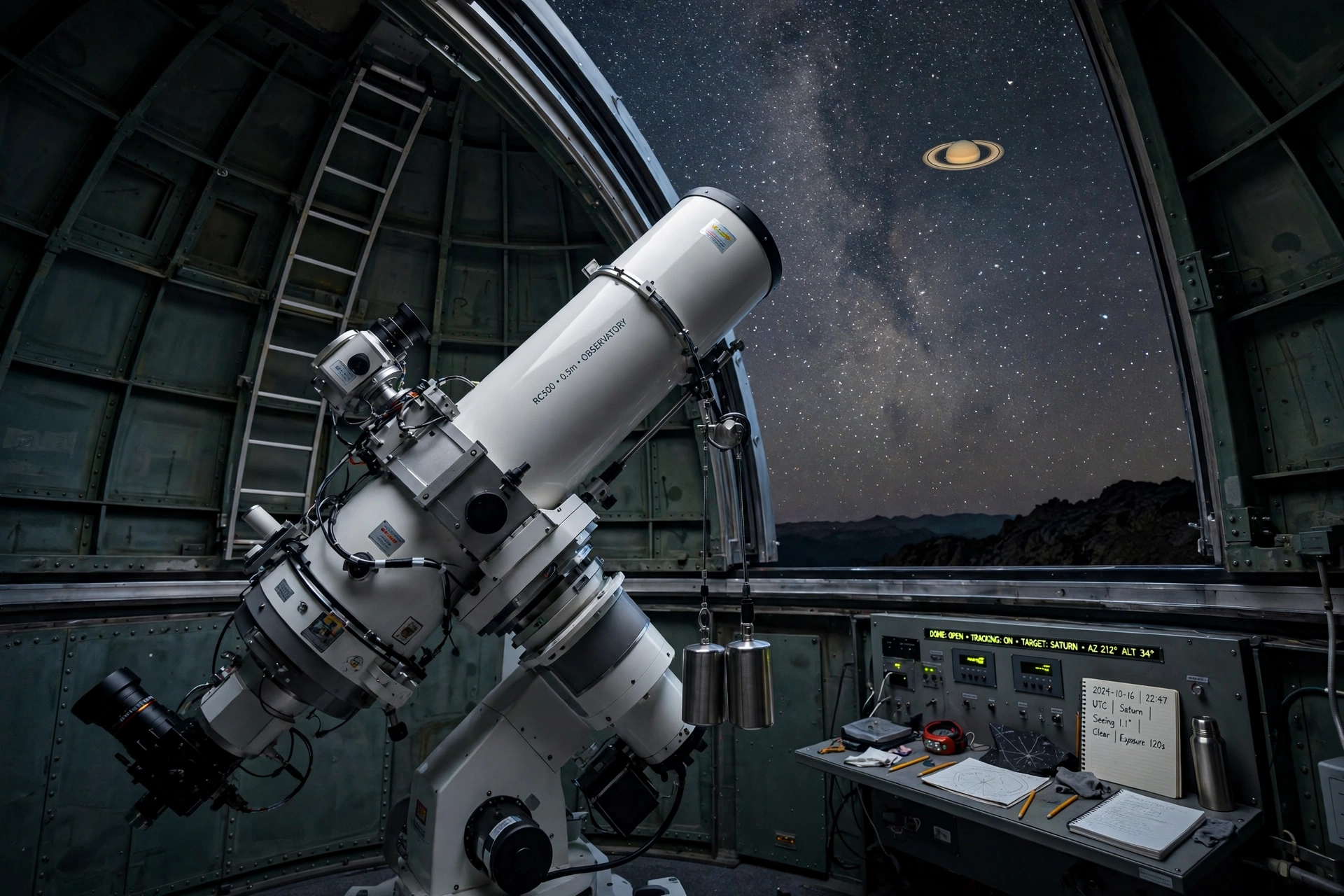
The survey relied on the Canada-France-Hawaii Telescope on Mauna Kea, whose wide, sharp view is well suited to hunting faint moving objects. The team, which included researchers from the University of British Columbia led in this work by Dr Edward Ashton, used a method called shift and stack. Computers shift many long-exposure images to follow Saturn’s motion through the sky, then stack them together, so a moon too faint to see in any single frame gradually emerges from the noise.
That patience matters. A tiny moon reflects very little sunlight, and a single snapshot rarely proves anything. By gathering deep images over several years, astronomers could confirm that each candidate really was travelling with Saturn rather than passing in front of it by chance. Background on the observatory and its instruments is available from the Canada-France-Hawaii Telescope, while the university team has described the wider programme through the University of British Columbia.
Small, tilted and often travelling backwards
None of the newcomers resembles Earth’s large, orderly Moon. Most are only a few kilometres across, irregular in shape, and parked on distant orbits that are strongly tilted compared with Saturn’s equator. Many travel in the retrograde direction, moving opposite to the planet’s rotation. Astronomers group such bodies together as irregular moons, a class thought to consist largely of objects captured by Saturn’s gravity long ago rather than formed alongside the planet.
Their clustered orbits tell a violent story. Groups of these moons share similar paths, which suggests they are fragments of larger captured moons that were shattered by collisions. In effect, each family is the debris of an ancient impact, still orbiting together billions of years later. If you enjoy following how a single discovery connects to everyday coverage, our recent reporting at this recent article shows how quickly a space story can move from observatory data to public conversation.
Why formal recognition matters
A candidate moon does not become official by announcement alone. The International Astronomical Union is the body that recognises new moons, and its confirmation is what turned this survey’s candidates into the 128 additions now counted in Saturn’s total. You can read about how the Union handles names and discoveries at the International Astronomical Union. That formal step protects the catalogue from false alarms and gives future researchers a stable list to work from.
Recognition also sharpens the science that follows. With confirmed orbits, teams can model how the families formed, estimate when the parent moons broke apart, and test ideas about how often collisions still occur around the giant planets. Each confirmed fragment is therefore both a discovery and a data point in a much longer investigation into the history of the outer solar system.
What happens next around Saturn
The obvious question is whether still more moons remain hidden. The honest answer is probably yes. Every improvement in telescope sensitivity has so far revealed smaller and fainter objects, and there is no reason to assume the current survey reached the true floor. Future instruments may push the count higher still, although each new generation of candidates will be harder to confirm because the objects are fainter and their orbits take longer to pin down.
For now, 274 is the number to remember. It is a record built not on a single lucky night but on years of careful imaging, clever software and international checking. Saturn’s rings made it famous; its enormous, ragged family of tiny moons is what now makes it unmatched. Daily readers can expect the total to be quoted for years, and quite possibly revised upwards again.
