
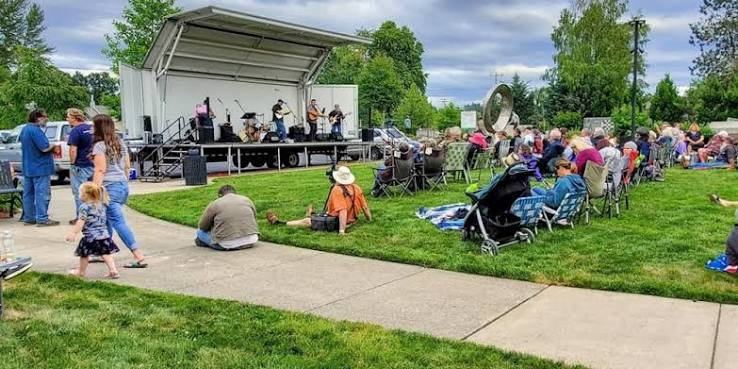
Organizing a live music event for a residential community is not a casual undertaking. It involves coordinating permits, managing vendor relationships, setting realistic budgets, and ensuring the event reflects the expectations of the people it serves. For neighborhood associations, civic organizers, and community boards across the United States, the process has become more structured in recent years — partly because more communities are investing in programming that brings residents together, and partly because the infrastructure to support these events has become more accessible.
What many organizers underestimate is how much groundwork happens before any artist takes the stage. The logistical decisions made in the early planning stages directly affect the experience on event day, the safety of attendees, and whether the community will want to do it again. This guide walks through the full process — from initial concept to post-event review — with the kind of practical detail that helps organizers make sound decisions at each stage.
Understanding What It Means to Book a Concert at the Community Level
When a neighborhood association or community organization decides to book a concert, they are not simply hiring a band. They are entering into a series of agreements — with artists or their representatives, with venue operators, with local authorities, and often with commercial vendors — that collectively determine the scope, safety, and financial responsibility of the event. Each of these relationships carries its own requirements and timelines.
Community concerts differ from private events or commercial productions in several important ways. The organizing body is typically a volunteer-run or nonprofit entity with limited administrative capacity. The audience is local and mixed — families with children, older residents, younger adults — which affects everything from the type of music selected to the noise level considerations submitted in permit applications. And the budget is almost always constrained, which means every decision carries more weight.
The Role of the Artist Agreement
Most working musicians and small-to-mid-level acts operate through a booking agent or manager who handles the contractual side of their schedule. When a community organization reaches out to book an act, they will typically receive a performance rider — a document that outlines the artist’s requirements for the engagement. This includes technical requirements such as sound equipment and stage configuration, as well as hospitality expectations like meals, green room access, and transportation arrangements.
For community organizers unfamiliar with this process, the rider can appear more demanding than expected. It is worth reviewing carefully and asking questions before signing anything. Some requirements are negotiable for smaller-scale events; others are not. Understanding the difference early prevents cost surprises close to the event date.
Matching the Artist to the Community
Genre is only one dimension of fit. A neighborhood event draws people who live within a defined geographic area, which means the audience is not self-selected by interest the way a ticketed concert audience would be. The music needs to work for a broad cross-section of ages and backgrounds. Organizers who think carefully about this — rather than simply booking whoever is locally popular or affordable — tend to produce events with better turnout and fewer complaints.
Acoustic or semi-acoustic acts often work well in residential settings because they carry less sound pressure at distance, reducing friction with nearby residents who are not attending. This is not a hard rule, but it is a pattern that experienced community event planners have noticed consistently.
Permits, Noise Ordinances, and Local Compliance
Every outdoor event held in a public or semi-public space in the United States is subject to local regulations that vary by city, county, and state. These regulations cover noise levels, crowd size limits, alcohol service, food vendor licensing, parking, and sometimes the hours during which amplified sound is permitted. Failing to secure the correct permits before the event can result in fines, forced shutdowns, or restrictions on future events in the same location.
The permit process typically begins with the local parks and recreation department or the city clerk’s office, depending on where the event is being held. Applications for outdoor events often require submission several weeks or even months in advance, particularly during the spring and summer seasons when competition for public space is highest. Organizers should build this timeline into their planning from the very beginning.
Noise Ordinance Considerations
Most US municipalities have noise ordinances that define acceptable decibel levels at property lines or within certain distances of residential structures. According to the US Environmental Protection Agency, community noise exposure has long been a recognized public health concern, and local governments have developed these ordinances accordingly. The specific thresholds vary significantly from one jurisdiction to another.
When planning a community concert, it is advisable to consult the ordinance language directly rather than relying on secondhand information. The sound engineer or production company brought in for the event should also be familiar with the local limits and able to configure the system to stay within compliance throughout the performance.
Insurance and Liability Coverage
Community events require event liability insurance. This is not optional — most public venues and many parks departments require proof of coverage before issuing a permit. Event liability insurance protects the organizing body against claims arising from property damage, personal injury, or other incidents that occur during the event. The coverage amount required varies by venue and jurisdiction, and organizers should confirm the minimum thresholds before purchasing a policy.
Some homeowner associations carry umbrella policies that may extend to community events; others do not. Checking with the association’s insurance provider early in the planning process prevents a scramble in the final weeks before the event.
Budgeting for a Community Concert
A realistic budget is one of the most important planning documents a community event organizer can produce. It does not need to be elaborate, but it does need to account for every category of expense — not just the obvious ones like the artist fee and sound equipment rental.
Community concert budgets typically include costs in the following areas:
• Artist or band fees, including any travel and accommodation requirements specified in the rider
• Sound and lighting production, including equipment rental and the technician fees for setup, operation, and breakdown
• Stage rental or construction, if no permanent structure is available at the venue
• Permit application fees, which vary by municipality and event type
• Event liability insurance premiums, often purchased as a single-event policy
• Security personnel, which may be required by the venue or local ordinance above a certain attendee threshold
• Portable restroom rental if the venue does not have sufficient permanent facilities
• Volunteer coordination and communication costs, including printed materials or digital outreach
• Contingency reserve, typically a percentage of total expenses held back to cover unexpected costs
One of the most common budgeting errors in community event planning is underestimating the production side of the event. Sound reinforcement for an outdoor performance is more complex and more expensive than many organizers anticipate, particularly when the venue is irregular in shape or surrounded by noise-sensitive properties.
Selecting the Right Venue Within Your Community
The choice of venue affects nearly every other decision in the planning process. A park with an existing amphitheater or bandshell is fundamentally different from an open field, a parking lot, or a school athletic ground. Each setting presents different acoustic conditions, different crowd management considerations, and different relationships with neighboring properties.
When evaluating potential venues, community organizers should consider access for attendees with mobility limitations, proximity to public transportation or parking, availability of power infrastructure for sound and lighting equipment, and the proximity of residential structures that could be affected by noise. Walking the site with the sound engineer before committing to a location is a step that experienced producers recommend consistently — what looks like a suitable space on a map can present meaningful production challenges in person.
Managing Neighbor Relations
Residents who live adjacent to a planned concert venue should be notified in advance, even when not legally required to do so. A brief notice delivered two to three weeks before the event — describing the date, the approximate hours, the type of music, and a contact for questions — reduces friction and positions the organizing body as a responsible neighbor. Communities that handle this communication well tend to face fewer objections on the day of the event and less resistance when planning future programming.
Day-of Coordination and Volunteer Management
The quality of a community concert is largely determined by the decisions made in the final hours before it begins. Load-in and soundcheck for even a modest outdoor performance can take several hours, and the schedule needs to be coordinated carefully with the artist’s team, the production crew, and any vendors operating on site.
Volunteers are central to most community events and should be assigned specific, defined roles rather than general responsibilities. Clear role assignments prevent gaps in coverage during high-traffic moments — arrival, intermissions, and departure — and ensure that someone with decision-making authority is always reachable. A simple volunteer briefing held an hour before gates open covers most of what people need to know to be effective on the day.
Post-Event Review and Community Feedback
After the event is over and the site has been restored to its original condition, the planning team should conduct a structured debrief. This does not need to be formal, but it should be deliberate. The questions worth addressing include: What did the budget look like in final actuality compared to the original estimate? Were there permit or compliance issues that need to be addressed differently next time? Did the artist relationship go smoothly, and would the community want to engage that act again?
Collecting feedback from attendees — through a brief survey distributed via the neighborhood association’s existing communication channels — provides useful data for future planning. Turnout numbers, sound quality comments, and general satisfaction levels help the organizing team make more grounded decisions when they begin planning the next event.
Bringing It All Together
Booking a concert for a neighborhood community in 2025 is a genuinely achievable goal for organized, well-prepared groups. The process is more structured than it once was, but that structure exists for practical reasons — it protects attendees, reduces liability for organizing bodies, and produces better outcomes for the community as a whole.
The organizers who do this well share a few common habits: they start early, they build relationships with local authorities before they need anything from them, they work with experienced production professionals rather than trying to manage technical elements in-house, and they treat the post-event review as seriously as the pre-event planning. Communities that approach the process this way tend to build on each event successively, creating programming that becomes a meaningful part of neighborhood life over time.
The investment of time and attention required to do this properly is real, but so is the return. A well-executed neighborhood concert builds social cohesion in ways that are difficult to achieve through other means. It gives residents a shared experience in a shared space, and it demonstrates that the people organizing community life are capable of delivering something that the community actually values.
