
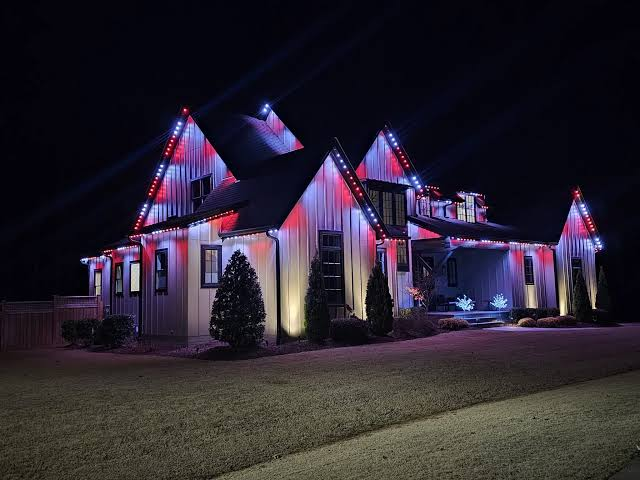
The Holiday Display Nobody Wants to Climb a Ladder For
Most people assume holiday lighting is a seasonal chore you either embrace or endure once a year, dragging boxes out of storage, untangling strands that worked fine last January, and testing bulbs on the kitchen table before committing to a ladder. That assumption has shaped how an entire industry markets itself, selling replacement bulbs and storage bins as if the hassle is simply part of the holiday package. The actual experience of putting up and taking down lights every year has very little to do with tradition and everything to do with outdated technology that was never built for repeated use.
In Utah specifically, the climate makes this worse. Freezing temperatures in November, snow accumulation on rooftops, and the physical risk of ladder work on icy surfaces turn a festive task into something closer to a liability. Homeowners in Salt Lake City, Provo, and the surrounding valleys have been quietly shifting away from the annual install-and-remove cycle, not because they stopped caring about how their homes look during the holidays, but because the old method stopped making sense once better alternatives existed.
The shift isn’t about abandoning holiday displays. It’s about separating the aesthetic outcome people actually want from the physical labor they’ve assumed was unavoidable. Once that separation happens, the expectation for what a reasonable homeowner should have to do every winter changes with it, and the ladder stops being part of the plan at all.
Fixed Systems, Their Costs, and What Installation Looks Like Here
Permanently installed lighting systems mount directly to the roofline, soffits, or trim of a house and stay there year-round, controlled through an app or timer that switches colors and patterns depending on the occasion. For Halloween it’s orange, for the Fourth of July it’s red and blue, for Christmas it’s whatever palette the homeowner prefers, and for the other ten months it can simply stay off or provide subtle accent lighting. The installation happens once, professionally, with weatherproof fixtures rated for exactly the kind of freeze-thaw cycles Utah winters produce.
Cost comparisons tend to surprise people who assume a permanent system must be dramatically more expensive than disposable string lights bought fresh every year. When you account for replacement bulbs, extension cords, storage containers, and the labor of hiring someone to climb a two-story roof each December, the annual cost gap narrows considerably. For homeowners who’ve looked into permanent holiday lighting in Utah, the installation process itself tends to be the deciding factor once they see how it differs from typical seasonal work. Crews mount fixtures along rooflines during a single visit, usually outside the coldest weeks, so the system is ready before the first snowfall.
The energy side of this matters more than most homeowners initially consider, and it tends to come up once the upfront cost of a fixed system is on the table. LED fixtures used in these systems draw a fraction of the electricity that older incandescent strands require, and the Department of Energy lighting resources lays out in plain terms how much that difference adds up over a season of nightly use. A display that used to run up a noticeable bump in the December electric bill now barely registers, which changes the math on running lights more often without guilt.
Local climate still shapes a few practical decisions. Fixtures need to handle swings from summer heat into sub-zero winter nights, and mounting hardware has to account for snow load and ice buildup along eaves, particularly in areas like Park City or the benches above Salt Lake Valley. A qualified installer accounts for these conditions during planning rather than treating every rooftop the same regardless of elevation or exposure, and the payoff is a display that can mark more than one occasion a year without anyone climbing a ladder in December again.
