
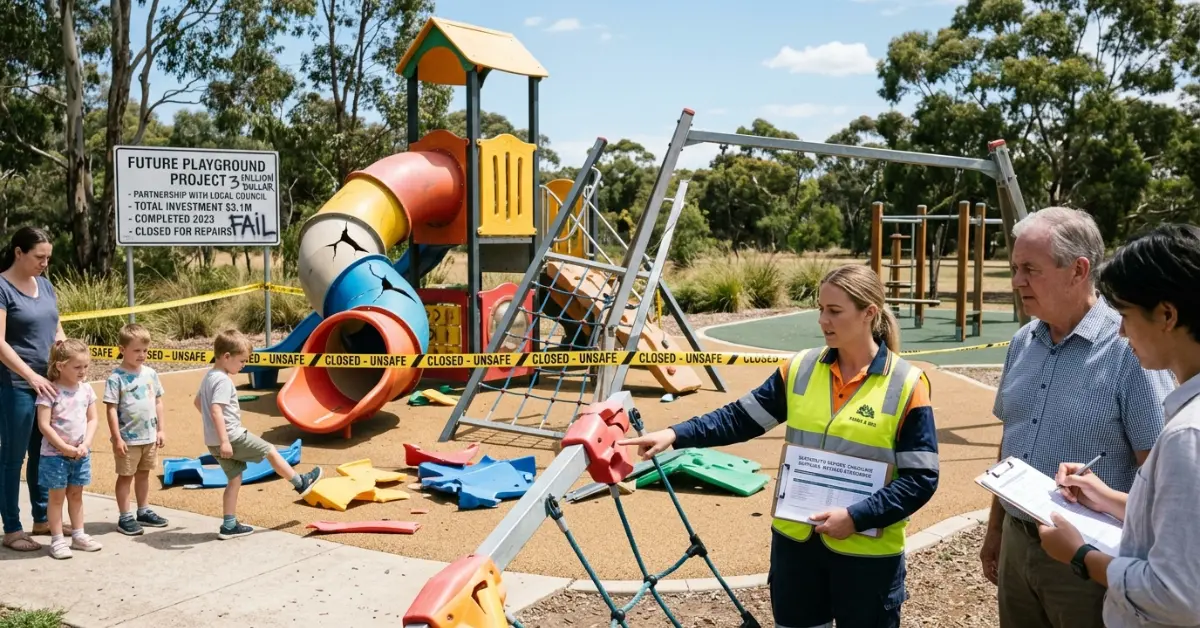
After a multimillion-dollar playground failure brought to light mounting concerns about durability, maintenance, and procurement standards in early learning settings, childcare supplies are under renewed investigation across Australia. Regulators and suppliers are increasingly viewing equipment lifespan as a primary safety risk, thus the problem is no longer limited to isolated flaws.
In metropolitan Adelaide and regional South Australia, SafeWork SA sent 385 safety notices to schools and daycare facilities between July 2023 and February 2024. Of these, 22 prohibition notices prohibited the use of dangerous equipment until major flaws were fixed. The shortcomings have increased pressure on centers to reevaluate how durable products are purchased, monitored, and maintained in light of growing incident numbers throughout the country and an ongoing Senate investigation into the safety and quality of early childhood education.
The Scale of the Durability CrisisBy the Numbers: Equipment Failures Across Australia
The statistics paint a troubling picture. At least seven children each day go missing or are unaccounted for. Others are locked out of childcare centres. This represents a 49 per cent rise over the same three-year period.
While not all incidents stem from equipment failure, the broader pattern reveals systemic quality issues across the sector.
The SafeWork SA compliance campaign provides insight into what inspectors found. The breakdown includes 363 improvement notices directing centres to fix identified risks. It also includes 22 prohibition notices stopping equipment use entirely until repairs were completed. Inspectors audited 85 total facilities across metropolitan and regional areas.
What’s Actually Failing: From Surfaces to Structures
Playground equipment in Australia must comply with Australian Standard AS 4685. This covers design and installation requirements along with maintenance specifications. Impact-absorbing surfaces fall under AS 4422. This standard specifies materials and testing methods.
Most commercial playground equipment is designed to last 10 to 20 years or sometimes longer. However, this lifespan depends heavily on several factors. Weather exposure plays a significant role. Usage intensity matters considerably. Maintenance quality proves essential. Initial product standards establish the foundation.
The problems inspectors identify most frequently include worn rubber surfacing and degraded fall zones beneath climbing equipment. Loose-fill materials that haven’t been topped up create hazards. Structural components showing stress or corrosion pose serious risks.
Rubber undersurfacing is particularly susceptible to damage from dropped tools or furniture. It experiences excessive wear at high-traffic points like the base of ladders or slide exits. These failures often require patching well before the material’s expected lifespan ends.
Industry analysis reveals that procurement decisions significantly influence long-term durability outcomes. Centres that prioritise initial cost savings over quality specifications frequently face higher replacement costs. They also encounter elevated repair costs within shorter timeframes.
Complete Wholesale Suppliers has observed increasing demand for guidance on balancing cost efficiency with safety compliance and durability standards. The company serves the early childhood education sector across Australia.
The For-Profit Factor: Cost-Cutting at Children’s ExpenseQuality Gaps Between Provider Types
Data from Australia’s childcare regulator consistently shows a troubling pattern. Among for-profit long daycare centres rated by regulators, 11 per cent are not meeting national minimum quality standards. They’re classified as just “working towards” compliance.
This gap isn’t coincidental. A 2023 Australian Competition and Consumer Commission investigation found that large for-profit providers spend significantly less on staffing than their not-for-profit counterparts. They employ higher proportions of part-time and casual staff. They hire less experienced early childhood teachers. They are more likely to use award rates of pay rather than enterprise agreement rates.
These cost-cutting measures extend beyond staffing. When childcare centres prioritise profit margins, equipment procurement budgets often shrink. Maintenance allocations face similar reductions. Cheaper supplies with shorter lifespans replace more durable options. Maintenance schedules stretch out. Professional inspections get delayed.
The Real Estate Investment Connection
Australia’s childcare sector has become an attractive investment class. Property transactions reached $720 million during 2024 alone. Sector revenue is forecast to grow from $21 billion in 2024 to nearly $26 billion by 2031.
Real estate brokers view childcare as offering secure returns. Property developers see government-backed income streams. Investment bankers recognise the stability childcare subsidies provide.
When property investors prioritise returns over quality, the impact reaches playground equipment and essential supplies. Cheaper and less durable childcare supplies maximise short-term property values. They boost returns on investment. Yet they compromise long-term safety and functionality.
Australian Standards: The Durability DisconnectWhat the Rules Actually Require
Australian Standard AS 4685:2017 sets clear requirements for playground equipment safety. It covers everything from structural integrity to fall zones around moving equipment. AS 4422:2016 addresses surfacing specifications. It details how impact-absorbing materials must perform when tested.
For example, unitary surfaces like rubber and synthetic grass should be tested from installation. Then testing should occur on a three-yearly basis to ensure they maintain impact performance. Loose-fill materials such as bark or sand must be maintained at minimum depths of 300 millimetres.
The standards are comprehensive and technically sound. Equipment suppliers must provide certified test results confirming compliance with Australian standards for all playground and safety equipment. Complete Wholesale Suppliers and similar industry participants follow these requirements.
The Enforcement Gap
Regulators are under-resourced. Inspections happen infrequently. The Productivity Commission found that services repeatedly failing to meet minimum standards are still allowed to operate. Some continue for more than a decade.
Penalties rarely match the severity of violations. In one case highlighted during the recent inquiry, a private operator accumulated 1,700 breaches over four years. Children suffered bone fractures at their facilities. The financial penalty totalled just $2,000. The company continues to expand operations.
Services notified before inspectors arrive can implement temporary fixes. These don’t address underlying maintenance failures. Equipment receives fresh coats of paint. Loose-fill surfacing gets quick top-ups. Then after inspectors leave, the neglect continues.
What Needs to Change: Systemic and Operational ReformsImmediate Actions for Childcare Operators
Operators can implement several changes immediately without waiting for regulatory reform. Establishing regular third-party safety audits beyond standard inspections provides independent verification of equipment condition.
Creating transparent reporting systems demonstrates commitment to safety standards. These keep parents informed about facility conditions. Training all staff on daily equipment inspection protocols ensures that emerging issues are identified early. This happens before they escalate into safety hazards.
Industry resources can assist operators in making informed procurement decisions. Guidance on bulk purchasing strategies that balance cost efficiency with quality standards proves valuable. Complete Wholesale Suppliers and similar industry participants have developed frameworks for centres seeking to optimise their supply chains while maintaining compliance with Australian standards.
Systemic Reforms Required
Broader changes require government action and industry cooperation. The Early Childhood Education and Care (Strengthening Regulation of Early Education) Bill 2025 proposes significant changes. It would allow the Commonwealth to determine that providers are no longer eligible for childcare subsidies based on quality and safety considerations.
Additional reforms under consideration include increased funding for regulators to conduct frequent unannounced spot inspections. Mandatory durability certification requirements for all childcare supplies and equipment would establish baseline standards. Stronger financial penalties could genuinely deter non-compliance.
The Senate inquiry commenced in August 2025. It is expected to deliver its final report by the end of March 2026. Industry observers anticipate strong recommendations around equipment standards and procurement protocols. They also expect detailed enforcement mechanisms.
What Parents and Operators Should Consider
Parents visiting childcare centres should ask specific questions about equipment age and maintenance schedules. They should inquire about the date of the last professional safety audit. Requesting to see maintenance logs and inspection reports provides transparency into operational standards.
Warning signs include visible wear on equipment surfaces and missing safety features like handrails or guardrails. Inadequate or degraded impact-absorbing surfacing raises concerns. Rust or corrosion on metal components indicates neglect. Loose bolts or unstable structures demand immediate attention.
For operators, understanding the full lifecycle costs of equipment and supplies proves essential. Initial savings from cheaper procurement often disappear when factoring in accelerated replacement cycles. Increased injury liability creates financial exposure. Potential regulatory penalties add further costs.
Moving Forward
The durability crisis in childcare supplies reflects fundamental choices about whether the sector values children’s safety over investor returns. As the Senate inquiry continues and legislative reforms progress, pressure for meaningful change is building across multiple stakeholder groups.
Quality childcare requires adequate investment in durable and properly maintained equipment. It requires regulators with resources to enforce standards effectively. Most importantly, it requires recognising that childcare is essential infrastructure. It deserves the same quality standards demanded for schools and hospitals along with other public services.
The conversation about childcare quality in Australia has reached a critical juncture. Upcoming policy decisions will determine whether durability becomes a mandatory consideration in procurement and maintenance protocols. The alternative is that it remains subordinate to short-term financial optimisation.
