
The first week with a new espresso machine teaches you more than any manual, and Meraki rewards a calm, step-by-step approach that turns guesswork into a repeatable morning ritual. If you want to understand how to use a Meraki coffee machine properly, start with the basics: fresh beans, a steady grind, and a consistent routine you can repeat before you start experimenting. This guide walks through each stage in order, so your coffee improves day by day instead of by accident.
Before Your First Shot
Preparation begins the night before you brew, because how to use a Meraki coffee machine starts with beans stored correctly and a grinder set for espresso, and Meraki machines perform best when the coffee is fresh and the dose is consistent. Buy beans roasted within the past few weeks, store them airtight away from light and heat, and grind only what you need for each session. Weigh your dose with a small scale rather than scooping by eye, since a gram or two of difference changes extraction more than most beginners expect.
Water and temperature deserve the same attention in how to use a Meraki coffee machine, because Meraki heats to a stable brewing range but cannot fix hard or stale-tasting water on its own. Fill the tank with fresh, filtered water each morning, and let the machine fully warm up, including the portafilter, before pulling a shot. A cold portafilter steals heat from the first extraction and leaves the cup tasting thin, so lock it in during warm-up and give the machine a few unhurried minutes.
Grinding, Dosing, and Tamping
Grind size is the lever you will adjust most often when learning how to use a Meraki coffee machine, and Meraki pairs with a burr grinder that can make the fine, even particles espresso demands. If shots run too fast and taste sour, grind finer; if they choke and taste bitter, grind coarser; change one step at a time and note the result. Consistency matters more than hitting a magic number, because the same grind setting should give you similar shot times across several days.
Dosing and tamping complete the puck in how to use a Meraki coffee machine, where Meraki works best with a level, even tamp that neither cracks the bed nor leaves loose channels. Distribute the grounds with a gentle shake or a distribution tool, tamp straight down with firm, even pressure, and polish lightly without pressing a second time. A level puck lets water flow evenly through the coffee instead of carving fast paths that under-extract some grounds and over-extract others.
Pulling the Shot
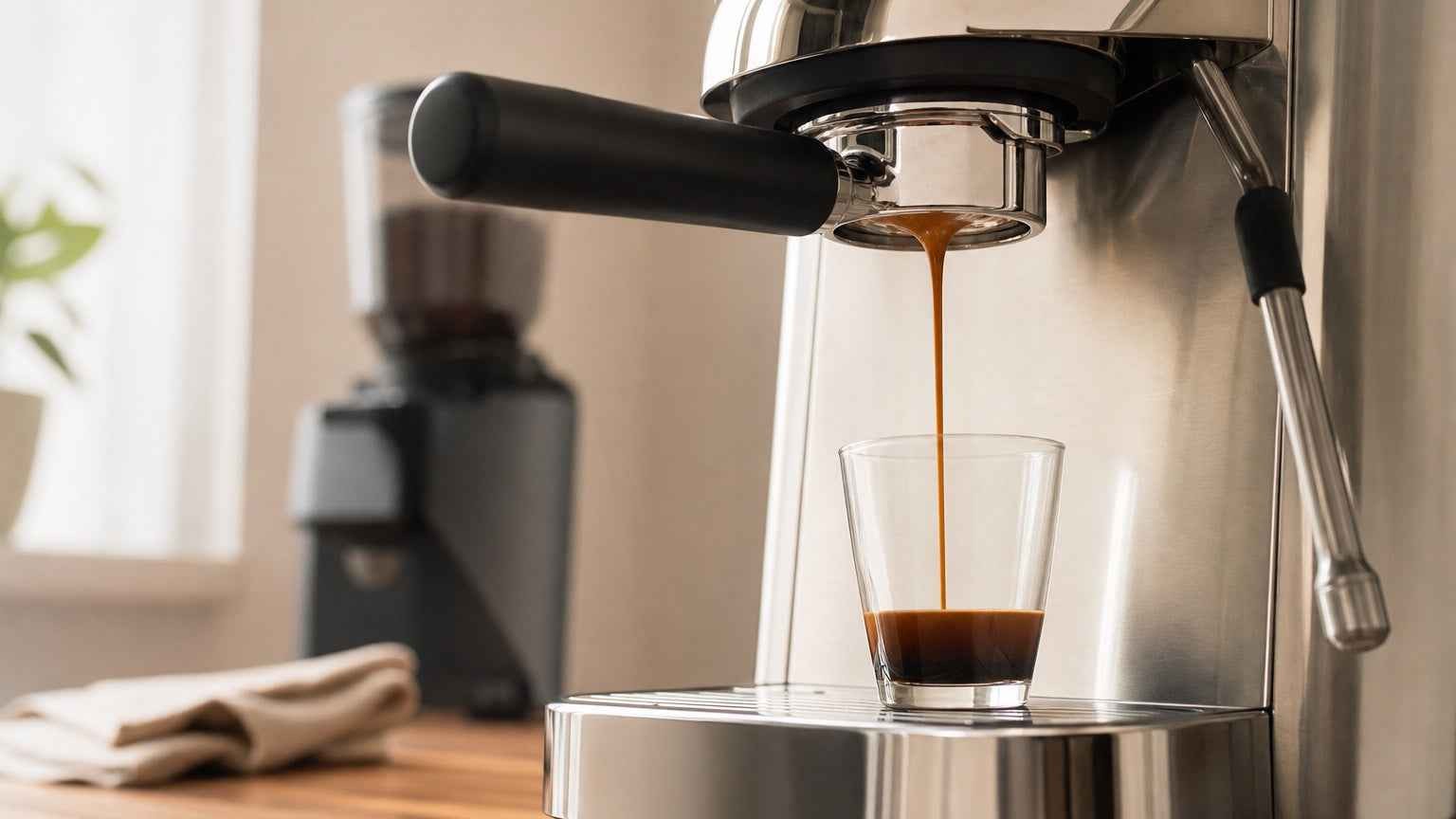
Timing your shot is the simplest way to judge it while learning how to use a Meraki coffee machine, since Meraki extraction usually lands in a pleasant window when dose, grind, and yield are balanced. Aim for roughly twice the coffee weight in the cup compared with the dose, and watch the stream: it should start as slow drips, join into a steady, honey-like flow, and finish before blonding turns pale and watery. If the shot runs far outside that window, adjust grind before changing anything else.
Taste beats the stopwatch in the end, and how to use a Meraki coffee machine becomes intuitive once you link flavors to causes, with Meraki shots revealing sourness when under-extracted and bitterness when pushed too far. Keep short notes on dose, yield, time, and taste for each session, and patterns will emerge within a week. Do not chase perfect numbers; chase a cup you enjoy, then repeat the recipe that produced it until it feels automatic.
Steaming Milk the Right Way
Milk texture separates an okay flat white from a great one in how to use a Meraki coffee machine, because Meraki steam power can create silky microfoam once you learn the two phases of stretching and rolling. Start with cold milk in a cold jug, introduce air briefly with the wand tip near the surface until the milk grows by about a third, then submerge the tip and roll the milk into a glossy vortex. Stop when the jug feels hot to hold, not scalding, and tap out any large bubbles before pouring.
Pouring is the final skill in how to use a Meraki coffee machine, and Meraki milk rewards a slow, steady hand that starts high to dive under the crema and finishes low and close for latte art. Practice with water and a drop of soap if you want to save milk while learning the motion, since the mechanics transfer directly. Even without art, well-textured milk transforms espresso into a café-quality drink, and it is worth practicing a little each day.
Cleaning and Daily Care
Cleaning is part of brewing, not an afterthought, in how to use a Meraki coffee machine because Meraki stays consistent only when coffee oils and milk residue are kept out of the group head and steam wand. Purge and wipe the wand immediately after every milk drink, rinse the portafilter and basket, and run a short water flush through the group after your last shot. These habits take two minutes and prevent rancid flavors from building up unnoticed.
Weekly care goes a step further in how to use a Meraki coffee machine, with Meraki benefiting from a backflush if your model supports it, plus a wash of the drip tray, water tank, and any removable parts. Descale on the schedule the manual suggests for your water hardness, and replace gaskets or shower screens when you notice leaks or uneven flow. A clean machine is a predictable machine, and predictable machines make better coffee with less effort.
Building a Routine You Keep
The goal of learning how to use a Meraki coffee machine is a routine so comfortable that good coffee happens even on rushed mornings, and Meraki fits that goal when every step has a fixed place and order. Lay out beans, scale, tamper, and cups the same way each time, and follow the same sequence: warm up, grind, dose, tamp, extract, steam, clean. Ritual removes decisions, and fewer decisions mean fewer mistakes before caffeine.
Finally, enjoy the learning curve itself, because how to use a Meraki coffee machine is a skill that keeps paying back, and Meraki gives you room to grow from simple, sweet shots toward lighter roasts and finer control. Celebrate small wins, like your first shot that tastes balanced from first sip to last, and keep experimenting one variable at a time. Great home coffee is not a destination you arrive at once; it is a habit you refine, and every morning is another chance to brew a little better.
