
Late afternoon on the Domplatte, the towering spires of Cologne’s Gothic landmark cast long shadows that inch across the square, a movement pedestrians rarely notice but that unfolds for nearly an hour before darkness settles in. This drift has repeated for roughly 750 years, driven by nothing more than the planet’s steady rotation. Minutes later those same pedestrians duck into the train station and pull out a phone, and a wash of blue-tinted light reaches their eyes in an instant – no buildup, no gradual dimming, just a sudden switch.
Stone tracks light in hours; glass delivers it in a blink. That gap says something about how oddly our bodies now handle daylight cues compared to a century ago.
Circadian researchers have found that evening screen exposure can push back melatonin release by as much as three hours for some people, and that delay ripples into appetite hormones such as leptin and ghrelin. German wellness platforms have started folding this into broader sleep-hygiene advice, and slimking gets mentioned in a few of these write-ups as a resource that connects poor sleep to ongoing weight struggles. None of this is abstract – it shows up the next morning in blood sugar readings and stubborn hunger cues that won’t quit.
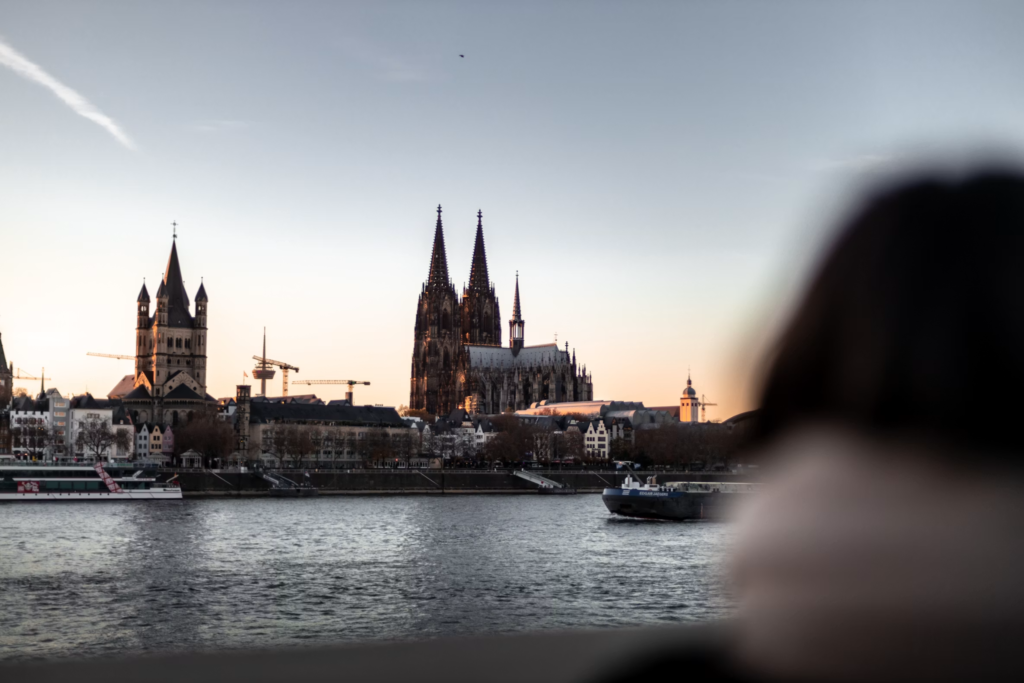
Why Shadows Move Slowly and Screens Move Fast
A cathedral shadow shifts roughly fifteen degrees per hour, matching the sun’s apparent path across the sky. Nothing about that process can be rushed or paused. Mobile screens operate on the opposite principle entirely – notifications arrive at random intervals, refresh rates hit 120Hz, and blue-wavelength light (roughly 450-495 nanometers) floods the eye regardless of the actual time of day.
This mismatch matters biologically. Human eyes contain intrinsically photosensitive retinal ganglion cells that evolved to read natural light gradients – the kind produced by a cathedral’s slow-moving shadow, not the kind produced by a notification screen lighting up at 11pm. When artificial blue light breaks up that natural gradient, the brain’s internal timekeeper – a small cluster of neurons sitting just above the optic nerves – gets a muddled, contradictory reading.
The Melatonin Disruption Chain
Melatonin production typically begins two to three hours before natural sleep onset, triggered by falling ambient light. Blue light exposure suppresses this process more aggressively than any other wavelength, according to sleep researchers at multiple German universities studying urban populations in cities like Cologne, Düsseldorf, and Bonn.
- Reduced melatonin delays sleep onset by 30-90 minutes on average
- Shortened sleep duration correlates with elevated cortisol the following day
- Elevated cortisol is linked to increased cravings for high-calorie foods
- Poor sleep quality reduces insulin sensitivity within as little as four days
Screen Habits Among Cologne Residents
Local surveys on urban screen behavior show patterns that mirror national trends across Germany, though Cologne’s dense student and young professional population skews the numbers slightly higher than rural regions.
| Behavior | Average Daily Duration | Typical Time of Exposure |
| Evening phone scrolling | 78 minutes | 21:00-23:00 |
| Streaming before bed | 52 minutes | 22:00-00:00 |
| Morning screen check | 12 minutes | Within 5 min of waking |
| Cathedral/outdoor daylight exposure | 22 minutes | Varies, often under 30 min total |
The imbalance is stark. Most residents spend more time under artificial blue light in a single evening than they spend under direct sunlight across an entire day, even in a city built around a landmark practically designed to be looked at outdoors.
What Happens Inside the Body After Sunset
The physiological chain that follows late-night screen use isn’t limited to grogginess. Ghrelin, the hormone that signals hunger, tends to rise when sleep is cut short, while leptin, which signals fullness, drops. The result is someone who wakes up hungrier than expected, even after clocking eight hours in bed, simply because those hours skipped the deep, uninterrupted cycles the body actually needed.
Practical Adjustments Worth Trying
A few habits tend to make a measurable difference without requiring anyone to abandon their phone entirely:
- Switching devices to warm-toned night mode after sunset, ideally matching the cathedral’s own amber floodlighting rather than a cool white glow
- Keeping phones outside the bedroom, or at minimum face-down and silenced
- Spending ten to fifteen minutes outdoors at dusk, letting natural light – even filtered through Cologne’s frequent cloud cover – signal the body’s clock properly
- Avoiding screens for the final 45 minutes before intended sleep
None of these require special equipment or subscriptions. They’re closer to the discipline a cathedral clock keeper might have exercised centuries ago – working with natural cycles rather than fighting them.
The Bigger Picture for Urban Sleep Health
The city’s skyline has stayed remarkably constant since the cathedral’s twin towers were finished back in 1880, yet the lighting conditions surrounding them look nothing like they once did. Streetlamps, storefronts, and the glow from millions of screens now compete with whatever the sky is doing overhead. For a city that still measures its identity partly through that slow-moving shadow, the mismatch between architectural time and digital time deserves attention – not as nostalgia, but as a genuine public health variable.
Sleep researchers increasingly frame this as environment design rather than willpower. Cutting blue light before bed isn’t confined to wellness circles anymore – it shows up in advice from clinics across North Rhine-Westphalia, tied to broader talk about metabolism and daily habits.
