
Introduction
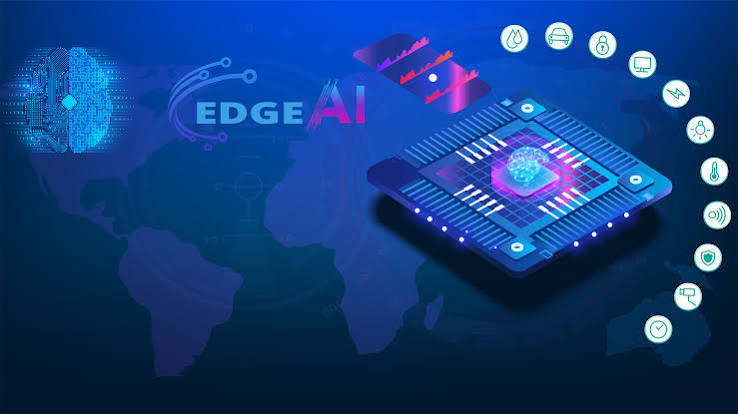
Edge AI is an emerging technology that combines Artificial Intelligence (AI) with edge computing to process data directly on local devices instead of relying entirely on centralized cloud systems. This allows faster decision-making, reduced latency, and improved privacy.
With the rapid growth of IoT devices, smart systems, and real-time applications, Edge AI is becoming a key technology in modern computing infrastructure.
What is Edge AI?
Edge AI refers to the deployment of artificial intelligence algorithms on edge devices such as smartphones, cameras, sensors, and embedded systems.
Instead of sending data to the cloud for processing, AI models run locally on the device itself.
How Edge AI Works
Edge AI processes data close to where it is generated.
- Data is collected by sensors or devices.
- AI models are embedded in edge hardware.
- Data is processed locally in real time.
- Only important insights are sent to the cloud.
- Systems take immediate action based on results.
This reduces dependency on cloud computing.
Key Components of Edge AI
Edge Devices
Devices like smartphones, cameras, and IoT sensors.
AI Models
Machine learning algorithms optimized for local processing.
Edge Hardware
Special chips like GPUs, TPUs, and NPUs.
Data Processing Units
Handle computation at the edge.
Connectivity Systems
Enable communication with cloud when needed.
These components enable intelligent edge systems.
Applications of Edge AI
Smart Surveillance
Real-time facial recognition and monitoring.
Autonomous Vehicles
Instant decision-making for safe driving.
Healthcare Devices
Wearable health monitoring systems.
Smart Homes
Intelligent automation of devices.
Industrial Automation
Predictive maintenance in factories.
Retail Systems
Customer behavior analysis in real time.
Edge AI is widely used across industries.
Benefits of Edge AI
Low Latency
Faster processing without cloud delay.
Improved Privacy
Data stays on local devices.
Reduced Bandwidth Usage
Less data sent to cloud systems.
Real-Time Decision Making
Instant responses to events.
Higher Reliability
Works even without internet connection.
These advantages make Edge AI powerful.
Challenges of Edge AI
Limited Hardware Resources
Edge devices have lower computing power.
Model Optimization Difficulty
AI models must be lightweight.
Security Risks
Edge devices can be physically accessed.
Maintenance Complexity
Updating distributed devices is difficult.
Energy Constraints
Battery-powered devices have limitations.
These challenges affect large-scale deployment.
Role of Artificial Intelligence in Edge AI
AI is the core of Edge AI systems, enabling devices to analyze data, recognize patterns, and make decisions independently without human intervention.
Edge AI vs Cloud AI
Edge AI processes data locally on devices, while Cloud AI processes data in centralized servers. Edge AI is faster and more private, while Cloud AI offers more computing power.
Future of Edge AI
The future of Edge AI is highly promising and will become a foundation for intelligent real-time link kubet.
Future developments may include:
Fully Autonomous Edge Devices
Self-learning and self-operating systems.
AI Chips in Every Device
Universal embedded intelligence.
6G-Powered Edge Networks
Ultra-fast connectivity for edge systems.
Smart Cities with Edge AI
Real-time urban intelligence.
Human-AI Collaboration Systems
Seamless interaction between humans and machines.
Edge AI will become a core part of digital ecosystems.
Conclusion
Edge AI is transforming computing by bringing intelligence closer to where data is generated. It improves kubet, privacy, and efficiency, making it essential for modern applications.
Although challenges such as hardware limitations, optimization, and security exist, continuous innovation is making Edge AI more powerful and scalable.
In the future, Edge AI will play a major role in smart systems, autonomous machines, and real-time decision-making technologies.
As technology evolves, Edge AI will become a fundamental pillar of intelligent digital infrastructure.