
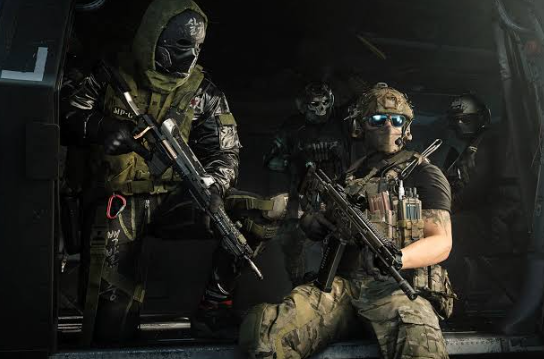
Yep, Modern Warfare 4 is already out. You just need to say you’re in New Zealand and live in New Zealand, and everything suddenly makes sense. So my current identity is a New Zealander. After getting into the game, I queued straight into Ground War, wanting to see what was new beyond the few maps I’d touched in the beta. Because I’d been soaking in DMZ for the past few days, I was already level 34, and my HAN86 was at level 70—and by the way, a lot of guns in this game cap at level 72. It’s not my memory playing tricks on me; there really are that many levels.
The Double XP Thing Deserves Its Own Section
I originally wanted to talk about Ground War, but I couldn’t help bringing this up first.
Activision changed the timer logic for Double XP tokens: now it only counts actual in-match time. If you’re standing around in menus, waiting for matchmaking, or watching loading bars, the token doesn’t tick down. Last night I played DMZ. I activated a one-hour Double XP token at the start. After finishing a 20-minute raid and coming out, it still had 38 minutes left. Twelve hours of real time had passed, and the token was still as unhurried as ever. If this had happened in the past, I’d probably have treated it as a positive example of “Activision finally listened to community feedback.” But what’s more interesting is that Battlefield should have done this first—they flip-flopped on similar mechanics, said they’d do it and then didn’t, and in the end it just fizzled out. A design that’s been complained about for so many years was implemented by CoD first, and implemented very cleanly.
Weapon levels are the same story. HAN86 is at 70/72, and the M4 is on the same long climb. The level cap itself sends a signal: this game wants you to stay inside it for a long time, rather than max out one gun and move on. For people who enjoy the progression curve, that’s fine. For people who just want specific attachments and specific camos and then want to go play the modes they actually want to play, level 72 is a wall.
Ground War Is Better Than Expected, but CoD Vehicles Are Still CoD Vehicles
Combat Outpost is the core mode of this game’s Ground War: 32v32, with three launch maps—Forest, Imjin Farmland, and Wolves Stadium. Forest was the first one I played: woods, hillsides, scattered buildings, with capture points and spawn points mixed in. I put together a sniper with a thermal scope. I’d originally planned to hold angles at mid-range, but the moment I landed I saw all my teammates waiting for tanks.
Tanks are indeed fun. You climb in, the turret starts turning, and enemy infantry go down like bowling pins being swept aside. But after the fun wears off, you also clearly realize: CoD vehicles were never meant to exist for realism. They’re enhanced killstreak rewards, mobile firepower points with health bars—not a Battlefield-style vehicle system that requires coordination, repairs, and an understanding of armor angles. You fire a shell at a lamppost, and the lamppost doesn’t budge; you fire an RPG at the corner of a building, and it doesn’t even give you a dent. The original joke about “Dice, look at them” actually turns into reverse criticism here—CoD doesn’t lack resources; it simply chose not to do environmental destruction, because once it did, its carefully designed map rhythm would fall apart.
The capture-point reinforcement system is unexpectedly interesting, though. Capturing a point isn’t enough—you have to hold it and reinforce it, and then the team gets UAVs, supply drops, and light tanks in sequence. That turns “holding a point” from a boring chore into an investment with visible returns. By comparison, Battlefield’s design for vehicle spawns at flag points really does look conservative. If BF back then had turned “holding a flag point → unlocking team vehicles” into a stable positive loop, instead of making players search the whole map for spawn points, the rhythm of large-scale modes would have been completely different.
Collateral: CoD’s Take on “Search, Fight, Extract”?
Collateral is another mode that surprised me. It combines search-and-destroy bomb plant/defuse logic with a round-to-round economy system. Win a round, get money; spend money on guns, armor, and Perks. In the first round I was using the default AK, while someone on the other team had already pulled out a modified SMG. By the third round our economy had collapsed, and we were forced into an “eco round.” That feeling really was very Counter-Strike.
The problem is that whether Collateral survives doesn’t depend on the economy system itself—it depends on the maps. CS’s economy system works because every map has sufficiently clear engagement lanes, sufficiently stable utility interactions, and sufficiently short rounds. CoD’s map design philosophy has long served respawn modes: faster pace, more routes, more fragmented information. Collateral’s current maps haven’t yet proven they can support a round-based economy that requires careful budgeting. It has potential, but for potential to become habit takes time.
Now, CoD MW4 Bot Lobbies: They Solve a Real Pain Point
By this point, I guess many people have already opened a search bar. Every time a new CoD releases, the same set of keywords explodes on schedule: bot lobbies, how to get into a bot lobby, the fastest way to level up guns. This is no accident. MW4’s weapon level cap is 72, the camo challenge counters don’t speed up just because you “want to play normally,” and opponents in public matchmaking won’t go easy on you just because you only want to relax today.
The essence of a Bot Lobby is to separate “grinding” from uncontrollable public matches. You enter a room organized by a host, mainly filled with AI or low-intensity opponents, and advance weapon levels, camo counts, and battle pass progress in a controllable environment. It doesn’t change the core fun of the game, but it changes the slope of the progression curve.
The risks must be made clear. Activision’s policy doesn’t literally say “bot lobbies are prohibited,” but it defines boosting—using game mechanics to artificially obtain XP, weapon levels, or unlockable content—and reserves a penalty range from data resets to permanent bans. RICOCHET anti-cheat runs analysis on the server side; VPN region spoofing, account sharing, and third-party software are behaviors that will clearly be watched. Meanwhile, a private room that you participate in with your own account and that doesn’t inject any external programs sits in a gray but relatively low-risk position. No third party can promise zero risk—that sentence itself is the honest bottom line.
If you decide to go the third-party route, MMOEXP is a reference point worth looking at first—not because its name appears frequently, but because its Bot Lobby page writes the rules specifically enough: you need to provide your Activision ID, add the host as a friend, and join the party to wait for the match to start; in-match requirements include prioritizing the nearest point, not touching B, not killing real players, suiciding to reset after accumulating about 7 kills, and not using tactical nukes. The existence of these rules shows that it is at least trying to make “controllability” part of the process, rather than throwing players into a room and praying they don’t get flagged. The price tiers are also transparent, with listed prices from single-session experiences to multi-round packages. It isn’t cheap, and it doesn’t promise safety, but it puts “what you’re buying” and “what you need to follow” on the table.
So, Is This MW4 Worth It?
If you’re someone who came all the way from the old MW2 and MW3, this game will give you a strange sense of familiarity: the gunfeel is back, the weight of movement is back, and the Double XP change shows that someone is actually listening. Ground War’s capture-point reinforcement and Collateral’s economy system are two experiments pointing in the right direction, even if neither is fully mature yet. The amount of content in the campaign and DMZ is also worth the launch price.
But if you’re someone who doesn’t want to be locked out by the level-72 weapon cap, and doesn’t want to be repeatedly worn down by the randomness of public matches while grinding camos, then the topic of Bot Lobbies won’t disappear just because you pretend not to see it. The question was never “should you grind,” but “how do you grind, what cost are you willing to bear, and whether that cost is worth the time you save.”
My advice is simple: first, play the modes you actually want to play thoroughly. The Forest map in Ground War is worth a dozen or so matches with your own guns, and Collateral’s economic game is worth losing a few eco rounds to understand. Once you’ve figured out which guns you really want to max out and which camos you really want, then look at third-party options. At that point, MMOEXP is at least a reference point that clearly lays out the rules, prices, and restrictions—you don’t have to choose it, but you should know what it’s selling and what it doesn’t promise.
