
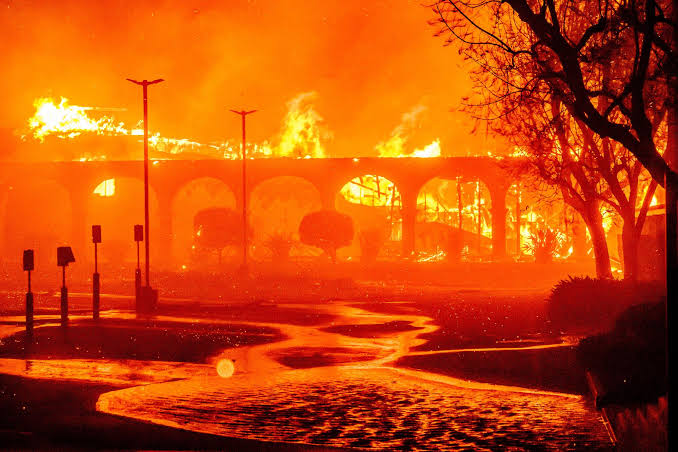
The Eaton Fire left thousands of Pasadena and Altadena families sorting through what remains of their homes. Once the immediate danger passes, a different kind of pressure sets in. Insurance adjusters call. Contractors give estimates that never quite match what the policy covers. And somewhere in the background, homeowners start asking the same question: was this fire preventable, and does that matter for what happens next?
For wildfires tied to utility equipment, the answer to that second question is often yes, but not for the reason most people expect. California has a legal doctrine that changes how these claims work, and understanding it can shape every decision a homeowner makes in the months ahead.
What Inverse Condemnation Means for Fire Victims
Most personal injury or property damage claims require proving the other party was careless. You show they had a duty, they breached it, and that breach caused your loss. Utility liability after a wildfire often works differently.
California courts have long applied a doctrine called inverse condemnation to public utilities. The idea traces back to the state constitution, which requires compensation when private property is damaged for public use, even when no one did anything wrong. Utilities operate as quasi-public entities providing an essential service, and courts have extended that same logic to wildfire damage caused by their equipment.
In practice, this means a homeowner does not have to prove the utility ignored a known hazard or skipped a maintenance inspection. If it can be shown that utility equipment, such as a power line, transformer, or pole, started or contributed to the fire, the utility can be held financially responsible for the resulting property damage. Fault becomes far less central to the case than it would be in a typical negligence claim.
Why This Distinction Actually Matters
This is not just a technical point for attorneys to argue over. It changes the entire trajectory of a claim.
Negligence cases can take years to resolve because so much depends on internal utility records, inspection logs, and expert testimony about what a reasonable utility should have done. Inverse condemnation claims move faster in many respects because the central question is narrower: did the equipment cause the fire, and did the fire damage the property.
That said, faster does not mean simple. Utilities and their insurers still contest causation, especially in fires with multiple possible ignition points or overlapping weather conditions like the Santa Ana winds present during the Eaton Fire. Investigators from Cal Fire, the utility itself, and any retained experts may reach different conclusions, and those conclusions carry real weight in settlement negotiations.
Documentation That Strengthens a Claim
Homeowners often assume the insurance claim and the utility liability claim are the same process. They are not, and the paperwork one needs for each can overlap only partially. Before signing anything or accepting a settlement offer, it helps to have gathered the following.
Photos and video from before the fire. Anything showing the condition of the home, landscaping, and personal property prior to the loss carries far more weight than an inventory written from memory. Social media posts, real estate listing photos, and even old home videos have all been used to establish pre-loss condition.
A complete list of damaged or destroyed property. This includes structures, vehicles, and personal belongings, with approximate purchase dates and replacement costs where known.
All correspondence with the insurance company. Adjuster notes, claim numbers, and any denial or reduction letters should be kept together in one file, physical or digital.
Contractor and rebuild estimates. These need to reflect actual current construction costs in the Pasadena area, not outdated pre-fire figures, since materials and labor pricing shifted significantly after such a large regional loss event.
A timeline of the fire and evacuation. Even rough notes about when smoke was first noticed, when evacuation orders came through, and when the homeowner was able to return help establish the sequence of events later.
Firms handling these cases, including Roxell Richards’ Eaton Fire legal team, often ask for this same documentation early on, because it lets them evaluate a claim’s strength before any settlement conversations begin.
Mistakes That Weaken an Otherwise Strong Claim
A few patterns show up again and again in wildfire property claims, and each one can chip away at what a homeowner ultimately recovers.
Accepting the first insurance settlement offer without an independent rebuild estimate is one of the most common. Insurance companies calculate replacement cost using their own formulas, which do not always reflect real Pasadena-area contractor pricing after a disaster drives up demand.
Another is waiting too long to preserve evidence. Debris removal, required for safety and often mandated by local authorities, can eliminate physical evidence of an ignition source if it happens before an investigation captures it. Homeowners do not need to delay cleanup entirely, but documenting the site thoroughly beforehand matters.
Signing a release without understanding what it covers is a third pitfall. Some settlement agreements resolve only the insurance claim while leaving the door open for a separate utility liability claim. Others attempt to close off both. Reading the release language carefully, or having someone else read it, prevents accidentally giving up a claim that has not been valued yet.
How Settlement Timelines Typically Unfold
Homeowners often expect a single lump-sum check once liability is established, but wildfire settlements rarely work that way. Insurance payouts usually arrive first, often in stages tied to the rebuild process itself: an initial payment for temporary housing, a second for the structure once construction begins, and a final disbursement once the home passes inspection.
Utility liability settlements move on a separate, generally slower track. Large-scale fires sometimes lead to a consolidated claims process, where thousands of affected households file within the same framework rather than pursuing individual lawsuits. This can mean waiting months, sometimes longer, for a resolution, but it also tends to produce more consistent outcomes across similarly situated claimants than one-off negotiations would.
Understanding which track a particular claim falls into, insurance versus utility liability, and how the two interact, helps set realistic expectations for when funds will actually arrive.
Deciding Whether to Work With an Attorney
Not every homeowner needs legal representation to file an insurance claim. But utility liability claims tied to inverse condemnation involve a different level of complexity: multiple defendants, competing investigations, and settlement funds that sometimes get established for large-scale fires rather than handled case by case.
Some published overviews of how Eaton Fire settlements are structured can help homeowners understand how these larger settlement structures typically work, including how claims get valued relative to one another when many households are affected by the same fire.
Homeowners weighing this decision should ask a few practical questions. Is there a clear utility equipment connection to the fire’s origin? Is the damage extensive enough that a modest miscalculation in the claim could mean a meaningful financial gap? Does the timeline involve a formal claims process with filing deadlines that are easy to miss without guidance?
If the answer to any of these is yes, getting a professional opinion early, even just a consultation, tends to be worth the time.
Moving Forward After the Eaton Fire
Rebuilding after a wildfire is slow no matter how strong a legal claim turns out to be. But understanding the difference between a standard insurance claim and a utility liability claim under inverse condemnation gives Pasadena homeowners a clearer picture of their options.
The core takeaways are straightforward. Document everything before debris removal begins. Do not assume the first settlement offer reflects true rebuild costs. Understand exactly what any release language covers before signing. And when equipment failure appears connected to the fire’s cause, know that California law does not require proving carelessness to hold a utility financially accountable.
None of this makes the process painless. It does make it more navigable.
