
Artificial intelligence is becoming a standard part of business operations for many small and mid-sized organizations. From customer service automation to workflow management and data analysis, AI tools are helping businesses improve efficiency and support decision-making.
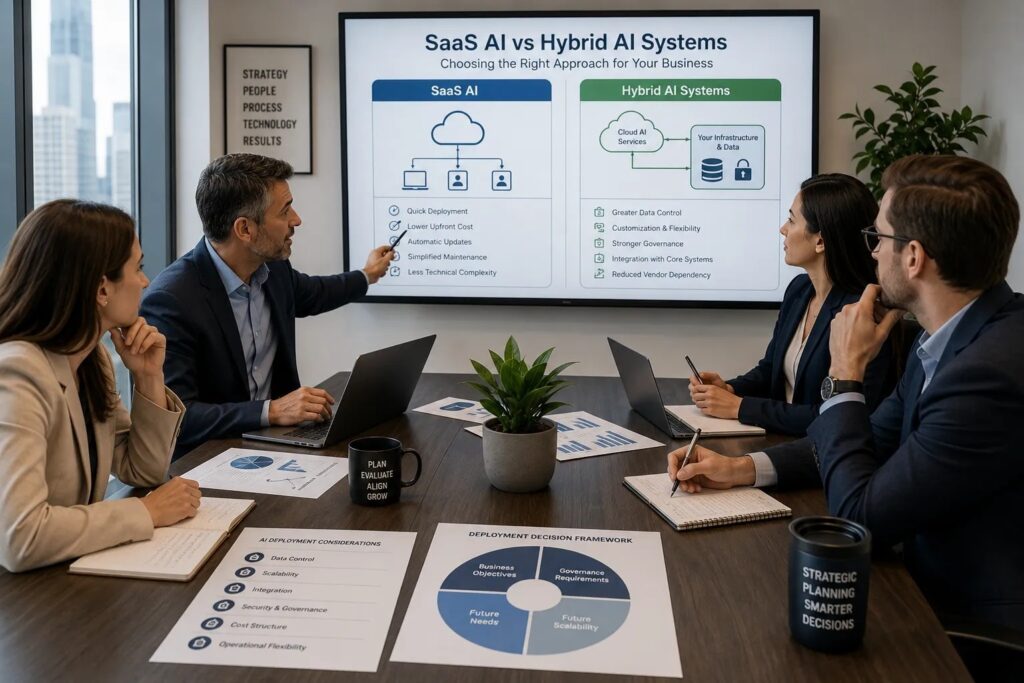
For many organizations, the first step into AI adoption comes through Software-as-a-Service (SaaS) platforms. These solutions offer quick deployment, predictable costs, and relatively low technical complexity. However, as AI becomes more deeply integrated into business processes, leaders often begin exploring whether their initial deployment approach remains the best fit for long-term objectives.
The discussion increasingly centers on the differences between SaaS AI platforms and hybrid AI systems. Rather than focusing on specific products, business leaders are evaluating deployment models based on flexibility, governance, scalability, and operational requirements.
Why SaaS AI Is Often the Starting Point
SaaS AI platforms have become popular because they remove many of the barriers associated with technology adoption. Businesses can access advanced AI capabilities without investing in infrastructure, specialized development resources, or complex implementation projects.
For organizations beginning their AI adoption strategy, SaaS solutions often provide several advantages:
- Faster deployment timelines
- Lower upfront costs
- Simplified maintenance
- Automatic updates and feature improvements
- Easier user onboarding
These benefits make SaaS AI particularly attractive for SMBs seeking immediate operational improvements. Teams can often implement solutions quickly and begin realizing value without major disruptions to existing processes.
Because of this accessibility, SaaS platforms continue to play an important role in helping businesses explore AI opportunities and build organizational familiarity with the technology.
Understanding the Hybrid AI Systems Approach
As AI usage expands across departments and workflows, some organizations begin evaluating hybrid AI systems as an alternative deployment model.
Hybrid AI systems combine external AI services with internally managed components, allowing organizations to maintain greater control over certain aspects of their AI environment. Depending on business requirements, this may include managing proprietary data, integrating multiple AI technologies, or maintaining specific governance controls.
The appeal of hybrid approaches often stems from flexibility rather than technical complexity.
Businesses may consider hybrid deployment models when they need:
- Greater control over data management
- Customized workflow integration
- Enhanced governance capabilities
- Reduced reliance on a single vendor
- More flexibility to adapt as requirements evolve
For organizations with growing operational demands, hybrid systems can provide additional options for balancing innovation with business oversight.
Operational Flexibility and Technology Ownership
One of the most significant differences between deployment models involves operational flexibility.
SaaS platforms typically provide predefined environments that prioritize ease of use and consistency. While this simplifies deployment, it can also limit customization options as organizational requirements become more complex.
Hybrid AI systems often provide greater flexibility because businesses can determine how different components interact with existing systems and processes. This can support more tailored operational outcomes and allow organizations to evolve their AI capabilities over time.
Technology ownership also becomes an important consideration as AI becomes embedded within critical business functions. Leaders frequently evaluate questions such as:
- How easily can systems be modified?
- What happens if business requirements change?
- How portable are workflows and data?
- How dependent is the organization on a single provider?
These considerations are increasingly influencing business AI strategy discussions, particularly among organizations planning for long-term growth.
Governance Considerations in AI Implementation Planning
Governance is becoming a central factor in AI deployment decisions.
While many SaaS platforms offer strong security and compliance capabilities, organizations may still need additional oversight Addressing saas security challenges as part of governance planning can help businesses identify potential risks early and maintain stronger control over cloud-based applications.
AI governance extends beyond security. It includes decision-making frameworks, accountability structures, data management practices, and oversight processes that help ensure responsible use of AI technologies.
When evaluating deployment models, organizations often assess:
- Data handling requirements
- Regulatory obligations
- Risk management procedures
- Transparency expectations
- Internal governance policies
These factors can influence whether a SaaS-only approach remains sufficient or whether a hybrid model better aligns with business objectives.
As a result, AI implementation planning increasingly includes governance discussions from the beginning rather than treating them as a later-stage consideration.
Choosing the Right Model for Long-Term Business Objectives
There is no universal answer to the SaaS versus hybrid AI question. The most appropriate deployment model depends on organizational priorities, operational complexity, and future business goals.
For some organizations, SaaS AI may continue to provide the right balance of simplicity, affordability, and performance. For others, growing operational demands may justify a more flexible deployment structure.
The key is evaluating deployment models through a strategic lens rather than focusing exclusively on features or vendor comparisons. Business leaders often benefit from assessing operational requirements, governance expectations, scalability goals, and long-term technology considerations before making significant commitments. Organizations that follow an AI strategy consulting approach can use structured evaluation frameworks to align deployment decisions with broader business objectives rather than short-term technology preferences.
As AI adoption continues to mature, deployment planning is becoming an increasingly important aspect of technology leadership. Whether choosing SaaS AI, hybrid AI systems, or a combination of both, organizations that prioritize operational flexibility and long-term alignment are often better positioned to adapt as business needs evolve.