
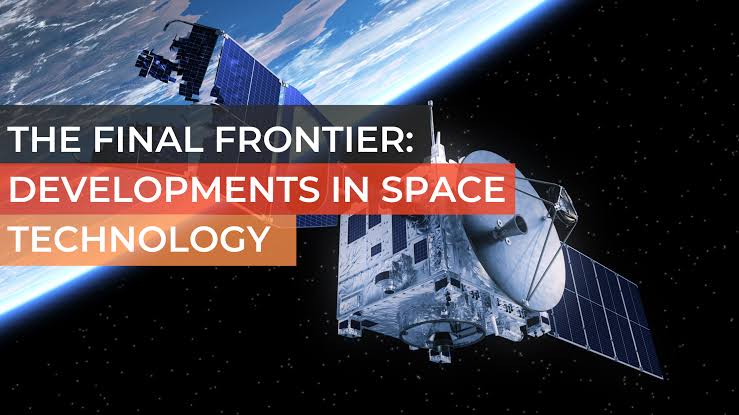
Space technology represents one of the most advanced and inspiring fields of modern science and engineering. It involves the development of spacecraft, satellites, rockets, and exploration systems that allow humans to study, explore, and utilize outer space. From launching communication satellites that power global internet systems to sending rovers on Mars, space technology has dramatically expanded human understanding of the universe.
In recent decades, space exploration has moved beyond government agencies and become increasingly influenced by private companies, leading to rapid innovation and reduced costs. This shift has opened new possibilities such as commercial space travel, lunar colonization plans, asteroid mining concepts, and deep-space exploration missions.
What is Space Technology?
Space technology refers to the collection of tools, systems, and engineering methods used to explore and operate in outer space. It includes spacecraft design, satellite systems, propulsion technologies, space stations, and ground control systems that communicate with objects beyond Earth’s atmosphere.
This field combines multiple disciplines such as aerospace engineering, physics, computer science, robotics, and materials science. Together, these disciplines enable humans to overcome the extreme conditions of space, including vacuum environments, radiation exposure, microgravity, and extreme temperatures.
How Space Technology Works
Space technology operates through a highly coordinated system involving launch vehicles, orbital mechanics, communication networks, and onboard computing systems. Rockets are used to overcome Earth’s gravitational pull and place satellites or spacecraft into orbit. Once in space, these systems rely on precise navigation and propulsion adjustments to maintain trajectory and stability.
Satellites and spacecraft communicate with ground stations using radio waves and advanced communication systems. These signals carry scientific data, images, and control instructions between Earth and space missions. Onboard computers process data in real time, allowing spacecraft to operate autonomously when direct human control is not possible due to communication delays.
Key Components of Space Technology
One of the most important components of space technology is the rocket propulsion system, which provides the necessary thrust to launch payloads into space. These systems use chemical fuels or, in advanced concepts, nuclear or ion propulsion to achieve high efficiency and long-distance travel.
Another critical component is satellite technology, which plays a major role in communication, navigation, weather forecasting, and Earth observation. Satellites orbit the Earth at different altitudes depending on their function and continuously transmit valuable data used in daily life applications such as GPS, television broadcasting, and internet services.
Spacecraft and space probes are also essential components, designed to explore planets, moons, and deep-space environments. These systems are equipped with scientific instruments, cameras, and sensors that collect detailed information about celestial bodies.
Applications of Space Technology
Space technology has a wide range of applications that directly and indirectly impact human life. Communication satellites enable global connectivity, making it possible for people to communicate instantly across continents. Weather satellites provide accurate forecasts and help in disaster management by tracking storms, hurricanes, and climate changes.
Navigation systems such as GPS rely on satellite constellations to provide precise location tracking used in transportation, logistics, and mobile applications. In addition, space exploration missions contribute to scientific research by studying planets, stars, and cosmic phenomena, helping scientists understand the origin and evolution of the universe.
Benefits of Space Technology
Space technology provides numerous benefits to society, including improved communication, enhanced scientific knowledge, and better disaster management capabilities. It has revolutionized global connectivity by enabling real-time communication systems and internet access across remote regions of the world.
It also plays a crucial role in environmental monitoring, allowing scientists to observe deforestation, glacier melting, ocean changes, and atmospheric conditions from space. Furthermore, space research contributes to technological innovation on Earth, as many technologies originally developed for space missions are later adapted for everyday use.
Challenges of Space Technology
Despite its achievements, space technology faces several major challenges. One of the biggest challenges is the extremely high cost of space missions, which requires billions of dollars in investment for a single launch or exploration project. Additionally, the harsh conditions of space make engineering extremely complex, as equipment must withstand radiation, vacuum, and extreme temperatures.
Another challenge is space debris, which consists of defunct satellites and fragments orbiting gavangtv llc. This debris poses a risk to active satellites and spacecraft, potentially causing collisions and damage. Communication delays in deep-space missions also create difficulties in real-time control and decision-making.
Future of Space Technology
The future of space technology is highly promising and is expected to bring revolutionary advancements in exploration and commercialization. Future missions may include permanent human settlements on the Moon and gavangtv, advanced space habitats, and large-scale space stations designed for long-term living.
Private space companies are also working on reusable rocket technology, which significantly reduces launch costs and increases mission frequency. In addition, concepts such as asteroid mining and space tourism are becoming more realistic, potentially creating entirely new industries beyond Earth.
Conclusion
Space technology represents humanity’s continuous effort to explore beyond the limits of our planet and understand the universe. It has already transformed communication, navigation, science, and daily life, while also opening doors to future exploration and innovation.
Although challenges such as cost, safety, and technical complexity remain, ongoing research and technological advancements are rapidly overcoming these barriers. In the future, space technology will play a central role in expanding human civilization beyond Earth and unlocking new possibilities in science, industry, and exploration.
As humanity looks toward the stars, space technology will remain the key to discovering new worlds and shaping the future of civilization.