
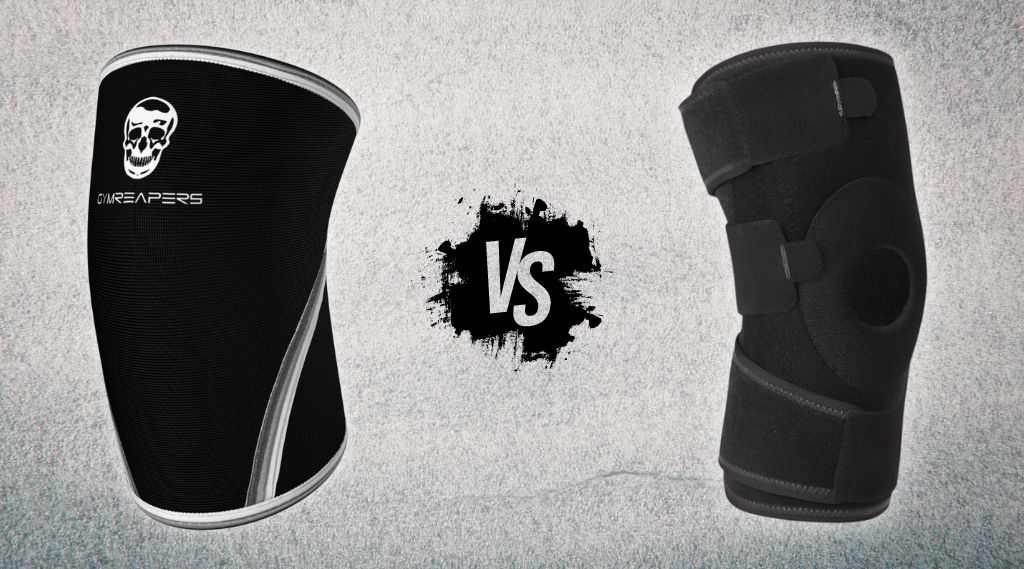
If you lift heavy weights, like doing barbell squats, leg presses, or serious lower-body training, you may have wondered, “Should I use knee wraps or a knee cap?” You can find both kinds of individuals at the gym. Some lifters tighten their wraps before a max attempt, while others use the same knee support for every leg session.
So which one is better for lifting heavy things?
The truth is that it depends on your requirements.
Let’s break it down in a simple way with no extra information so you can choose what works best for your training.
What Are Knee Wraps?
Before doing heavy sets, you wrap long, thick elastic bands around your knees tightly. They are very popular among powerlifters.
When wrapped correctly, they:
- Impart a lot of pressure on the knee joint
- Make things more stable when they’re heavy
- Keep elastic energy at the bottom of a squat
- Help you bounce out of the hole
Knee wraps can help you lift more weight because they hold in tension. In strength sports, they aren’t just protective gear, they’re also tools that help you do better.
But they’re not very comfortable. And they aren’t made to be worn all day or to help with pain in general.
What is a knee cap?
Most of the time, when people say knee cap, they mean a knee sleeve or brace, not the bone itself. A knee cap for pain relief is usually made of neoprene or compression fabric and fits over your knee like a sleeve.
There are different kinds:
- Basic sleeves for compression
- Designs for reinforced knee support
- A hinged knee cap with side stabilizers to help control the joint better
Knee caps don’t try to help you lift more weight like wraps do. Instead, they give your knees compression, warmth, and moderate support to make them feel more stable and comfortable while you train.
Which is better: support or stability?
Knee wraps are the best choice if you want the most mechanical support when carrying very heavy loads. When wrapped tightly, they make it hard for the knee to move forward and make the joint feel stiff.
That’s why powerlifters who are competing often use them when they are trying to lift heavy weights. With extra structural support, they can lift a lot of weight.
On the other hand, knee caps only give a little support. A regular knee support sleeve keeps your knee stable by compressing and warming it up instead of restricting it. A hinged knee cap gives you extra support on the sides, which can help if your ligaments are a little unstable.
Many people find that sleeves or braces give them enough support for everyday heavy lifting without the tightness of wraps.
Pain Relief and Comfort for Joints
This is where knee caps really shine.
If you’re dealing with:
- Tendon pain
- Slight swelling
- General pain in the knees
- Signs that you are using too much too soon
A knee cap can help with pain relief in a big way. The compression helps blood flow and lowers inflammation during and after workouts. The heat also helps the joint feel less stiff and more flexible.
Knee wraps are not made to help with pain. In fact, wrapping a knee that is already hurting too tightly can make things worse outside of the lift itself. They are made to work well, not to heal.
If you want to keep your knees feeling good for a long time, knee support sleeves or braces are usually the better option.
Boost in Performance
Knee wraps are a clear advantage if you want to improve your one-rep max squat.
The elastic tension that builds up as you descend helps you ascend. In some cases, experienced lifters can make their squats noticeably heavier just by using wraps correctly.
That kind of bounce doesn’t happen with knee caps. They might help you feel more confident and stable, but they won’t assist the lift mechanically.
So, if you do powerlifting (especially in wrapped divisions) or try to lift the most weight you can, wraps can be helpful. If you’re training for general strength, hypertrophy (muscle growth), or athletic performance, the trade-offs probably aren’t worth the performance difference.
Long-Term Joint Health
This is something that a lot of lifters miss.
If you use knee wraps for every heavy session, your stabilizing muscles may not have to work as hard on their own. This may lead to over-dependence over time. If you never work out without them, your knees may feel weak as soon as you take them off.
Knee caps, especially moderate compression sleeves, are less noticeable. They help you without changing the way you move too much.
If you’re healing from a minor ligament problem or need more lateral stability, a hinged knee cap can help. It helps you move without completely taking over the job of your muscles.
Moderate knee support is usually the best way to go for most lifters who want to stay strong for years, not just months.
Comfort and Usefulness
It takes time and effort to put on knee wraps the right way. If you wrap it too loosely, it won’t work. If you wrap too tightly, you might lose circulation and feel very uncomfortable between sets. Most people take them off right after trying hard.
Knee caps are much easier to use. Put them on, train, and then take them off. You can wear them during warm-ups, working sets, and accessory work without any problems.
Knee caps are much more useful if you’re doing a lot of leg workouts instead of just one max attempt.
When to Use Knee Wraps
If you need knee wraps,
- You’re working out just for powerlifting
- You’re getting ready to try your hardest squats
- You are in a wrapped division
- You already have good technique and stable joints
They are not everyday safety gear; they are tools for pushing performance limits.
When to Get a Knee Cap
If you need one, a knee cap or knee support sleeve is the best choice.
- You work out with heavy weights a lot, but not for competition
- You have mild pain or discomfort in your knees
- You want to feel more confident when you’re under the bar
- You’re thinking about the long-term health of your joints
- You’re coming back from a small injury
If instability is a concern, a hinged knee cap can provide extra side-to-side control while still allowing natural movement.
For most recreational lifters and even many serious strength athletes, a well-fitted knee cap for pain relief offers enough support without the downsides of heavy restriction.
Final Thoughts
So, which is better for heavy lifting?
If your goal is maximum squat numbers and competitive performance, knee wraps have the edge. They provide unmatched mechanical support and can help you move more weight.
If your goal is consistent heavy training, joint comfort, and pain relief, a knee cap is usually the better long-term option. A basic knee support sleeve works well for most people, and a hinged knee cap can add extra stability if needed.
For many lifters, the smartest approach isn’t choosing one forever. It’s understanding when each tool makes sense.
Train smart. Protect your joints. And choose the support that matches your goals, not just what the biggest lifter in the gym is wearing.
