
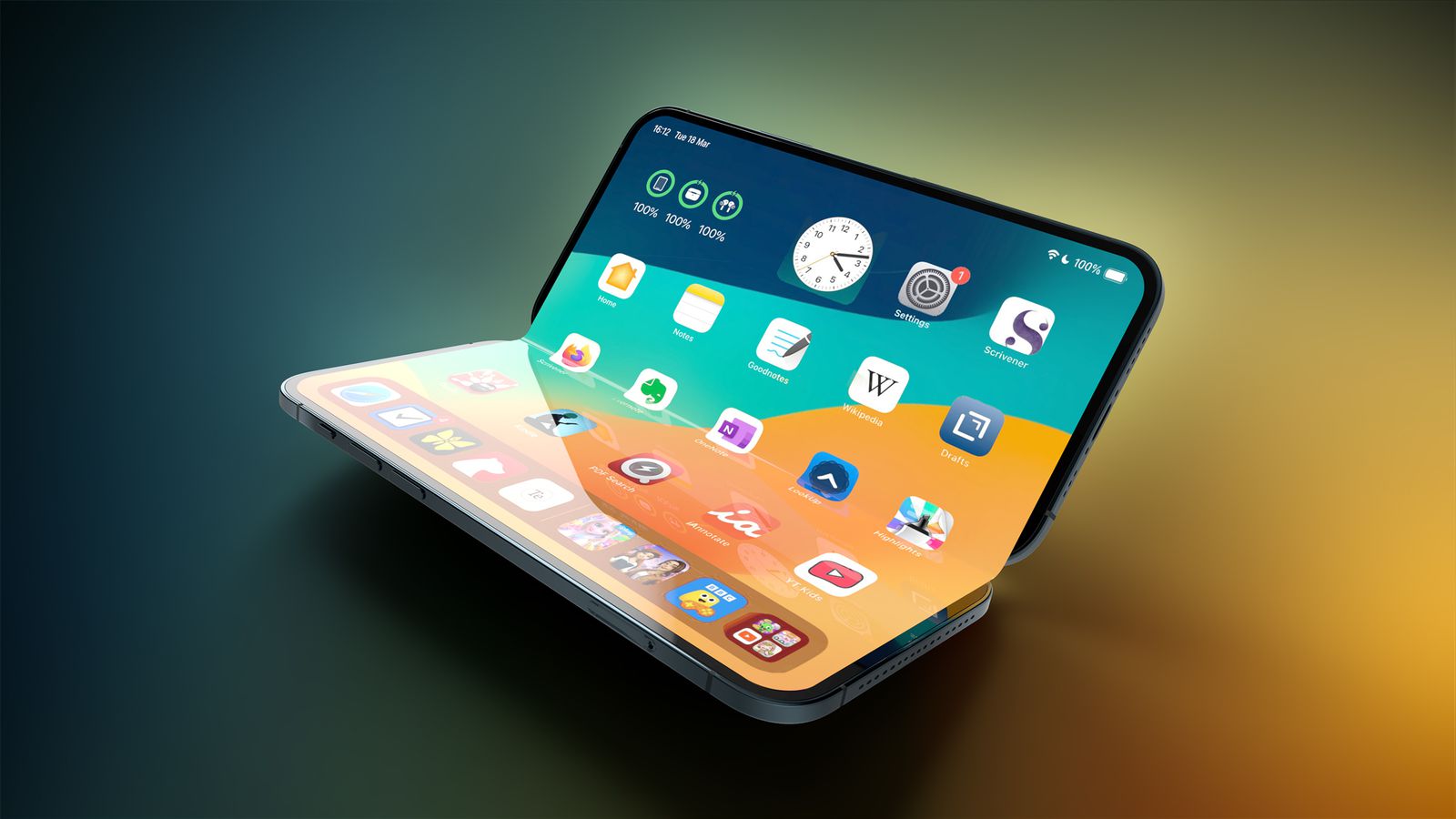
Apple has entered the foldable smartphone market with iPhone Duo, its first foldable iPhone. Introduced on September 9, 2026, the device combines a 5.4-inch outer display with a 7.6-inch inner display, creating a smartphone that can expand into a larger workspace without leaving the iPhone ecosystem.
The launch marks a significant change for Apple’s premium smartphone strategy. Foldable phones have existed for years, led by companies such as Samsung and Huawei, but Apple’s entry brings the category into the iPhone ecosystem.
The bigger question is not simply whether Apple can build a foldable phone.
It is whether iPhone Duo can change what consumers expect from a premium smartphone.
What Is Apple’s Foldable iPhone?
iPhone Duo is Apple’s first foldable smartphone.
When closed, it has a 5.4-inch outer display designed for everyday smartphone interaction. When opened, it reveals a 7.6-inch inner display designed for content consumption, gaming, multitasking, and productivity.
The device uses a precision hinge, titanium construction, dual-battery architecture, advanced thermal management, and Apple’s A20 Pro chip.
The result is a product positioned between conventional smartphones and smaller tablet-style devices.
Why Apple’s Foldable iPhone Matters
Foldable smartphones are not new.
Samsung, Huawei, Motorola, Xiaomi, and other manufacturers have already released multiple generations of foldable devices.
Apple’s importance comes from a different factor: ecosystem scale.
The iPhone has an established hardware, software, services, accessory, developer, and retail ecosystem.
Apple is therefore bringing foldable hardware into an existing platform rather than introducing an entirely new smartphone ecosystem.
This could influence how developers build applications, how accessory manufacturers design products, and how consumers evaluate premium smartphones.
A Smartphone That Expands Into a Larger Workspace
The biggest hardware difference is the transition between the compact and expanded display.
A traditional premium smartphone provides a fixed screen size.
A foldable iPhone provides two modes.
Closed Mode
The 5.4-inch outer display is designed for conventional smartphone tasks.
Users can:
- Make calls
- Send messages
- Browse the web
- Check notifications
- Use social apps
- Capture photos
- Access everyday iPhone features
Open Mode
The 7.6-inch inner display creates a larger workspace.
Apple highlights use cases such as:
- Multitasking
- Gaming
- Video consumption
- Productivity
- Immersive applications
- Larger-format content
This creates a different relationship between portability and screen size.
Could Foldables Reduce the Smartphone-Tablet Divide?
One of the most interesting implications of iPhone Duo is the space between smartphones and tablets.
A conventional iPhone and iPad serve different form factors.
A foldable iPhone can occupy part of that middle ground.
A 7.6-inch display provides substantially more visual space than a conventional phone while maintaining a pocketable form when closed.
That could make certain tablet-style tasks more practical on a smartphone.
For example, users may find a larger foldable display useful for:
- Reading documents
- Reviewing spreadsheets
- Editing photos
- Watching video
- Gaming
- Managing multiple applications
- Taking notes
- Browsing information
Apple also says iPhone Duo will support Apple Pencil with USB-C later in 2026, expanding its potential for notes, sketches, and document markup.
The Software Experience May Matter More Than the Hinge
Foldable hardware creates possibilities, but software determines whether those possibilities become useful.
Apple has redesigned iOS 27 for iPhone Duo, adapting the interface to different orientations and display configurations.
This matters because foldable smartphones require applications to understand changes in screen size and device position.
Developers may need to consider:
- Folded layouts
- Expanded layouts
- Multitasking
- Orientation changes
- Large-format controls
- Content continuity
- Resizable application interfaces
- Productivity workflows
A successful foldable ecosystem therefore requires more than a flexible OLED display.
It requires software that understands the device’s physical transformation.
Apple Intelligence Adds Another Layer
Apple is also integrating Apple Intelligence and Siri AI into iPhone Duo.
The foldable design provides additional display space for AI-assisted workflows.
Potential applications include:
- AI-generated summaries
- Writing assistance
- Visual analysis
- Document workflows
- Multitasking with AI tools
- Content creation
The combination of foldable hardware + larger display + AI software could become an important part of Apple’s premium-device strategy.
Why the Premium Price Matters
Foldable smartphones generally carry higher prices than conventional flagship phones because of their complex displays, hinges, materials, engineering, and manufacturing requirements.
iPhone Duo starts at $1,999 in the United States, according to Reuters, with higher configurations reaching $3,199.
That price positions the device firmly within the premium smartphone segment.
The pricing strategy creates an important market question:
What additional value does a foldable smartphone need to deliver to justify its premium over a conventional flagship?
The answer depends on how consumers use the larger display, multitasking features, durability, camera system, battery performance, and software experience.
Foldable iPhone vs. Traditional iPhone
| Feature | Traditional iPhone | iPhone Duo |
|---|---|---|
| Form factor | Fixed smartphone | Foldable smartphone |
| Main display | Conventional phone-sized screen | 7.6-inch inner display |
| Outer display | N/A | 5.4-inch |
| Multitasking space | Limited by phone display | Larger expanded workspace |
| Portability | Compact | Compact when folded |
| Software | Standard iOS experience | iOS 27 adapted for foldable interaction |
| AI | Apple Intelligence | Apple Intelligence and Siri AI |
| Stylus support | Model-dependent | Apple Pencil with USB-C planned |
| Target segment | Broad premium market | Ultra-premium foldable segment |
Apple Enters a Market Led by Android Manufacturers
Apple’s arrival changes the competitive landscape.
Samsung has spent years developing Galaxy Z Fold and Galaxy Z Flip devices. Huawei has also developed advanced foldable designs, including multi-fold smartphones.
Apple therefore enters an established category rather than creating the category itself.
Its contribution is bringing the foldable format into the iPhone ecosystem.
Could Apple Make Foldable Phones More Mainstream?
Apple’s entry could increase consumer awareness of foldable smartphones.
The foldable category remains a smaller portion of the overall smartphone market, despite continued development from major Android manufacturers.
A larger foldable market could encourage:
- More display innovation
- Better hinge technology
- Improved durability
- More foldable-optimized applications
- Greater accessory availability
- More competition among premium smartphone manufacturers
Apple does not need to invent the foldable category for its entry to influence the category.
Its ecosystem scale makes the launch significant.
The Camera Experience Gets a New Form Factor
Foldable hardware can also change how users capture photos and videos.
The folding design creates additional ways to position the phone and use its larger display while shooting.
Potential applications include:
- Self-portraits
- Group photography
- Video recording
- Hands-free shooting
- Content creation
- Viewing captured media
The camera system therefore becomes part of the foldable experience rather than simply another specification.
Durability Remains a Critical Question
Foldable phones introduce mechanical components that conventional smartphones do not need.
The hinge and flexible display must withstand repeated opening and closing.
Apple says iPhone Duo uses a precision hinge and engineered hardware designed for durability.
Long-term durability will ultimately depend on real-world use over extended periods.
This remains an important consideration for anyone evaluating a foldable smartphone.
Battery and Thermal Engineering Matter
Foldable smartphones have competing hardware demands.
They need:
- Multiple displays
- High-performance processors
- Cameras
- Wireless connectivity
- Battery capacity
- Thin physical dimensions
Apple says iPhone Duo uses a dual-battery architecture and a custom vapor chamber for thermal management.
The engineering challenge is maintaining performance and battery endurance without making the device excessively thick or heavy.
What Could iPhone Duo Mean for Developers?
The foldable iPhone creates a new application environment.
Developers now have to consider how an application behaves when the device changes physical configuration.
That could encourage new approaches to:
- Multitasking
- Productivity interfaces
- Media applications
- Gaming
- Digital art
- Note-taking
- AI applications
- Content creation
Apple’s software ecosystem could eventually develop a distinct category of foldable-first iPhone experiences.
That would make the device more than a larger-screen iPhone.
Will Foldable Smartphones Replace Traditional Phones?
There is no indication that conventional smartphones are disappearing.
Foldables introduce a different form factor rather than eliminating the standard smartphone.
Many consumers may still prefer:
- Lower prices
- Simpler hardware
- Familiar designs
- Lower weight
- Conventional displays
- Established flagship form factors
Foldable smartphones instead offer a specific proposition:
More screen when needed without carrying a separate tablet-sized device.
Whether that proposition becomes mainstream depends on pricing, durability, software, battery life, and consumer demand.
Frequently Asked Questions
What is Apple’s first foldable iPhone?
Apple’s first foldable iPhone is iPhone Duo, introduced on September 9, 2026. It has a 5.4-inch outer display and a 7.6-inch inner display.
When is iPhone Duo available?
Apple says iPhone Duo will be available starting October 23, 2026, with preorders beginning October 16. Availability varies by market.
How much does the foldable iPhone cost?
iPhone Duo starts at $1,999 in the United States, with higher configurations reaching $3,199.
How large is the iPhone Duo display?
The outer display measures 5.4 inches, while the inner foldable display measures 7.6 inches.
Does the foldable iPhone support Apple Intelligence?
Yes. iPhone Duo includes Apple Intelligence and Siri AI capabilities alongside its redesigned iOS 27 experience.
Does iPhone Duo support Apple Pencil?
Apple says iPhone Duo will support Apple Pencil with USB-C later in 2026, enabling note-taking, sketching, and document markup.
Is iPhone Duo replacing the iPad?
iPhone Duo introduces a larger 7.6-inch display, but it does not replace the broader iPad product category. Its primary role remains a foldable iPhone that combines smartphone portability with a larger display experience.
Final Takeaway
Apple’s move into foldable smartphones represents more than the arrival of a new iPhone form factor.
iPhone Duo combines a pocketable smartphone with a 7.6-inch expandable display, redesigned iOS 27 experiences, A20 Pro performance, Apple Intelligence, and Apple’s existing hardware and software ecosystem.
Its significance for the premium smartphone market will depend on how consumers respond to the combination of price, portability, display size, durability, software, AI, cameras, and multitasking.
Apple is entering a foldable market already shaped by Samsung, Huawei, and other manufacturers. Its arrival could expand consumer awareness of foldable smartphones and encourage developers to create applications designed around flexible screen formats.
The larger shift is clear: the premium smartphone is no longer limited to a fixed rectangle.
With foldable technology, one device can move between compact smartphone and expanded-screen modes, giving manufacturers a new way to rethink what a flagship phone can be.
