
Background
Most homeowners assume that outdoor lighting is purely decorative — a way to make a porch look inviting after dark or highlight a walkway during evening gatherings. That assumption misses a larger picture. Exterior lighting plays a functional role in home security, energy consumption, and even resale value that far outweighs its reputation as an afterthought. Homeowners who treat outdoor fixtures as a checklist item, rather than a system that interacts with the rest of the house, often end up with mismatched brightness levels, wasted electricity, and fixtures that fail within a few seasons.
For decades, exterior lighting design followed a simple formula: install a fixture at every entry point and call it finished. That approach worked reasonably well when incandescent bulbs were the only option and energy costs were lower. The shift toward LED technology changed the calculus considerably, introducing new variables like color temperature, lumen output, and smart controls that most homeowners never had to consider before. As the technology evolved, so did expectations around what outdoor lighting should accomplish, from deterring intruders to reducing utility bills.
What the Research Shows
Independent studies on residential lighting patterns reveal a pattern worth noting: homes with well-planned exterior lighting see measurably lower rates of nighttime break-ins compared to those with minimal or poorly placed fixtures. Motion-activated lighting near entry points appears particularly effective, likely because sudden illumination disrupts the element of surprise that intruders rely on. Beyond security, researchers have found that consistent outdoor lighting design correlates with higher perceived property value among prospective buyers touring homes in the evening. None of this suggests that more light is automatically better; placement and control matter just as much as raw output.
The data also points to a gap between what homeowners install and what actually performs well over time. Many exterior fixtures purchased at big-box retailers are rated for indoor-adjacent use and degrade quickly when exposed to humidity, temperature swings, or direct sun. Homeowners searching for best exterior house lighting often discover that weather resistance and color accuracy vary far more between brands than most people expect, which explains why identical wattage fixtures can produce noticeably different results after a single winter. Selecting fixtures built for sustained outdoor exposure, rather than repurposed indoor designs, appears to be one of the more consistent findings across residential lighting research.
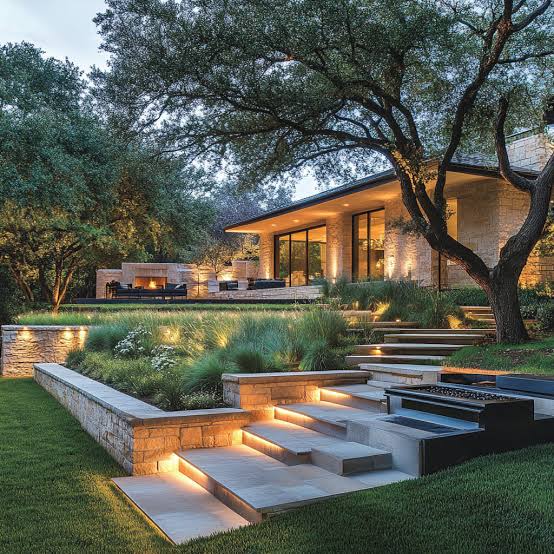
Another consistent finding involves layering. Homes that combine ambient, task, and accent lighting outdoors tend to score higher in both security assessments and aesthetic evaluations than those relying on a single floodlight or porch fixture. This mirrors findings from interior lighting design, where layered light sources reduce harsh shadows and glare. Timers and dusk-to-dawn sensors also reduce energy waste without requiring homeowners to remember to flip a switch every evening, a detail that shows up repeatedly in efficiency studies.
Practical Takeaways
Translating research into action starts with an honest assessment of what each exterior zone actually needs. A front walkway benefits from steady, moderate light that guides movement without creating glare, while a driveway or side yard may call for motion-activated fixtures that conserve energy when no one is present. Mixing fixture types across a property, rather than installing identical units everywhere, tends to produce better results both functionally and visually.
Energy efficiency deserves equal attention alongside security and aesthetics. Reviewing ENERGY STAR lighting guidance before purchasing new fixtures can help homeowners compare lumen output, wattage, and expected lifespan in a standardized way, avoiding guesswork based on marketing claims alone. LED options rated for outdoor use typically last several times longer than older halogen or incandescent alternatives, which reduces both replacement costs and the environmental footprint of a lighting plan over its lifespan.
Timing installation around seasonal changes also pays off. Fall and early spring tend to be ideal windows for evaluating exterior lighting, since reduced daylight hours make it easier to spot dark corners or uneven coverage around a property. Homeowners who walk their property after sunset a few times before finalizing a layout often catch problems that daytime inspections miss entirely. Small adjustments made during this process, such as repositioning a single fixture or swapping a bulb’s color temperature, frequently resolve issues that would otherwise require a full redesign later.
