
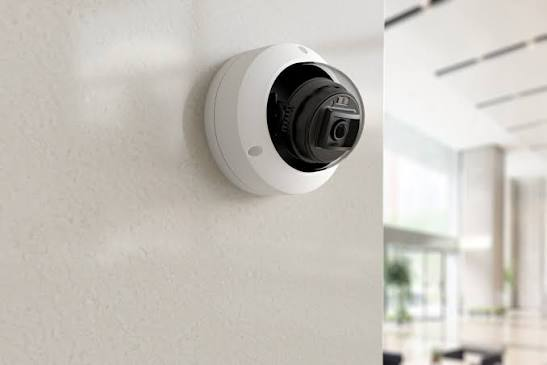
Healthcare facilities in the United States operate under a level of scrutiny that most other industries rarely face. Patient safety, staff accountability, regulatory compliance, and asset protection all converge in environments where decisions carry real consequences. When something goes wrong — a medication error, a security incident, a patient fall — the ability to reconstruct what happened is often the difference between a resolved incident and a prolonged liability.
Surveillance systems in hospitals are not a luxury or a secondary consideration. They are infrastructure. And yet, many facilities still approach camera procurement the way they might purchase office equipment — comparing specifications on a sheet, choosing the lowest compliant bid, and assuming installation is the finish line. That approach has a cost, and it rarely becomes obvious until the system is needed most.
This guide is written for the people who carry that responsibility: facilities directors, security managers, risk officers, and administrators who need to understand what a hospital-grade surveillance system actually requires before a purchase decision is made.
Why Hospital Camera Systems Require a Different Evaluation Framework
A hospital camera installation is not a scaled-up version of a retail or office security system. The clinical environment introduces requirements that do not exist in commercial settings, and those requirements affect every layer of the decision — from camera placement and image quality to network architecture and data retention policy. Treating a hospital the same as any other building leads to systems that technically function but fail in practice when they matter most.
Facilities that want a reliable starting point for understanding what that differentiation looks like in practical terms will find that a structured Hospital Camera guide built around healthcare-specific deployments addresses considerations that general-purpose security documentation often skips entirely.
What makes healthcare environments operationally distinct from other surveillance contexts comes down to three interconnected pressures: the mix of sensitive and unrestricted zones, the regulatory obligations tied to patient privacy, and the requirement for continuous, uninterrupted recording in areas where gaps in coverage create legal and clinical exposure.
Zone Classification Is Not Optional
Hospitals contain a broader range of controlled spaces than almost any other facility type. Patient rooms, medication storage areas, surgical suites, emergency departments, lobbies, parking structures, and staff-only corridors all carry different access expectations and different legal protections. A surveillance system that ignores these distinctions — even unintentionally — can create serious compliance problems.
Before a single camera is specified or positioned, a facility needs a documented zone classification map. This is a formal exercise that aligns camera placement with access control policy and regulatory boundaries. Without it, procurement becomes guesswork, and installation teams are left making decisions they are not qualified to make.
Patient Privacy Creates Hard Boundaries
The Health Insurance Portability and Accountability Act, commonly known as HIPAA, does not explicitly prohibit surveillance cameras in patient care areas, but it does establish requirements around the protection of individually identifiable health information. Video footage that captures a patient receiving treatment, or that allows a viewer to infer a patient’s diagnosis or condition, may constitute protected health information under certain interpretations.
This creates a compliance burden that most general security vendors are not equipped to help facilities navigate. Any footage that qualifies as protected health information must be stored, accessed, and retained under the same controls as medical records. That includes limiting who can review footage, logging access events, and ensuring that footage is not retained longer than policy allows without proper justification.
Camera Placement in Clinical Environments
The physical positioning of cameras in a hospital determines both what the system captures and what legal exposure the facility carries. There is no universal floor plan that applies across facilities, but there are consistent principles that distinguish well-designed systems from those that create operational problems after installation.
High-Traffic Public Zones
Lobbies, main corridors, entrances, and waiting areas are the most straightforward zones to cover from a compliance standpoint, but they still require deliberate planning. These areas see the highest volume of non-patient visitors, contractors, and delivery personnel. Camera angles in these zones should provide clear facial coverage at entry and exit points without creating blind spots near elevator banks or stairwells, which are common vectors for unauthorized access and patient elopement.
The goal in public zones is comprehensive coverage with minimal overlap — a configuration that produces usable footage while keeping storage demands manageable and system maintenance predictable.
Medication Rooms and Controlled Substance Storage
Diversion of controlled substances is a documented and significant problem in US healthcare facilities. The Drug Enforcement Administration and state regulatory bodies require facilities to maintain accountability for controlled substances, and video surveillance is an accepted part of that accountability framework.
Cameras in medication rooms must capture both the access point and the activity area clearly enough to identify individuals and confirm what actions were taken. This is an area where image quality and camera angle are not interchangeable — a wide-angle camera that distorts facial features or obscures fine motor actions near a medication cabinet is functionally inadequate regardless of its technical resolution rating.
Emergency Departments and High-Acuity Areas
Emergency departments present a distinct challenge because they combine high patient volume, compressed staff-to-patient ratios, and elevated rates of behavioral incidents. Surveillance in these areas serves multiple functions simultaneously: staff safety, patient monitoring support, liability documentation, and incident reconstruction.
Facilities designing coverage for emergency departments need to account for the dynamic nature of the space. Curtained bays, triage areas, and waiting zones all require different approaches. Fixed cameras in these environments often miss critical angles because patient and staff positions shift constantly. A thoughtful placement strategy, developed with input from clinical and security staff together, produces better outcomes than one driven by infrastructure convenience alone.
Network Infrastructure and System Reliability
Hospital camera systems are network-dependent, and hospital networks are some of the most complex IT environments in any industry. Electronic health records, medical devices, telemetry systems, and administrative platforms all compete for bandwidth and network stability. Adding a surveillance system to that environment without a clear integration plan creates risk on both sides.
Dedicated Network Segmentation
Surveillance systems should operate on a segmented network that is logically separated from clinical systems. This is a standard architecture recommendation that reduces the risk of surveillance traffic degrading clinical system performance and prevents a compromise of the surveillance network from exposing clinical data to the same incident.
Facilities that attempt to run surveillance on shared infrastructure often encounter performance problems under load — most noticeably during shift changes when both camera traffic and clinical system usage peak simultaneously. Segmentation is not a premium option; it is a basic design requirement for any environment where reliability is non-negotiable.
Redundancy and Uptime Requirements
A surveillance system that goes offline during a security incident, a patient fall, or an accidental injury claim provides no value at the moment it is most needed. Healthcare facilities must approach surveillance uptime the same way they approach clinical system uptime — with redundancy built into the design, not added as an afterthought.
This includes local storage redundancy so that footage is preserved even if network connectivity is temporarily lost, uninterruptible power supply coverage for camera hardware and recording servers, and documented failover procedures that security and IT staff both understand and can execute without escalation.
Data Retention, Access Control, and Legal Readiness
Footage is only valuable if it can be located, authenticated, and produced when needed. Many facilities discover the limitations of their retention and access infrastructure during litigation or regulatory inquiry — a moment when those limitations are extremely difficult to address quickly.
Retention Policies Must Reflect Operational and Legal Reality
Standard commercial surveillance systems default to short retention windows determined by storage capacity. Healthcare facilities need retention policies built around the types of incidents they document. Slip-and-fall claims, medication diversion investigations, and staff misconduct reviews may require footage that is weeks or months old. Facilities that cannot produce that footage — because it was overwritten — face legal and operational consequences that often exceed the cost of the additional storage.
A retention policy should be developed with input from risk management, legal counsel, and IT, and should be formally documented so that it can be defended under regulatory or legal scrutiny.
Access Logs and Chain of Custody
Every instance of footage access should be logged automatically by the system. Who accessed footage, when, for what duration, and whether it was exported or copied are all details that matter in any formal review. Without this logging, a facility cannot demonstrate that footage was handled appropriately — and in a legal context, that gap in documentation can be as damaging as missing footage itself.
Chain of custody procedures for exported footage should be formalized before they are needed, not improvised at the moment a subpoena arrives.
Vendor Selection and Long-Term System Management
The vendor relationship in a hospital camera deployment extends well beyond installation. Camera systems require firmware updates, hardware replacement cycles, ongoing calibration, and periodic design reviews as the physical environment changes. Facilities that treat installation as the endpoint of vendor responsibility consistently find themselves managing aging systems with inadequate support.
When evaluating vendors, facilities should look for demonstrated experience in healthcare environments specifically — not general commercial security. The ability to speak fluently about HIPAA implications, zone classification, clinical workflow impact, and network segmentation is a meaningful signal that a vendor understands what the environment actually requires.
Support response times matter as much as installation quality. A camera system in a critical zone that requires a multi-day service window for hardware failure creates real operational exposure. Service level agreements should reflect the clinical importance of the areas being covered, with faster response commitments for high-priority zones.
Concluding Considerations for Healthcare Facility Leaders
Surveillance in a healthcare setting is ultimately about accountability — to patients, to staff, to regulators, and to the institution itself. A well-designed hospital camera system does not just record; it provides verifiable documentation of events in an environment where the stakes of uncertainty are high.
The decisions that determine whether a system meets that standard are made before procurement, during planning, and through the ongoing management of the system after installation. Facilities that invest in that planning process — building zone maps, establishing retention policies, segmenting networks, and selecting vendors with genuine healthcare experience — end up with systems that function reliably and hold up under scrutiny.
Facilities that skip that process often find themselves revisiting those decisions under pressure, at greater cost, and with fewer options. In an environment as operationally complex as a hospital, the foundation of a surveillance system matters as much as the hardware itself. Getting that foundation right is the work that happens before any camera is mounted on a wall.
