
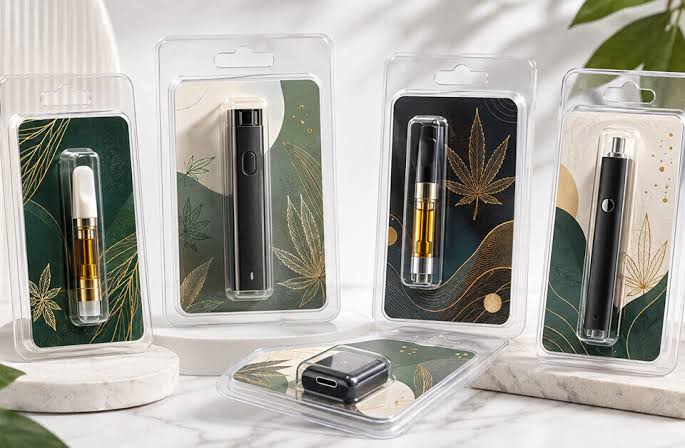
Cannabis vaporizer products occupy a complicated space in the US market. On one side, consumer demand for vape pens and cartridges has grown steadily across both medical and adult-use states. On the other side, the regulatory environment surrounding how these products are packaged, labeled, and sold has become increasingly demanding. For cannabis brands and operators navigating this space, packaging is not a peripheral concern. It sits at the intersection of product safety, legal compliance, retail performance, and brand consistency.
What often gets overlooked in early-stage cannabis operations is that the box surrounding a vape pen is not simply a container. It is a compliance document, a tamper-evident barrier, a retail display asset, and a first point of physical contact between the brand and the consumer. Getting the packaging wrong does not just create aesthetic problems — it can result in regulatory fines, product recalls, or retail rejection. This guide walks through the core elements that any cannabis business should understand before finalizing packaging decisions for vape pen products.
What Weed Pen Boxes Actually Need to Do
The functional requirements of cannabis vape pen packaging are often underestimated by brands entering the market for the first time. A well-constructed resource like a Weed Pen Boxes guide will typically address several overlapping requirements at once — child resistance, regulatory labeling, structural protection, and retail compatibility — because these factors cannot be treated as separate design decisions. They are interdependent.
Packaging for cannabis vape products in the United States must meet requirements that go beyond standard consumer goods. States that have legalized adult-use or medical cannabis typically mandate child-resistant closures, opaque or semi-opaque materials, specific warning text, and in some cases, tamper-evident seals. These requirements are set at the state level and can vary significantly between jurisdictions, which creates a meaningful challenge for multi-state operators.
Child Resistance as a Structural Requirement
Child-resistant packaging for cannabis products is not optional in any legal US cannabis market. Most states reference the Poison Prevention Packaging Act standards when defining child resistance, which means packaging must meet a specific resistance threshold for children under five while remaining accessible to adults. For vape pen boxes, this typically means incorporating mechanisms such as press-and-turn closures, locking tabs, or certified exit bags — depending on the product format.
The structural implications of child-resistant design are real. Packaging that meets these standards needs to be tested and certified, and the materials used must support the closure mechanism without degrading over time. A flimsy box that passes certification during testing but fails in humid retail environments or during shipping creates liability exposure. Operators often underestimate the importance of material quality in sustaining child-resistant functionality through the full product lifecycle.
Tamper Evidence and Product Integrity
Several states require tamper-evident packaging for cannabis products sold at retail. This means that consumers should be able to visually confirm that a product has not been opened before purchase. For vape pen boxes, tamper evidence is typically achieved through perforated pull strips, shrink-wrap bands, or adhesive seals that cannot be reapplied once broken.
Tamper-evident features also serve a brand protection function. In markets where counterfeit cannabis products are a known problem, visually distinctive and difficult-to-replicate tamper seals communicate authenticity to consumers and retail buyers alike. For brands building long-term recognition, this is not a trivial consideration.
Materials Used in Cannabis Vape Pen Packaging
The choice of material for weed pen boxes affects everything from structural durability to print quality to regulatory compliance. There is no universally superior material — the right choice depends on product dimensions, price point, channel requirements, and regulatory context. Understanding the trade-offs between common materials allows brands to make informed decisions rather than defaulting to whatever a packaging vendor recommends first.
Rigid Paperboard and Folding Cartons
Rigid paperboard is the most common substrate for premium cannabis vape pen packaging. It supports high-quality printing, accepts a wide range of surface finishes including matte lamination and spot UV coating, and provides sufficient structural rigidity to protect the vape pen during shipping and retail display. Folding cartons made from paperboard can be configured with various closure types to accommodate child-resistant requirements.
The weight and thickness of the paperboard matters. Thinner stock may reduce cost at the unit level but creates problems in retail environments — shelves, display cases, and consumer handling put real stress on packaging over time. Boxes that lose structural integrity quickly create negative impressions and can result in product damage before purchase.
Kraft and Recycled Materials
Kraft-based packaging has found a clear market segment in the cannabis industry, particularly among brands positioning themselves around sustainability or natural product identity. Unbleached kraft has a distinct visual character that communicates transparency and environmental consideration to certain consumer audiences. Recycled content materials are also increasingly available and can help brands meet internal sustainability targets.
There are practical trade-offs to acknowledge. Kraft materials generally accept printing differently than bleached paperboard, meaning color reproduction can be less precise. For brands that rely heavily on vibrant color or detailed graphic work, kraft may not deliver the consistency needed at scale. These are not reasons to avoid the material, but they require honest assessment during the design phase rather than after production runs have been completed.
Rigid Plastic and Hybrid Formats
Some cannabis vape pen products are packaged in rigid plastic clamshells or hybrid formats that combine a plastic outer shell with cardboard inserts. These formats are more common in the medical cannabis segment, where child resistance requirements are particularly strict and tamper evidence needs to be highly visible. Rigid plastic also provides stronger protection against moisture and physical impact.
The environmental profile of rigid plastic packaging is a legitimate concern for brands operating in states with sustainability mandates or among consumer segments that actively avoid single-use plastic. Some manufacturers have responded by developing recyclable or post-consumer recycled plastic options, though availability and cost vary by region and production volume.
US Regulatory Requirements Across State Markets
Cannabis packaging regulation in the United States operates almost entirely at the state level. The federal government has not established a unified packaging framework for cannabis products, which means every state with a legal cannabis market has developed its own requirements. These requirements are administered by state-level cannabis control boards, health departments, or dedicated regulatory agencies, and they can change as regulations are updated.
The FDA has issued guidance related to certain cannabis-derived products and continues to evaluate its regulatory authority over hemp-derived compounds, but for state-licensed cannabis products, compliance obligations remain a state-by-state responsibility.
Labeling Requirements and Panel Space
Every legal cannabis market requires specific information to appear on product packaging. While the exact requirements differ by state, common mandatory elements include the THC and CBD content, net weight or volume, a universal cannabis symbol, a list of ingredients for processed products, batch or lot numbers for traceability, and required health or safety warnings. In many states, the warning text is prescribed verbatim by regulation — brands cannot abbreviate or reword it.
The practical impact of these requirements is significant during the design phase. Brands frequently underestimate how much panel space mandatory text consumes, particularly when products are sold across multiple states with different labeling standards. Designing packaging that accommodates regulatory text while maintaining visual clarity requires early collaboration between design teams and compliance personnel. Last-minute labeling changes that force design revisions are one of the most common and avoidable sources of production delay in cannabis packaging.
Opaque Packaging and Youth Marketing Restrictions
Most states require cannabis products to be sold in packaging that is not transparent or see-through. The intent is to prevent packaging from being attractive or accessible to minors. Some states go further, prohibiting any imagery on cannabis packaging that could appeal to children — this includes certain cartoon styles, bright primary color schemes, and imagery associated with candy or toys.
For weed pen boxes, these restrictions shape design decisions around color palette, typography, imagery, and overall visual tone. Brands that develop their visual identity without accounting for these restrictions often face design revisions after the fact, which adds cost and delays time to market.
Design Decisions That Affect Retail and Consumer Experience
Cannabis retail environments are increasingly sophisticated. Dispensaries range from clinical medical environments to lifestyle retail spaces that more closely resemble boutique consumer goods stores. In either context, packaging affects how quickly a product is identified, picked up, and purchased. Design decisions made during packaging development have direct consequences for retail performance.
Structural Formats and Retail Compatibility
Vape pen boxes must fit into the physical constraints of dispensary display cases, shelving systems, and point-of-sale trays. Products that are awkward to display, easy to tip over, or difficult to arrange uniformly create operational friction for retail staff. Standardizing packaging dimensions across a product line improves retail compatibility and reduces the chance of display errors that affect brand presentation.
Secondary Packaging and Shipping Considerations
Individual weed pen boxes are often packed into secondary shipping containers for transport from manufacturer to distributor to retail. The relationship between individual unit packaging and secondary packaging affects shipping efficiency and product protection during transit. Brands that design unit packaging without considering how it aggregates in secondary containers often encounter problems with space efficiency, stacking stability, and damage rates.
Conclusion: Building Packaging That Works Across the Supply Chain
Cannabis vape pen packaging sits at the intersection of legal obligation, operational practicality, and consumer communication. Brands that treat packaging as a final-stage decision consistently face avoidable problems — regulatory rejections, retail complaints, design revisions, and production delays. Brands that build packaging requirements into the early stages of product development tend to move through the process with fewer disruptions and greater consistency.
The decisions that matter most — material selection, child-resistant closure type, label panel planning, and state-specific compliance review — are not difficult to get right when they are addressed early. The complexity of the US regulatory environment for cannabis is real, but it is navigable with structured planning. Understanding what your packaging must accomplish before you begin designing it is the most reliable way to avoid the problems that slow cannabis businesses down and create unnecessary cost. The fundamentals outlined here provide a working framework for approaching those decisions with clarity and confidence.
